Foundations • Lesson 1
Why Longevity Matters
A beginner-friendly guide to healthspan, lifespan, and why longevity is really about protecting the quality of your future years.
Before supplements, wearables, fasting windows, or advanced protocols, this is the idea that matters most: longevity is not just about living longer. It is about staying strong, sharp, mobile, and independent for as long as possible.
Most people hear the word longevity and think it simply means living to 90, 100, or beyond. But the real goal is not just to add more years at the end of life. The goal is to increase the number of years you can move well, think clearly, recover properly, and live with independence.
That is the difference between lifespan and healthspan. Lifespan is how long you live. Healthspan is how long you live well.
This guide is the first foundation in the Longevity Simplified series. It explains why healthy ageing matters, what modern science says about ageing, and which daily levers are most worth focusing on first.
Table of Contents
The new definition of ageing
For most of history, ageing was seen as a slow and unavoidable decline. You grew older, your body wore out, and there was not much you could do about it.
Modern longevity science gives us a more useful picture. Ageing still happens, but it is not completely random. It follows biological patterns we can study, measure, and influence.
At a simple level, ageing is the gradual build-up of damage and dysfunction inside the body. Cells become less efficient. Repair systems slow down. Inflammation rises. Energy production weakens. Over time, this affects how the body feels and functions.
The encouraging part is that many of these processes are influenced by daily life. Movement, nutrition, sleep, stress, light exposure, social connection, and environment all send signals to the body. Repeated over years, those signals matter.
Lifespan vs healthspan
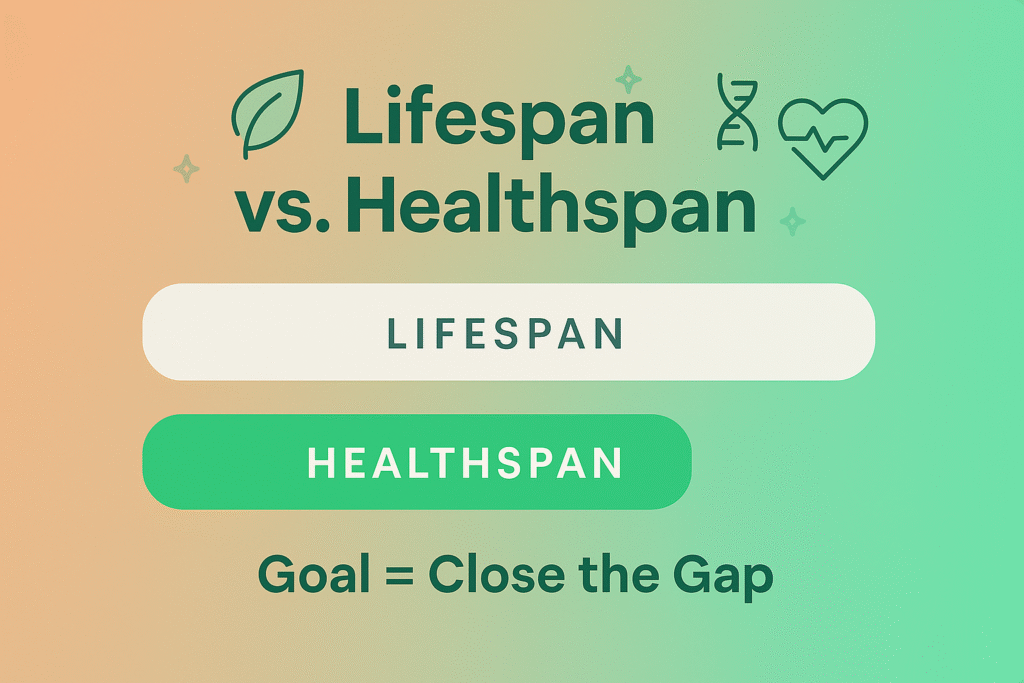
Lifespan is the total number of years you live. Healthspan is the number of years you live in good health.
This distinction matters because a longer life is not automatically a better one. Most people do not simply want more birthdays. They want more capable years: walking comfortably, travelling, working if they choose, spending time with family, thinking clearly, and doing the things that make life feel meaningful.
In practical terms, longevity is about narrowing the gap between lifespan and healthspan. Instead of spending many final years in steep decline, the aim is to maintain function for longer and compress serious illness and frailty into a shorter period near the end of life.
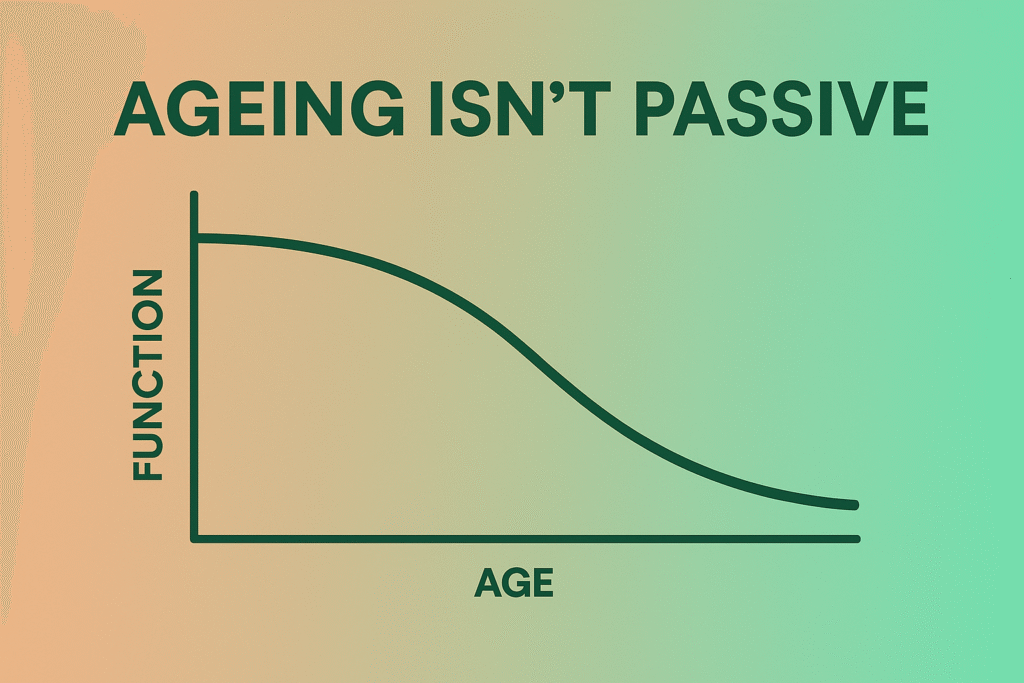
Ageing is not just passive decay
The old view of ageing was simple: the body wears out like an old machine. Today, we know ageing is more complex. It involves identifiable changes in cells, tissues, metabolism, and immune function.
Researchers can now track changes in DNA repair, protein quality, mitochondrial function, inflammation, cellular senescence, nutrient sensing, and stem cell activity. These processes help explain why two people of the same chronological age can have very different energy, strength, disease risk, and physical capacity.
The key takeaway is not that you can stop ageing. You cannot. The key takeaway is that the pace and expression of ageing are partly influenced by your environment and habits.
A body that regularly receives positive signals from movement, nourishing food, deep sleep, daylight, recovery, and connection is in a very different state from a body under constant stress, inactivity, poor sleep, and ultra-processed food.
The blueprint of ageing
Longevity starts at the cellular level. You do not need a biology degree to benefit from this, but a simple map helps you make better choices.
Three foundation ideas are especially useful when you are starting out.
1. The nine biological hallmarks of ageing
Scientists often describe ageing through a set of biological “hallmarks”. These include things like DNA damage, cellular senescence, mitochondrial dysfunction, chronic inflammation, and loss of protein quality control.
Think of the hallmarks as the recurring ways cells and tissues become less resilient over time. You do not need to memorise every one. The important idea is that ageing is not vague. It has patterns.
We break this down in plain English in the next guide: The Nine Hallmarks of Ageing Explained Simply.
2. Autophagy: your built-in recycling system
Autophagy is your body’s clean-up and recycling process. It helps cells remove damaged parts and reuse useful components.
This matters because ageing is partly a problem of accumulated damage. When clean-up and repair systems work well, the body is better able to maintain quality control.
Learn the simple version here: Autophagy Explained Simply.
3. Metabolic flexibility: why fuel switching matters
Your body can use glucose and fat for energy. Metabolic flexibility is the ability to switch between those fuel sources smoothly.
When metabolic flexibility is poor, energy can feel unstable, cravings can increase, and blood sugar regulation can become harder. Over time, this can affect inflammation, insulin sensitivity, and long-term health.
For practical next steps, read Metabolic Flexibility Explained Simply and Blood Sugar and Longevity.
The four pillars of longevity
If the blueprint explains why ageing happens, the pillars explain where to focus. Most people do not need an extreme protocol. They need a few high-leverage basics done consistently.
Pillar 1: Movement
Movement tells your body to stay capable. Strength training helps preserve muscle and bone. Aerobic exercise supports the heart, brain, metabolism, and mitochondria. Daily walking improves blood sugar, circulation, mood, and energy.
Start here: Best Exercises for Longevity and Zone 2 Cardio for Longevity.
Pillar 2: Nutrition
Food is more than calories. It is information for your cells. A longevity-focused diet is not about perfection. It usually means enough protein, more plants, supportive fibre, healthy fats, steadier blood sugar, and fewer ultra-processed foods.
Useful next reads: The Optimal Longevity Diet, Anti-Inflammatory Foods, and Blood Sugar and Longevity.
Pillar 3: Sleep and stress
Many repair processes happen during sleep. Meanwhile, chronic stress can affect blood sugar, inflammation, immune function, hormones, and recovery. Sleep and stress are not “soft” lifestyle topics. They are core longevity levers.
Start here: How to Improve Sleep for Longevity and Stress and Longevity.
Pillar 4: Smart support
Supplements, wearables, and testing can be useful, but they sit on top of the basics. They work best when they help you fill a real gap, track a meaningful pattern, or make a better decision.
Good starting points: Best Supplements for Longevity and Best Wearables for Health and Longevity.
How to start putting this into practice
The biggest mistake is trying to change everything at once. Longevity is built from simple actions repeated for years, not perfect weeks that happen twice a year.
1. Choose one pillar first
Ask yourself: which area feels most off right now?
- If you feel tired, weak, or unfit, start with movement.
- If your diet feels chaotic, start with nutrition.
- If you feel wired, stressed, or exhausted, start with sleep and stress.
- If your basics are already solid, add smart support.
2. Add one simple habit
- Walk for 10 to 20 minutes most days, ideally outdoors.
- Add one extra serving of plants to a meal you already eat.
- Set a consistent bedtime window.
- Dim screens 30 to 60 minutes before bed.
- Do two minutes of slow breathing before work or sleep.
3. Track patterns, not perfection
You do not need obsessive tracking. A notebook, notes app, or simple wearable can help you notice trends over weeks. The goal is awareness, not anxiety.
Simple takeaway
Longevity is not about doing everything. It is about finding the few habits that protect your future health, then making them repeatable.
FAQs
Is it too late for me to start working on longevity?
No. Many people can improve strength, fitness, blood pressure, blood sugar, sleep, and general wellbeing even when they start later in life. You cannot rewind the clock completely, but you can often improve the trajectory.
How much time do I need to invest each week?
You do not need to make health your full-time job. Start with a few repeatable basics: walking, two or three strength sessions per week if possible, better meals most of the time, and a more consistent sleep window.
Do I need advanced tests or expensive longevity programmes?
Not to start. Most people get the biggest return from improving the basics first. Testing can be useful later, but it is rarely the first step.
Is longevity the same thing as biohacking?
Not exactly. Biohacking often focuses on gadgets, experiments, and interventions. Longevity is broader. It is about protecting function, reducing risk, and supporting repair over decades.
What is the best age to start thinking about longevity?
The best time is earlier than you think, but the second-best time is now. The habits that support longevity also improve energy, mood, strength, sleep, and metabolic health in the present.
References
- World Health Organization: Ageing and health, healthy ageing, and healthy diet guidance.
- Harvard T.H. Chan School of Public Health: Lifestyle factors and longevity research.
- López-Otín C. et al. The Hallmarks of Aging. Cell, 2013.
- López-Otín C. et al. Hallmarks of Aging: An Expanding Universe. Cell, 2023.
- Kennedy BK. et al. Geroscience: linking aging to chronic disease. Cell, 2014.
- Global Burden of Disease Study: Lifestyle risk factors and chronic disease burden.
- Blue Zones research and observations on dietary, movement, and social patterns linked with longer life.
Next steps: build your foundations in order
Longevity is not reserved for scientists, athletes, or biohackers. It is built from simple, repeated choices that protect your body’s ability to repair, adapt, and stay capable.
Now that you understand why longevity matters, the next step is to understand what ageing actually does inside the body.

Simon is the creator of Longevity Simplified, where he breaks down complex science into simple, practical habits anyone can follow. He focuses on evidence-based approaches to movement, sleep, stress and nutrition to help people improve their healthspan.