Foundations • Lesson 3
Autophagy Explained Simply
Your body’s built-in cellular recycling system — what it is, why it matters for ageing, and how to support it safely with realistic daily habits.
Autophagy is not a magic switch or a fasting hack. It is one of your body’s core repair processes, quietly helping cells clear damaged parts and stay resilient over time.
In the previous guide, The Nine Hallmarks of Ageing, we looked at the biological processes that drive ageing. One of the most useful ideas from that framework is cellular clean-up.
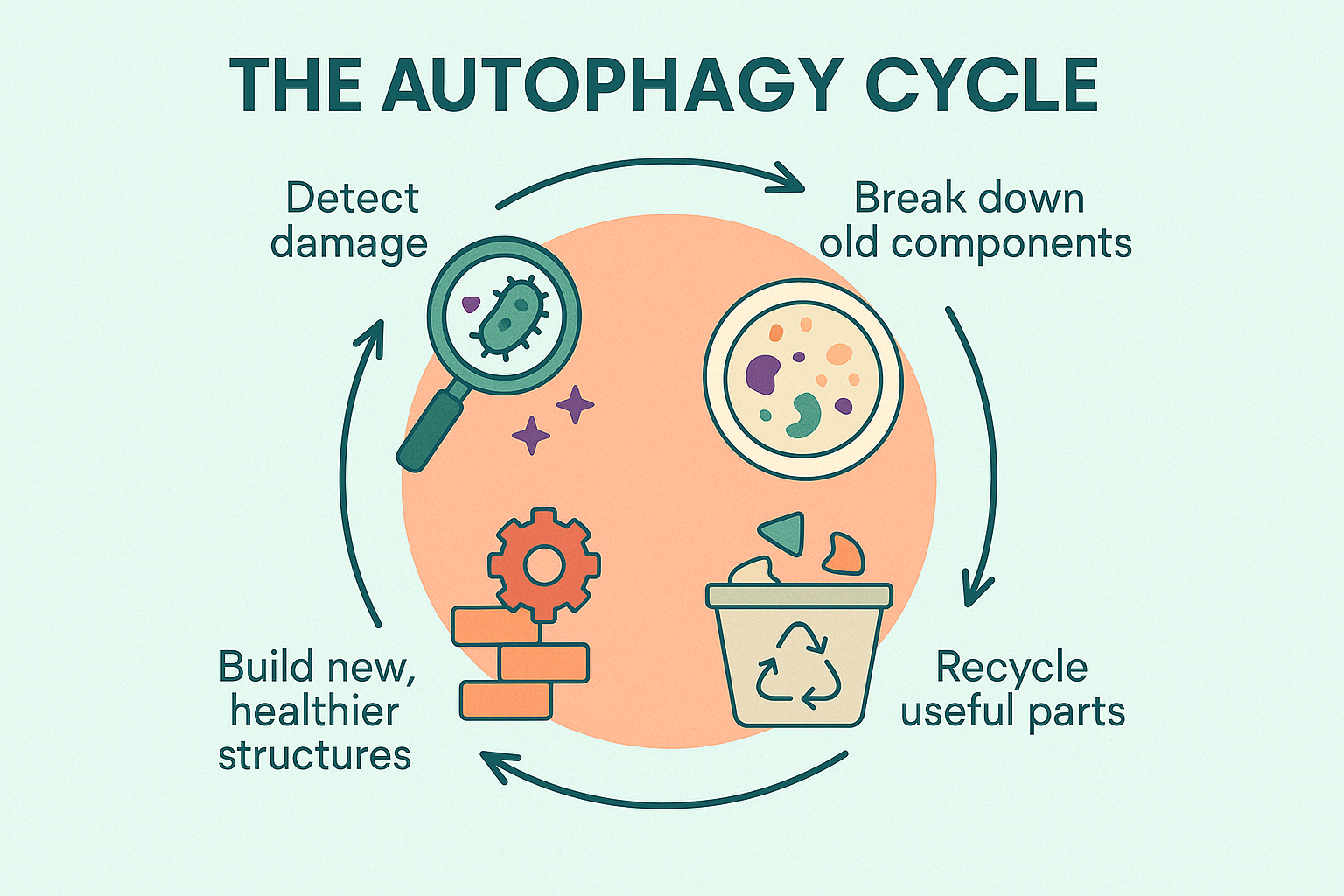
That is where autophagy comes in. Autophagy is your body’s method of breaking down damaged proteins, worn-out mitochondria, and other cellular waste so useful parts can be recycled.
The word autophagy literally means “self-eating”, but it is not harmful. It is more like internal housekeeping: clearing clutter, recycling parts, and helping cells stay efficient.
As we age, autophagy can become less efficient. This may contribute to cellular clutter, inflammation, slower repair, and reduced resilience. The good news is that simple habits — movement, sleep, food quality, sensible eating windows, and recovery — can support this process without extreme fasting or complicated protocols.
Table of Contents
What autophagy actually is
Every cell in your body produces waste. Proteins become damaged. Mitochondria wear out. Small bits of broken cellular material accumulate over time.
Autophagy helps identify this debris, package it up, break it down, and recycle what can be reused. In simple terms, it is one of the body’s built-in quality-control systems.
Without effective autophagy, cells can become cluttered and less efficient. With healthy autophagy, cells are better able to clear damaged parts and maintain function.
Simple takeaway
Autophagy is cellular housekeeping. It helps your body clear damaged parts and recycle useful materials so cells can stay cleaner, more efficient, and more resilient.
Why autophagy matters for ageing
Autophagy connects directly to several hallmarks of ageing, especially loss of proteostasis, mitochondrial dysfunction, inflammation, and cellular stress.
- It reduces cellular clutter: clearing damaged proteins and worn-out parts helps cells function more smoothly.
- It supports mitochondrial health: damaged mitochondria can be removed and replaced through related clean-up processes.
- It supports energy reliability: cleaner, better-maintained cells tend to manage energy more effectively.
- It supports brain health: cellular clean-up is relevant to protein build-up and long-term brain resilience.
- It works in the background: many longevity-friendly habits nudge autophagy gently rather than forcing extremes.
The key is not to chase maximum autophagy all the time. Growth, repair, nourishment, and muscle maintenance also matter. Longevity comes from rhythm: periods of nourishment, periods of repair, enough movement, enough rest, and enough consistency.
How to support autophagy safely
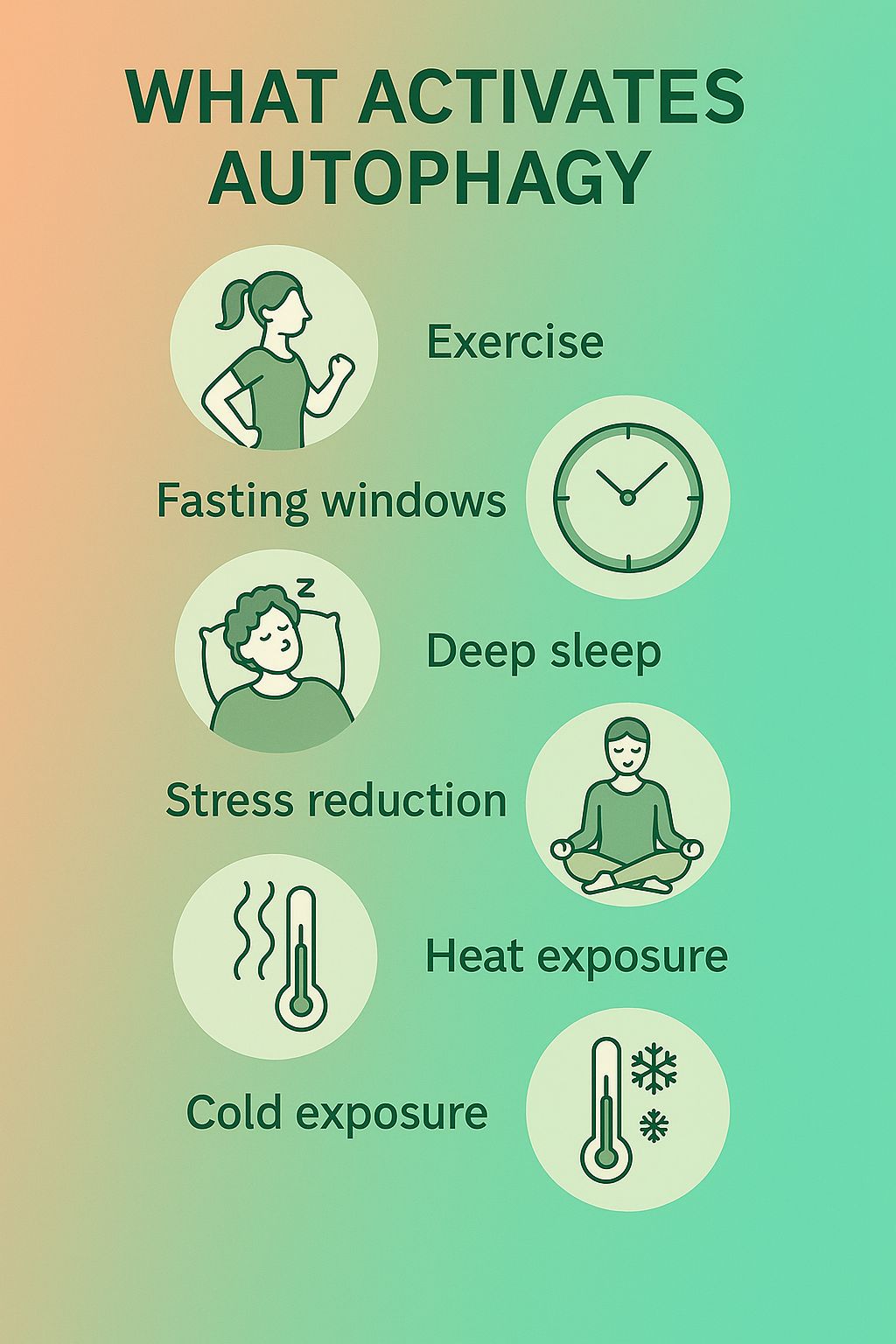
Autophagy tends to increase when the body senses manageable cellular stress — for example, exercise, a break from constant eating, or short exposure to heat or cold. The word manageable matters.
Too much stress can backfire. The aim is not to punish the body. The aim is to give it healthy signals to clean up, adapt, and rebuild.
1. Time-restricted eating
When you stop eating for a while, insulin tends to fall and the body shifts away from constant growth-and-storage mode. This can create a better environment for cellular maintenance.
- Science idea: Lower insulin and lower nutrient signalling can support clean-up pathways.
- Practical start: Begin with a simple 12-hour overnight break from eating, such as 8 p.m. to 8 a.m.
- Optional progression: Some people experiment with 14–16 hours, but longer is not automatically better.
You do not need extreme fasts to begin. A regular overnight break from food is enough for most people to start building a healthier rhythm.
2. Exercise
Exercise creates a useful form of cellular stress. It increases energy demand, encourages adaptation, and supports mitochondrial turnover.
- Science idea: Exercise influences energy-sensing pathways such as AMPK, which are linked with cellular maintenance.
- Practical start: Walk daily, build regular Zone 2 cardio, and add 2–3 short strength sessions per week.
- Best mindset: Consistency matters more than occasional heroic workouts.
3. Sleep
Sleep is one of the most overlooked repair windows. During sleep, the body shifts into maintenance mode, and the brain has its own waste-clearance systems.
- Science idea: Deep sleep supports repair, immune balance, and waste clearance.
- Practical start: Keep a consistent sleep window, dim lights in the evening, and avoid heavy meals right before bed.
- Next read: How to Improve Sleep for Longevity.
4. Heat exposure
Heat exposure, such as sauna, can trigger heat shock proteins. These help stabilise proteins and support cellular resilience.
- Science idea: Heat shock proteins help with protein folding and stress resilience.
- Practical start: If safe for you, try 10–20 minutes in a sauna 1–3 times per week.
- Safety note: Hydrate, avoid alcohol beforehand, and leave if you feel dizzy or unwell.
5. Mild cold exposure
Cold exposure can activate stress-resilience and energy pathways. However, it should be treated as optional, not essential.
- Science idea: Cold may influence energy sensing, metabolism, and adaptation.
- Practical start: Try 20–30 seconds of cool water at the end of a normal shower.
- Best mindset: You do not need ice baths. Small, repeatable doses are enough if you tolerate them well.
Common mistakes when trying to boost autophagy
Because autophagy sounds powerful, it is easy to turn it into another extreme health trend. That is usually the wrong approach.
- Over-fasting: Very long or frequent fasts can raise stress, reduce energy, and make it harder to maintain muscle.
- Skipping protein: Autophagy does not replace the need for protein. You still need enough protein to repair tissue and preserve muscle.
- Training too hard while under-fuelled: Intense workouts and long fasts can increase fatigue and slow recovery.
- Ignoring sleep: Poor sleep undermines repair, even if your fasting window looks perfect.
- Thinking more is always better: Longevity depends on balance, not constant stress.
Simple rule
If your autophagy plan leaves you exhausted, cold, irritable, sleep-deprived, or obsessive about food, it is probably too aggressive.
Who should be cautious
Autophagy-supporting habits can be useful, but some people should avoid fasting, heat exposure, or cold exposure unless they have personalised medical guidance.
- People with diabetes, reactive hypoglycaemia, or blood sugar instability
- Anyone underweight, frail, or with a history of disordered eating
- Pregnant or breastfeeding individuals
- People taking medication that needs food at set times
- Anyone with cardiovascular disease, fainting risk, or low blood pressure, especially with sauna use
- People with conditions affected by cold exposure, such as Raynaud’s phenomenon
If this applies to you, focus first on food quality, gentle movement, sleep, and stress reduction. These support longevity without requiring aggressive fasting or temperature exposure.
A simple weekly protocol to support autophagy
You do not need complicated routines. A steady weekly rhythm can support autophagy while still protecting energy, muscle, hormones, mood, and recovery.
Daily foundations
- Use a gentle 12-hour overnight break from eating.
- Walk most days, ideally outside.
- Eat whole-food meals with enough protein, fibre, and healthy fats.
- Keep a consistent sleep window.
- Take short breaks from sitting during the day.
Two to three times per week
- Do short strength training sessions to protect muscle.
- Add Zone 2 cardio to support mitochondrial health.
- Use sauna if available and safe for you.
Optional extras
- Try a 14-hour overnight eating break once or twice per week if it feels easy.
- Add a short cool finish to showers if you tolerate it well.
- Plan one restorative evening with low light, calm food, hydration, and an earlier bedtime.
This kind of approach stimulates repair pathways quietly in the background while still supporting the bigger goal: a strong, well-fed, resilient body.
FAQs
How long do I need to fast to trigger autophagy?
There is no exact hour when autophagy suddenly switches on. It happens at a low level all the time and can increase when the body spends more time without food. For most people, a regular 12-hour overnight break from eating is a safe starting point.
Does coffee during a fast stop autophagy?
Plain black coffee is unlikely to completely stop fasting-related signalling for most people, especially in modest amounts. Adding sugar, milk, or cream adds calories and may reduce the fasting signal.
Is autophagy just another weight-loss tool?
No. Weight may change when eating windows and activity change, but autophagy is primarily a repair and recycling process. The goal is healthier, more resilient cells, not simply a lower number on the scale.
Are there supplements that boost autophagy?
Some compounds are being researched, but supplements are not a shortcut. Lifestyle foundations such as sleep, movement, nutrition, and metabolic health matter most.
Can you have too much autophagy?
The body needs balance. Constantly pushing fasting, under-eating, and stress can harm energy, hormones, recovery, and muscle. The goal is healthy rhythm, not maximum autophagy at all times.
References
Key scientific papers and reliable sources behind this simplified guide:
- Mizushima N. and Komatsu M. Autophagy: Renovation of Cells and Tissues. Cell, 2011.
- Levine B. and Kroemer G. Biological Functions of Autophagy Genes. Cell, 2019.
- López-Otín C. et al. The Hallmarks of Aging. Cell, 2013.
- López-Otín C. et al. Hallmarks of Aging: An Expanding Universe. Cell, 2023.
- Madeo F. et al. Caloric Restriction Mimetics against Age-Associated Disease. Nature Reviews Drug Discovery, 2019.
- de Cabo R. and Mattson M. P. Effects of Intermittent Fasting on Health, Aging, and Disease. New England Journal of Medicine, 2019.
- He C. and Klionsky D. J. Regulation Mechanisms and Signaling Pathways of Autophagy. Annual Review of Genetics, 2009.
These references explain the deeper mechanisms. This article focuses on practical, beginner-friendly ways to support cellular repair safely.
Next steps: fit autophagy into the bigger longevity picture
Autophagy is one of the body’s key cellular repair systems, but it is not the whole story. Longevity also depends on metabolic health, muscle, sleep, stress, nutrition, and resilience.
The next foundation guide explains how your body switches between fuel sources — and why that matters for blood sugar, energy, cravings, and long-term health.
Helpful supporting guides: Best Exercises for Longevity, How to Improve Sleep for Longevity, Blood Sugar and Longevity, and Stress and Longevity.

Simon is the creator of Longevity Simplified, where he breaks down complex science into simple, practical habits anyone can follow. He focuses on evidence-based approaches to movement, sleep, stress and nutrition to help people improve their healthspan.