Foundations • Lesson 4
Metabolic Flexibility Explained Simply
A beginner-friendly guide to how your body switches between glucose and fat — and why flexible fuel use matters for energy, blood sugar, and healthy ageing.
Metabolic flexibility is not about cutting carbs or chasing ketosis. It is about helping your body use the right fuel at the right time.
In the previous guide, Autophagy Explained Simply, we looked at cellular clean-up and repair. This guide focuses on another foundation of healthy ageing: how your body uses energy.
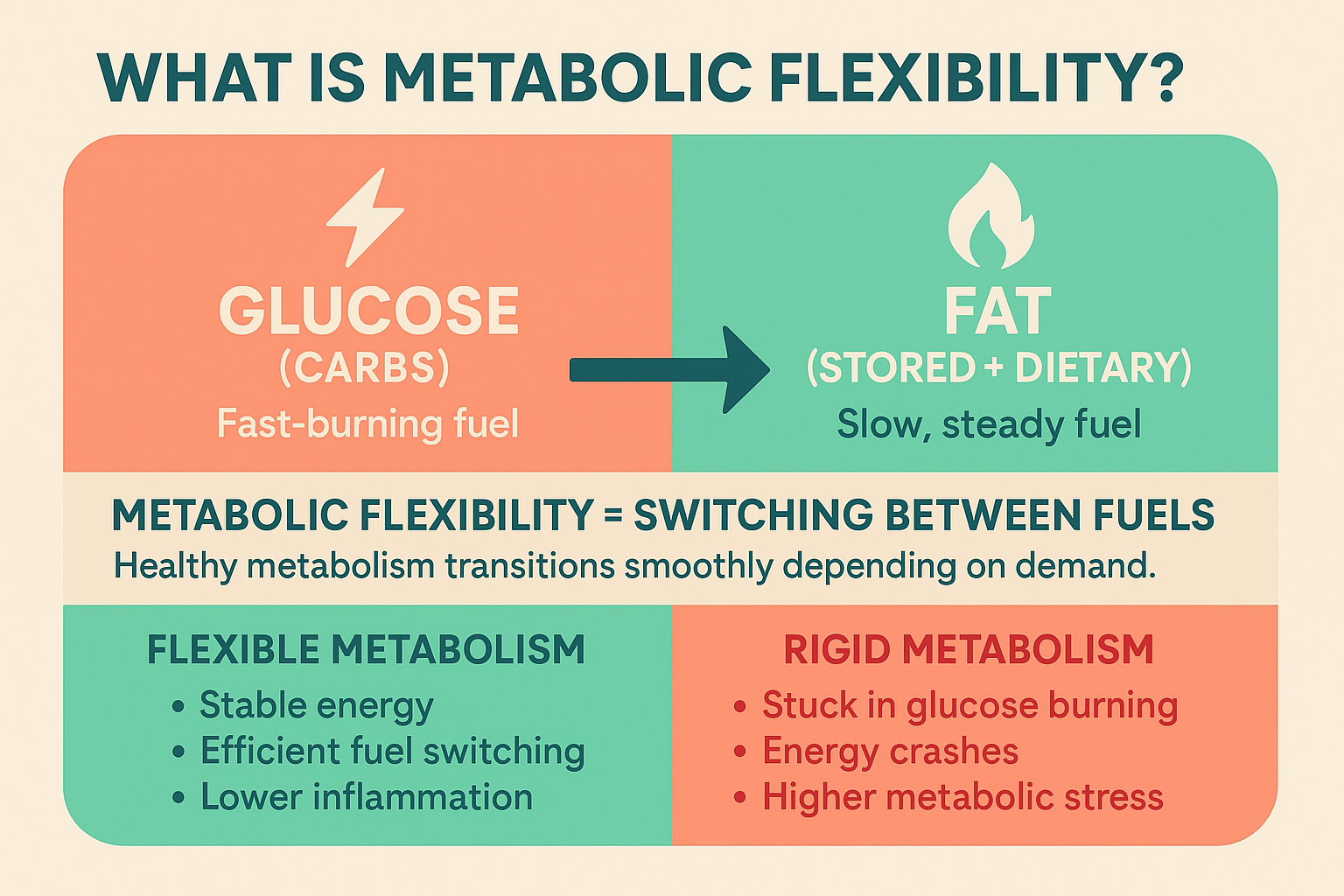
Every cell needs fuel. Most of the time, that fuel comes from two main sources: glucose, usually from carbohydrates, and fat, either from food or stored body fat.
Metabolic flexibility is your body’s ability to switch between these fuels smoothly depending on what you have eaten, how active you are, and what your cells need.
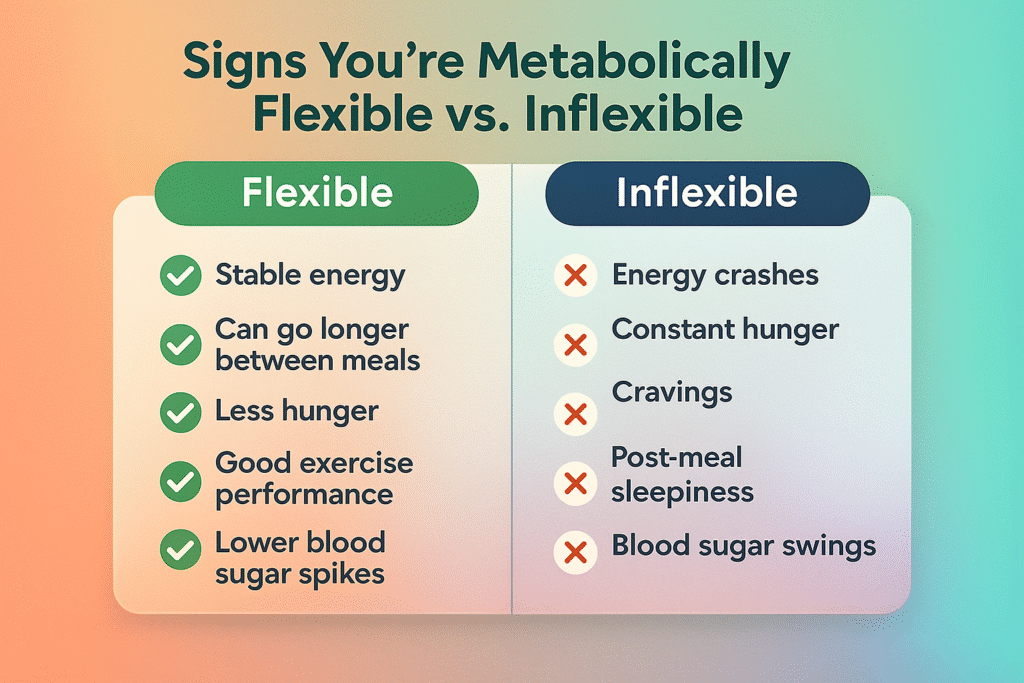
When this system works well, energy tends to feel steadier, cravings often reduce, blood sugar is easier to manage, and your metabolism becomes more resilient. When it works poorly, you may feel stuck in a cycle of crashes, cravings, fatigue, and constant snacking.
Table of Contents
What metabolic flexibility actually is
Metabolic flexibility is your ability to move between different fuel sources. After a meal, your body naturally uses more glucose. Between meals, overnight, or during steady exercise, it should become better at using fat.
A flexible metabolism is like a hybrid engine. It can use the fuel that makes sense for the situation. A less flexible metabolism is more like an engine that only runs well on one fuel and struggles when conditions change.
Modern life can make this harder. Constant snacking, poor sleep, chronic stress, low activity, and ultra-processed foods all keep the body in a more glucose-dependent state. Over time, that can reduce your ability to switch into fat-burning mode when needed.
Simple takeaway
Metabolic flexibility is your body’s ability to use both glucose and fat well. The goal is not to avoid one fuel forever. The goal is to switch between fuels smoothly.
Why metabolic flexibility matters for longevity
Metabolic health sits at the centre of energy, inflammation, hormones, brain function, blood vessels, and long-term disease risk. That makes metabolic flexibility a key part of healthy ageing.
- Steadier energy: fewer crashes, less fatigue, and fewer urgent snack cravings.
- Better blood sugar control: smaller glucose and insulin spikes support long-term metabolic health.
- Improved fat access: the body becomes better at using stored energy when food is not constantly coming in.
- Healthier mitochondria: flexible fuel use supports the cell’s energy-producing machinery.
- Lower inflammatory load: better glucose control and body composition can reduce chronic stress on the system.
- Reduced disease risk: poor metabolic health is strongly linked with type 2 diabetes, cardiovascular disease, fatty liver, and other age-related problems.
Metabolic flexibility also connects directly to the hallmarks of ageing, especially deregulated nutrient sensing, mitochondrial dysfunction, inflammation, and cellular stress.
How to improve metabolic flexibility
Metabolic flexibility improves when your body regularly practises different fuel states: eating, digesting, moving, resting, sleeping, and spending some time between meals.
The aim is not a strict diet. It is to create a healthier rhythm of fuel use across the day and week.
1. Use a simple overnight eating break
Time-restricted eating gives your body a clearer rhythm: a period of eating and a period of not eating. During the overnight break, insulin tends to fall and the body gradually shifts towards using more stored energy.
- Science idea: Lower insulin makes it easier for the body to access stored fat.
- Practical start: Begin with a 12-hour overnight break, such as 8 p.m. to 8 a.m.
- Optional progression: Try 14 hours only if it feels easy and does not affect mood, sleep, training, or appetite.
2. Walk after meals
A short walk after eating is one of the simplest ways to improve glucose handling. Your muscles help clear glucose from the bloodstream, which can reduce spikes and improve energy later.
- Science idea: Muscle contractions help move glucose into muscle cells.
- Practical start: Walk for 10–15 minutes after your biggest meal.
- Best mindset: This does not need to be a workout. A gentle walk still helps.
3. Build Zone 2 cardio
Zone 2 cardio trains your aerobic system and mitochondria. It improves your ability to use fat as fuel during lower-intensity activity.
- Science idea: Aerobic training supports mitochondrial density and fat oxidation.
- Practical start: Try brisk walking, cycling, or easy jogging at a pace where you can still speak in short sentences.
- Next read: Zone 2 Cardio for Longevity.
4. Strength train to protect muscle
Muscle is one of your most important metabolic organs. It stores glucose, supports insulin sensitivity, and helps stabilise energy.
- Science idea: More active muscle improves glucose disposal and metabolic resilience.
- Practical start: Do 2–3 short strength sessions per week using bodyweight, machines, dumbbells, or resistance bands.
- Next read: Best Exercises for Longevity.
5. Build meals around protein, fibre, and whole foods
Meal quality affects how quickly glucose enters the bloodstream. Protein, fibre, and healthy fats usually make meals more satisfying and reduce sharp energy swings.
- Science idea: Protein and fibre help slow digestion and support steadier glucose responses.
- Practical start: Build meals around protein, vegetables, beans, lentils, whole grains, root vegetables, olive oil, nuts, seeds, or oily fish.
- Best mindset: Carbs are not the enemy. Quality, portion size, timing, and pairing matter.
6. Protect sleep and lower chronic stress
Sleep and stress strongly affect blood sugar and appetite. Poor sleep can reduce insulin sensitivity the next day, while chronic stress can keep glucose higher through cortisol.
- Science idea: Sleep and cortisol rhythms influence glucose metabolism, appetite, and insulin sensitivity.
- Practical start: Keep a consistent sleep window, get morning daylight, and use short decompression breaks during stressful days.
- Next reads: Sleep for Longevity and Stress and Longevity.
Common mistakes to avoid
Many people try to improve metabolic health by going too extreme. That often makes the system less resilient, not more.
- Thinking carbs are always bad: the goal is better fuel switching, not permanent carb fear.
- Over-fasting: long or frequent fasts can increase stress, disrupt sleep, and make training harder.
- Under-eating protein: this makes it harder to maintain muscle, which is essential for metabolic health.
- Doing high-intensity training every day: too much intensity can raise fatigue and reduce recovery.
- Ignoring sleep: poor sleep can quickly worsen glucose control and cravings.
- Chasing hacks: walking, strength training, food quality, and consistency beat most shortcuts.
Simple rule
Metabolic flexibility is built through rhythm: eat well, move often, sleep properly, and spend some time between meals. It does not require extremes.
Who should be cautious
Most metabolic flexibility habits are gentle when introduced gradually. However, some people should get personalised guidance before changing eating windows, carbohydrate intake, or training volume.
- People with diabetes or significant blood sugar instability
- People taking glucose-lowering or blood pressure medication
- Anyone with a history of disordered eating
- Anyone underweight, frail, pregnant, or breastfeeding
- People with adrenal, thyroid, kidney, liver, or cardiovascular conditions
If this applies to you, focus first on food quality, gentle movement, and sleep consistency. Speak with your GP or a qualified clinician before experimenting with fasting, major diet changes, or intense training.
A simple weekly protocol
You do not need a perfect routine. A few repeatable patterns can meaningfully improve metabolic flexibility over time.
Daily foundations
- Use a simple 12-hour overnight break from eating.
- Build meals around protein, fibre, and mostly whole foods.
- Walk for 10–15 minutes after one meal.
- Take short movement breaks if you sit for long periods.
- Keep a consistent sleep window.
Three to four times per week
- Do 30–45 minutes of Zone 2 movement, such as brisk walking, cycling, swimming, or easy jogging.
Two to three times per week
- Do short strength sessions focused on major muscle groups.
Optional extras
- Try a 14-hour overnight break once or twice per week if it feels easy and safe.
- Experiment with eating most carbohydrates around activity or earlier in the day.
- Use a wearable or simple notes app to track energy, cravings, sleep, and hunger patterns.
FAQs
How do I know if my metabolism is flexible?
Common signs include steadier energy between meals, fewer intense sugar cravings, less dependence on snacks to function, and an easier time going a few hours without eating. Many people also notice that gentle exercise feels more sustainable.
Do I have to cut carbohydrates to improve metabolic flexibility?
No. Many people do well with moderate amounts of higher-quality carbohydrates from oats, beans, lentils, fruit, whole grains, and root vegetables. The goal is to reduce ultra-processed sugar and pair carbohydrates with protein, fibre, and healthy fats.
Is keto the only way to become metabolically flexible?
No. A ketogenic diet is one approach, but it is not required for most people. Walking after meals, Zone 2 cardio, strength training, better sleep, and a simple overnight eating break can all improve metabolic flexibility without full-time ketosis.
How long does it take to improve metabolic flexibility?
Some people notice steadier energy and fewer cravings within a few weeks. Deeper changes in insulin sensitivity, body composition, and aerobic fitness usually build over months.
Is metabolic flexibility the same as good blood sugar control?
They are closely linked, but not identical. Good blood sugar control is one sign of metabolic health. Metabolic flexibility is broader: it includes how well your body switches between glucose and fat across different situations.
References
Selected research and reviews used to inform this simplified guide:
- Goodpaster B. H. and Sparks L. M. Metabolic Flexibility in Health and Disease. Cell Metabolism, 2017.
- Kelley D. E. and Mandarino L. J. Fuel Selection in Human Skeletal Muscle in Insulin Resistance. Diabetes, 2000.
- Patterson R. E. et al. Intermittent Fasting and Human Metabolic Health. Journal of the Academy of Nutrition and Dietetics, 2015.
- Sparks L. M. Exercise Training Response Heterogeneity: Physiological and Molecular Insights. Diabetologia, 2017.
- Hawley J. A. et al. Integrative Biology of Exercise. Cell, 2014.
- St-Onge M. P. et al. Sleep Duration and Quality: Impact on Lifestyle Behaviors and Cardiometabolic Health. Circulation, 2016.
Next steps: make your metabolism more adaptable
Metabolic flexibility is one of the clearest bridges between daily habits and long-term health. It links food, movement, sleep, stress, mitochondria, blood sugar, and inflammation.
You do not need perfection. Small repeatable habits — better meals, walking after food, Zone 2 movement, strength training, sleep consistency, and fewer ultra-processed foods — can shift the system over time.
Helpful supporting guides: Blood Sugar and Longevity, Best Exercises for Longevity, Anti-Inflammatory Foods, and The Optimal Longevity Diet.

Simon is the creator of Longevity Simplified, where he breaks down complex science into simple, practical habits anyone can follow. He focuses on evidence-based approaches to movement, sleep, stress and nutrition to help people improve their healthspan.