Metabolic Flexibility: Why Switching Fuels Matters
A simple guide to how your body uses energy – and why switching between fuels quietly shapes your long-term health.
Note: This article is for education only and is not medical advice. If you have a health condition, take medication (especially for blood sugar or blood pressure) or have a history of disordered eating, discuss changes with your GP or a qualified clinician first.
Table of contents
A simple guide to how your body uses energy – and why it affects your healthspan.
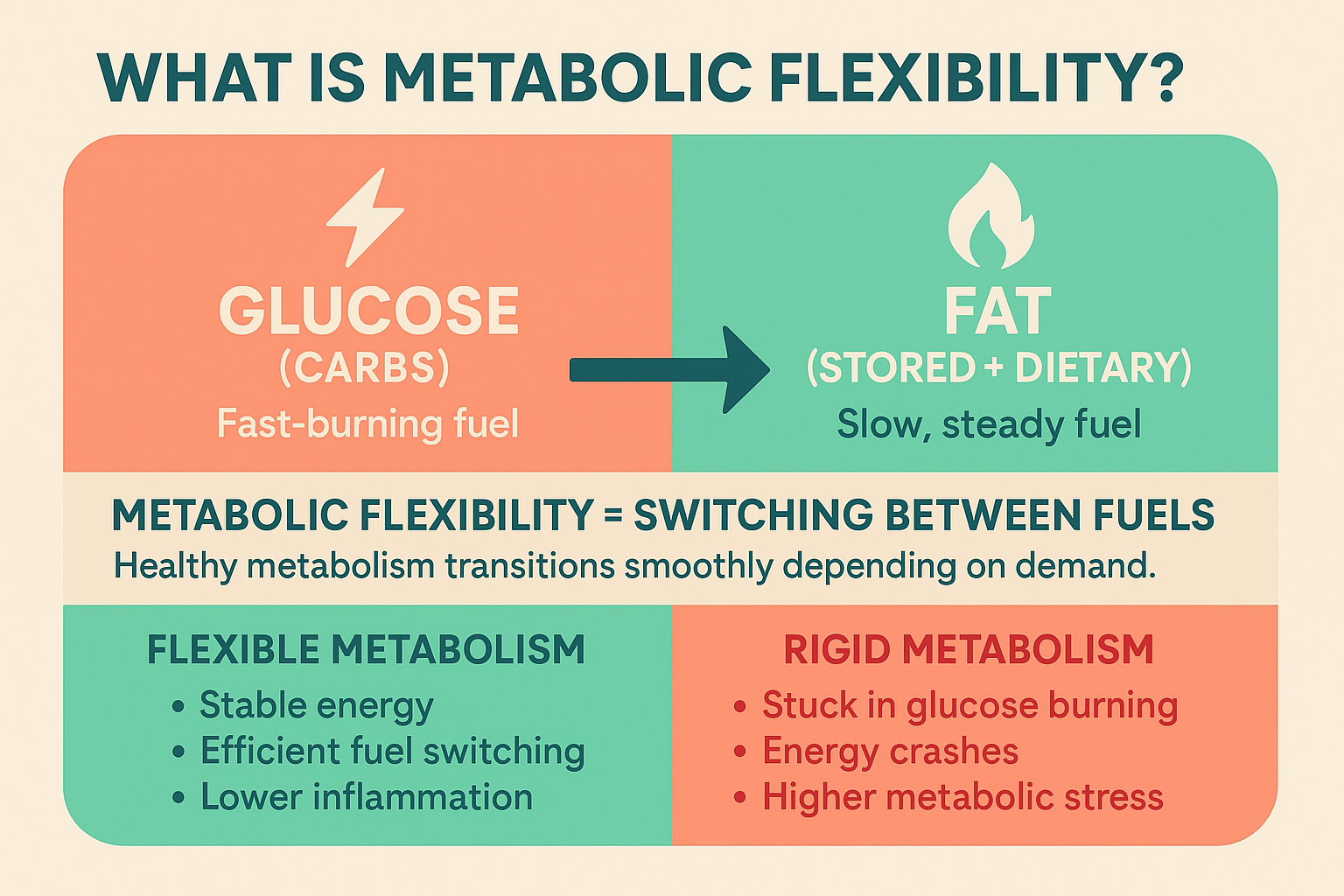
Every cell in your body runs on energy. Most of the time, that energy comes from two main sources: glucose (from carbohydrates) and fat. Metabolic flexibility is your body’s ability to switch between these fuels smoothly, depending on what you have eaten, how active you are and what your cells need at that moment.
When you are metabolically flexible, your energy tends to stay steadier. You are less dependent on constant snacking, you can access stored body fat more easily and your blood sugar remains more stable. When flexibility is low, you can become “locked” into using mainly glucose. Over time that can show up as energy crashes, cravings, fatigue and a higher risk of metabolic issues.
The encouraging part is that you can improve metabolic flexibility at almost any age. In this guide, we will look at what it means, why it matters for healthy ageing and the realistic habits that make your metabolism more adaptable and resilient.
If you are following the Longevity Simplified Foundations series, this guide naturally follows Autophagy explained simply and the nine hallmarks of ageing.
What metabolic flexibility actually is
Metabolic flexibility is your body’s ability to switch between burning glucose and burning fat depending on the situation. It is like having a hybrid engine that can change fuel automatically based on what is available and what the journey requires.
After a meal, glucose rises and your body naturally prioritises burning it. Overnight, between meals or during steady exercise, glucose drops and you should transition towards using stored fat. This switch is built into human biology. However, modern lifestyles – constant snacking, poor sleep, chronic stress and ultra-processed foods – can disrupt the process.
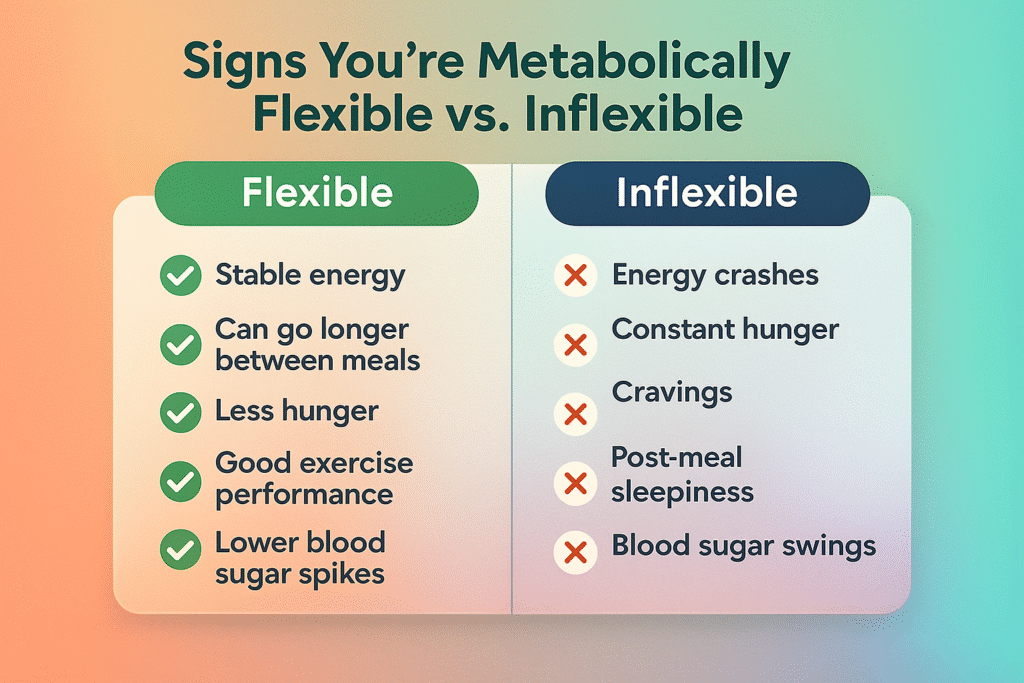
When your metabolism can switch fuels efficiently, you feel more stable and energised across the day. When it struggles to switch, you can feel drained, hungry, foggy and reliant on quick carbohydrate hits to feel normal.
Why metabolic flexibility matters for longevity
Your metabolism is about far more than body weight. It sits at the centre of energy production, inflammation, hormone balance and long-term disease risk. A flexible metabolism is often a healthier, more resilient metabolism.
- More stable energy: fewer crashes, less fatigue and a reduced mid-afternoon slump.
- Better fat access: easier use of stored body fat when glucose is lower.
- Lower glucose and insulin spikes: supports blood vessels and helps reduce inflammatory load.
- Improved mitochondrial health: your cells produce energy more efficiently and with less “waste”.
- Reduced risk of metabolic disease: lower risk of insulin resistance, type 2 diabetes and cardiovascular problems.
Metabolic flexibility is also tightly linked to several biological hallmarks of ageing, including mitochondrial function, deregulated nutrient sensing and chronic inflammation. By improving flexibility, you are often supporting multiple hallmarks at once.
For the practical “big picture” of how these levers combine, the final Foundations pillar ties it all together: The Longevity Equation.
How to improve metabolic flexibility
Metabolic flexibility improves when your body regularly experiences different fuel situations – times when glucose is available and times when it is lower. This teaches your cells to burn both glucose and fat efficiently. The aim is not a strict or extreme diet. Instead, you create gentle changes in fuel use across the day and week.
1) Time-restricted eating (TRE)
TRE works by giving your body a clear rhythm: an eating window and an overnight break. During the break, glucose falls, insulin drops and your body naturally shifts towards using stored fat. Over time, this supports more adaptable fuel switching.
- Science: Lower insulin helps your cells access fat stores rather than relying only on glucose.
- Practical: Start with a 12-hour window (for example, 8 a.m.–8 p.m.). Only progress to 14–16 hours if it feels comfortable and does not disrupt sleep, mood or training.
- Tip: Repeatable rhythm beats heroic fasts.
2) Movement (Zone 2 + strength training)
Exercise improves glucose handling and trains your mitochondria to use fuel more efficiently. Zone 2 improves your ability to burn fat, while strength training improves insulin sensitivity and supports muscle – a key metabolic “organ”.
- Science: Movement influences energy-sensing pathways and supports mitochondrial adaptation.
- Practical: Aim for 30–45 minutes of Zone 2 on most days and 2–3 strength sessions per week.
- Tip: A 10–15 minute walk after meals is one of the simplest “high ROI” habits for glucose control.
3) Balanced protein and whole foods
Meal quality matters. Higher-protein, whole-food meals reduce sharp glucose spikes, improve satiety and support stable energy. Ultra-processed foods tend to do the opposite by disrupting nutrient sensing and increasing cravings.
- Science: More stable glucose and insulin responses support healthier fuel switching and lower inflammatory load.
- Practical: Build meals around protein, fibre, healthy fats and minimally processed carbohydrates (oats, beans, lentils, whole grains, root veg).
- Tip: A protein-forward breakfast often improves cravings and energy later in the day.
4) Improve sleep quality
Poor sleep reduces insulin sensitivity and makes it harder to switch fuels effectively. Even one bad night can impair glucose handling the next day, which is why sleep is a cornerstone of metabolic health.
- Science: Sleep regulates hormones that affect appetite, insulin and glucose metabolism.
- Practical: Keep regular sleep/wake times, reduce bright light late at night and keep the bedroom cool and dark.
- Next read: Sleep for longevity (UK).
5) Reduce chronic stress
Chronic stress elevates cortisol, which can keep glucose higher and interfere with fat burning. Over time this pushes the body into a “glucose-first” mode.
- Science: Persistently high cortisol is linked with insulin resistance and inflammation.
- Practical: Use short breathwork, morning daylight, movement breaks and realistic boundaries to lower baseline stress.
- Next read: Stress and longevity.
Common mistakes to avoid
Many people overcomplicate metabolic health. These are the most common traps that slow progress.
- Over-fasting: very long or frequent fasts can increase stress, disturb hormones and reduce muscle mass.
- Under-eating protein: makes it harder to stabilise glucose and maintain lean tissue.
- High-intensity training every day: can push cortisol up and reduce recovery.
- Ignoring sleep: poor sleep can undo gains from food and training.
- Chasing hacks: consistency with basics beats most “fat-burning” shortcuts.
Who should be cautious
Most metabolic flexibility habits are gentle and safe when applied gradually. Even so, some people need extra care when adjusting eating windows or training volume.
- People with diabetes or significant blood sugar instability
- Those on glucose-lowering or blood pressure medications
- Anyone with a history of disordered eating or underweight
- Pregnant or breastfeeding individuals
- People with adrenal or thyroid conditions
If you fall into one of these groups, focus first on food quality, light movement and sleep consistency, and involve your clinician before experimenting with fasting or intense training.
A simple weekly protocol
You do not need a perfect routine. A few repeatable patterns, done most weeks, can make a meaningful difference over time.
- Daily
- Use a 12–14 hour overnight break from eating.
- Base meals on protein + fibre + healthy fats.
- Walk for 10–15 minutes after one or two meals.
- Keep a consistent sleep window.
- 3–4 days per week
- 30–45 minutes of Zone 2 movement (brisk walking, cycling, easy jog).
- 2–3 days per week
- Short strength sessions focused on major muscle groups.
- Once per week (optional)
- Try 14–16 hours overnight only if you feel well and it is medically safe for you.
Keep it simple. The core idea is regular movement, high-quality food, stable sleep and gentle variation in fuel availability.
FAQs
How do I know if my metabolism is flexible?
Common signs include steadier energy between meals, fewer intense sugar cravings, less dependence on snacks to function and an easier time going a few hours without eating. Many people also notice gentle exercise feels more sustainable.
Do I have to cut carbohydrates to improve metabolic flexibility?
No. Many people do well with moderate, higher-quality carbs from whole foods (oats, beans, lentils, root veg). The priority is reducing ultra-processed sugar and pairing carbs with protein, fibre and healthy fats.
Is keto the only way to become metabolically flexible?
No. Keto is one approach, but not required for most people. Walking after meals, Zone 2, strength training, better sleep and an overnight eating break can improve flexibility without full-time ketosis.
How long does it take to improve metabolic flexibility?
Some people notice improvements in energy and cravings within a few weeks. Deeper changes in insulin sensitivity and fitness tend to build over months. Consistency matters more than speed.
References
Selected research and reviews used to inform this simplified guide:
- Goodpaster B. et al. (2015). Metabolic Flexibility in Humans. Cell Metabolism.
- Kelley D. & Mandarino L. (2000). Fuel Selection and Insulin Resistance. Diabetes.
- Patterson R. et al. (2017). Time-Restricted Eating and Metabolic Outcomes. Nutrition Reviews.
- Metcalfe R. et al. (2019). Exercise and Metabolic Health. Sports Medicine.
- Bruce C. et al. (2006). Mitochondrial Adaptations to Training. Journal of Physiology.
Next steps: make your metabolism more adaptable
Metabolic flexibility is a cornerstone of healthy ageing. When your body can switch fuels easily, you gain more stable energy, better metabolic control and lower inflammation. You do not need perfection. Small, repeatable habits — built meals, walking after food, Zone 2 movement, strength training and better sleep — quietly shift the system.
Related guides you might like:
- Blood sugar and longevity
- Best exercises for longevity (no gym required)
- Anti-inflammatory foods for longevity
To tie the full Foundations system together (and see how to apply it without obsessing), go to: The Longevity Equation.
Want a simple, printable starting plan? Our free Longevity Starter Guide brings together movement, nutrition, sleep and stress into one easy daily checklist.
Written by Longevity Simplified – turning complex longevity science into simple daily actions.
Affiliate Disclaimer: Some links may be affiliate links. If you click and purchase, we may earn a small commission at no extra cost to you. We only recommend products we believe offer good quality and value.
Medical Disclaimer: This content is for information only and does not replace personalised medical advice. Always consult your doctor or a qualified health professional before making significant changes to diet, activity or fasting.

Simon is the creator of Longevity Simplified, where he breaks down complex science into simple, practical habits anyone can follow. He focuses on evidence-based approaches to movement, sleep, stress and nutrition to help people improve their healthspan.