Environment & Lifestyle • Consistency • Healthspan
Longevity Habits for Busy People
Simple, time-efficient habits that boost energy, reduce stress, and improve long-term health — even on your busiest days.
Foundations: Why Longevity Matters • Nine Hallmarks of Ageing • Autophagy • Metabolic Flexibility • Longevity Equation
Disclaimer: This article is for educational purposes only and does not replace medical advice. If you have a medical condition, injury, mobility limitation, or take medication, speak with a qualified professional before changing your diet, exercise, or sleep routine.
Most people want to live longer, feel better, and age well — but modern life rarely leaves room for perfect routines. Long work hours, commuting, family responsibilities, and constant digital noise make complex health plans unrealistic.
The mistake isn’t lack of discipline. It’s believing longevity requires more time.
You don’t need more hours — you need smarter habits.
Longevity is built through small, repeatable actions that fit naturally into your day. When done consistently, these micro-habits compound into major benefits for energy, metabolic health, stress resilience, and long-term ageing.
In this guide, you’ll learn:
- high-impact habits you can do in under five minutes
- how to improve health without adding more “to-do” items
- the Busy Person Longevity Formula
- how to stack habits into your existing routine
1) The simple explanation
Longevity is not built in long gym sessions, strict diets, or perfectly optimised routines.
It’s built in the margins of your day — the small moments that repeat every day whether you notice them or not.
The most effective longevity habits:
- take very little time
- fit into what you already do
- require minimal motivation
- deliver outsized benefits when repeated
Consistency beats intensity. Small habits done daily outperform big efforts done occasionally.
Related: Consistency Beats Intensity
2) Why small habits work (explained simply)
Short bursts of movement improve metabolic health.
Even 2–5 minutes of activity can support post-meal glucose control and energy.
Light exposure anchors your circadian rhythm.
Morning light helps regulate sleep timing, mood, and appetite signals.
Micro-recovery lowers chronic stress load.
Brief breathing resets help you downshift faster between tasks.
Your first meal shapes the whole day.
A protein-focused first meal often improves appetite control, focus, and steadier blood sugar.
For a simple external baseline, public health guidance supports frequent movement and weekly activity targets as a foundation for long-term health. See the World Health Organization (WHO) physical activity guidance.
3) The Busy Person Longevity Formula
If you only focus on three things, make them these. They deliver a disproportionate return for the time invested.
1. Move in micro-doses
Instead of long workouts, sprinkle movement throughout your day:
- march in place for 60 seconds
- take the stairs when available
- walk for 2–5 minutes after meals
- stretch hips, back, or shoulders
These “movement snacks” improve energy, insulin sensitivity, mood, and joint comfort — especially when sitting dominates the day.
Next: Healthy Ageing for Desk Workers • Walking as a Longevity Superpower
2. Master your first meal
Aim for 20–40 g of protein in your first meal:
- Greek yoghurt
- eggs
- protein shake
- beans on toast
This single habit often stabilises blood sugar, reduces cravings, and improves mental focus for the rest of the day.
Next: Blood Sugar & Longevity • Optimal Longevity Diet
3. Use one-minute stress resets
Lower stress quickly with:
- the physiological sigh
- slow nasal breathing
- box breathing
These can be done during work, commuting, or before sleep — no special setup required.
Next: Breathwork That Lowers Cortisol Fast • Stress & Longevity
4) Longevity habits you can do in under five minutes
- Post-meal walk: 3–5 minutes after your biggest meal
- Hourly reset: stand, stretch, and take 6 slow breaths
- Hydration first: water before your first coffee
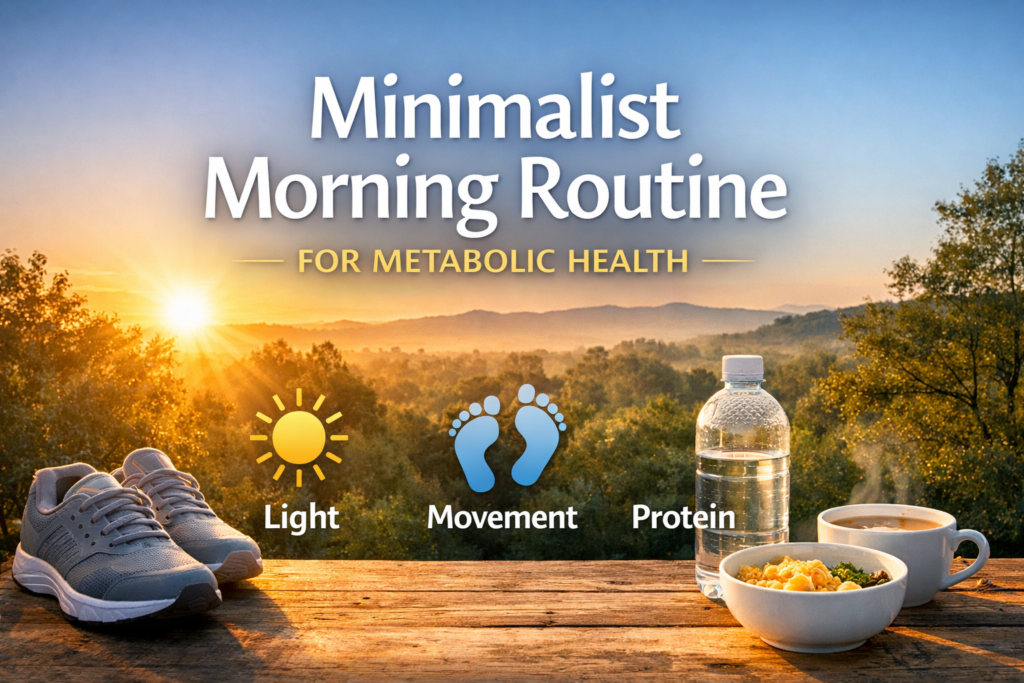
- Light cue: open curtains immediately after waking (or step outside for 60 seconds)
- Veg anchor: add vegetables to one meal per day
- Strength snack: 10 squats or 30–60 seconds of marching
- Wind-down shortcut: warm shower + dim lights 30 minutes before bed
- Brain dump: 60 seconds of writing “what’s on my mind” before sleep
None of these require planning — but together they significantly improve the daily “signals” that drive healthy ageing.
5) Habit stacking: fitting this into real life
Habit stacking means attaching a new habit to something you already do.
- after brushing teeth → one minute of breathing
- after meals → short walk
- while the kettle boils → stretch or squat
- before checking email → 60 seconds of calm breathing
- before shower → slow nasal breathing
This removes the need for motivation and makes habits far more automatic.
6) Quick wins
- prepare a protein breakfast the night before (yoghurt + berries, boiled eggs, or a shake)
- keep walking shoes visible by the door
- turn part of your commute into walking (get off one stop early)
- book “movement calls” (pace while you’re on the phone)
- swap doom-scrolling for a 60-second breathing reset
7) What not to do
- don’t aim for perfection — aim for repeatability
- don’t wait for “free time” (it rarely appears)
- don’t rely on motivation (build defaults instead)
- don’t underestimate tiny habits — they compound
- don’t try to “make up for it” at the weekend — just return to your baseline
8) My personal approach
On busy days, I strip things back to fundamentals. My “minimum effective day” is:
- morning light + water
- 2–3 micro-movement breaks
- a protein-first meal
- a short walk after my biggest meal
- a simple evening wind-down (lower lights, fewer inputs)
This keeps energy steadier and stress lower — even when the schedule is full — because it protects the basics that drive sleep, blood sugar, and recovery.
9) FAQs
Do small habits really matter?
Yes. Repeated daily, they often produce noticeable improvements in energy, appetite control, and stress regulation.
What if I can’t exercise?
Start with walking and movement snacks. They still deliver meaningful cardiovascular and metabolic benefits over time.
How long until I notice changes?
Many people feel steadier energy within days. Deeper changes (fitness, body composition, blood markers) usually take weeks.
What’s the single best habit to start with?
A short walk after meals — it’s low effort and high return.
UK-specific notes
- In winter, morning light matters more — even a short outdoor step helps your body clock.
- “Movement snacks” are perfect for grey, wet weather: stairs, indoor pacing, or 60-second circuits.
- Easy UK protein defaults: Greek yoghurt, eggs, cottage cheese, tinned fish, chicken, lentils, beans, tofu.
- If you commute: walk one stop early, take stairs, or stand on calls to build steps without “extra time”.
Want the full Environment & Lifestyle system?
The Blueprint turns these ideas into a simple weekly structure you can follow even when life is hectic.
Related articles
- Daily Longevity Checklist
- Minimalist Morning Routine for Metabolic Health
- Walking as a Longevity Superpower
- Stress & Longevity
- Movement for Stress & Recovery
If you take one thing from this…
Longevity is built in the margins. Small habits done daily matter far more than intense routines done occasionally.
References
- World Health Organization (WHO). Physical activity guidance (external).
- Research on breaking up sedentary time and post-meal glucose control (Sports Medicine / similar reviews).
- Research on sleep, circadian rhythm, and cardiometabolic health (Circulation / similar reviews).
- Paluch AE et al. Steps per day and all-cause mortality (JAMA).
— Simon, Longevity Simplified
Disclaimer: This article is for educational purposes only and does not constitute medical advice.

Simon is the creator of Longevity Simplified, where he breaks down complex science into simple, practical habits anyone can follow. He focuses on evidence-based approaches to movement, sleep, stress and nutrition to help people improve their healthspan.