Longevity Habits for Beginners: A No-Overwhelm Starter Guide
Longevity doesn’t start with perfection. It starts with a few high-impact habits you can repeat even on busy days.
Foundations: Why Longevity Matters • Nine Hallmarks of Ageing • Autophagy • Metabolic Flexibility • Longevity Equation
Disclaimer: This article is for educational purposes only and does not replace medical advice. If you have a medical condition, injury, mobility limitation, or take medication, speak with a qualified professional before changing your diet, exercise, or sleep routine.
Most longevity advice online feels overwhelming. One day it’s supplement stacks, the next it’s intense workouts, and then it’s strict diets. However, people who age well rarely follow complicated systems.
Instead, they repeat a few simple habits for years.
This beginner guide strips longevity back to the essentials. No jargon, no pressure, and no “all or nothing”. Just small, reliable actions that improve energy, sleep, mood, and long-term health — even if you’re starting from zero.
Inside, you’ll learn:
- the 5 highest-return longevity habits for beginners
- how to build them into daily life with very little time
- how to avoid overwhelm and stay consistent
1. The Simple Explanation
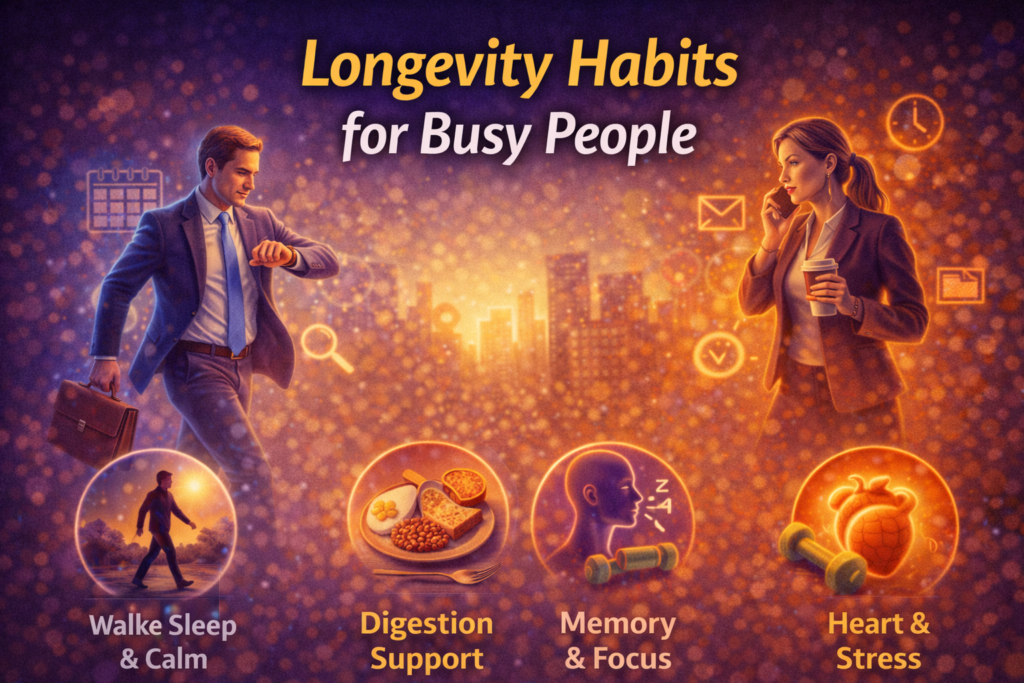
Most longevity habits fall into four pillars:
- Move — keep muscles, heart, and joints strong
- Eat — support blood sugar, inflammation, and energy
- Rest — repair, recover, and regulate appetite hormones
- Calm — reduce the chronic stress load that speeds up ageing
You don’t need perfect routines. Instead, you need a small amount, repeated often. That’s how habits stick — and that’s how results compound.
2. The 5 Habits Every Beginner Should Start With
A) Walk more (aim for 7,000–8,000 steps, or add 10–15 minutes)
Walking is one of the best beginner habits because it supports blood sugar, heart health, mood, and recovery. In addition, it’s low stress and easy to repeat.
If you’re starting from a low baseline, keep it simple:
- add a 10-minute morning or lunchtime walk
- add a 5–10 minute after-meal walk
Helpful next reads: Walking as a Longevity Superpower and Why Walking After Meals Extends Lifespan.
B) Eat a protein-rich, balanced first meal
A protein-focused first meal often stabilises blood sugar and reduces cravings later. As a result, energy tends to feel steadier.
A simple target is:
- 20–30g protein (more is fine if it suits you)
- plus fibre and a little healthy fat
Easy examples:
- Greek yoghurt with berries + nuts
- eggs with veg + wholegrain toast
- smoothie with protein powder, spinach, and berries
- beans on wholegrain toast with a side of fruit
If you want a broader food framework, see: Optimal Longevity Diet and Blood Sugar and Longevity.
C) Add one simple strength session (3× per week)
Strength training is a cornerstone of healthy ageing. That said, beginners don’t need complicated programs.
Start with just a few movements:
- sit-to-stand (or bodyweight squats)
- push-ups (wall, counter, or floor)
- a “pull” pattern (rows with a backpack, towel rows, or bands if you have them)
Do 2–3 sets, at an effort that feels challenging but safe. Then, build slowly.
Next read: Exercises for Longevity.
D) Improve sleep with one small change
Sleep is where a lot of recovery happens. Therefore, one small shift can make a big difference over time.
Choose just one:
- set a consistent bedtime window
- stop screens 30 minutes before sleep
- keep the room cooler and darker
- do 5–10 minutes of stretching + slow breathing
Next read: Sleep for Longevity.
E) Use one daily “stress-down” tool
Stress isn’t the enemy. However, staying “stuck on” all day is a problem. A short reset helps you come down faster.
Pick one option and repeat it daily:
- 60 seconds of slow exhales (exhale longer than inhale)
- 5–4–3–2–1 grounding (senses-based)
- a 2-minute outdoor break
- a short “shake & reset” to release tension
Next reads: Stress and Longevity and Movement for Stress & Recovery.
3. The Beginner Longevity Framework
If you want to avoid overwhelm, use three rules.
✓ One habit per pillar
To begin with, pick one habit from each pillar:
- Move: daily walking
- Eat: protein-first meal
- Rest: one sleep improvement
- Calm: one daily reset
✓ Habit stacking
Next, attach a new habit to something you already do:
- after brushing teeth → 60-second breathing reset
- after dinner → 10-minute walk
- while the kettle boils → 10 sit-to-stands
✓ Low-friction versions
Finally, choose the easiest version that you’ll actually do. Later, you can increase time or intensity.
4. A Simple Weekly Longevity Plan for Total Beginners
This plan is minimal, low stress, and equipment-free.
- Daily: 10–15 minute walk + 60-second breathing reset
- 3× per week: simple strength circuit (squat, push, pull)
- Most days: protein-focused first meal
- Evenings: one small sleep-supporting habit
Total time commitment: 15–20 minutes per day on average.
5. Quick Wins
- walk after your largest meal for an easy metabolic win
- keep a water bottle visible so hydration becomes automatic
- prep 2–3 breakfast options so mornings feel easier
- do strength sessions earlier in the day if you tend to skip them later
- choose the “easy version” now, then upgrade later
6. What Not to Do
- don’t overhaul everything at once
- don’t rely on supplements before foundations
- don’t punish yourself for missed days — restart at the next opportunity
- don’t copy advanced influencer routines
- don’t obsess over perfect numbers — consistency wins
7. How to Know If You’re Progressing
You don’t need fancy metrics at the start. Instead, watch for simple signals:
- walking feels easier (less puffed, quicker recovery)
- sleep improves (faster to fall asleep, fewer wake-ups)
- energy is steadier across the day
- cravings feel calmer
- you bounce back faster after stress
Small improvements may feel slow day-to-day. However, they compound massively over months.
8. FAQs
How long until I feel better?
Many beginners notice changes within 7–14 days, especially steadier energy and better sleep. Deeper metabolic changes usually take weeks.
Can I do more than this?
Yes. However, build the base first. Once these habits feel automatic, you can add Zone 2, a structured strength plan, or bigger nutrition changes.
Do I need supplements?
Not initially. For most beginners, food, movement, sleep, and stress habits deliver the biggest return.
Do I need a gym?
No. You can make real progress with walking and a few bodyweight movements.
9. UK-Specific Notes
- use short outdoor walks whenever weather allows — even grey daylight still helps your body clock
- on rainy days, pace indoors or use stairs to keep steps up
- parks and local footpaths are ideal for “movement snacks” during breaks
- seasonal daylight changes make a consistent evening wind-down even more useful
If You Take One Thing From This…
Start with the smallest habits you can repeat — not the biggest habits you can imagine. Longevity is built on consistency, not intensity.
Want the full Environment & Lifestyle system?
The Blueprint pulls these habits into a simple structure you can follow week after week — without overwhelm.
Related Articles
- Daily Longevity Checklist
- Walking as a Longevity Superpower
- Why Walking After Meals Extends Lifespan
- Sleep for Longevity
- Stress and Longevity
References
- World Health Organization. Physical activity recommendations and guidance.
- Paluch AE et al. Steps per day and all-cause mortality. JAMA.
- DiPietro L et al. Light activity and post-meal glucose control. Sports Medicine.
- St-Onge M-P et al. Sleep and cardiometabolic health. Circulation.
— Longevity Simplified

Simon is the creator of Longevity Simplified, where he breaks down complex science into simple, practical habits anyone can follow. He focuses on evidence-based approaches to movement, sleep, stress and nutrition to help people improve their healthspan.