Environment • Lifestyle • Defaults
Environment & Lifestyle Blueprint
The everyday inputs that quietly shape how you age — and how to improve them without turning your life into a project.
Most people think longevity is about discipline. I’ve come to see it differently: it’s about what your environment makes effortless, and what it makes difficult.
Key takeaways
- Longevity is shaped by environment. Your body responds continuously to air, light, stimulation, routines, and habits.
- Small daily inputs compound. Quiet, consistent exposures matter more than occasional extreme interventions.
- Change defaults, not discipline. A supportive environment reduces reliance on willpower.
- Reduce before you add. Lower chronic stressors first, then layer improvements slowly.
- You don’t need perfection. “Good enough” environments that stick beat optimal plans that collapse.
Your body is constantly responding to inputs you barely notice — the air you breathe, the light you wake to, the noise and stimulation around you, and the routines (or chaos) that shape your days. These aren’t dramatic “biohacks”. However, they’re quiet, chronic signals — and over years they can tilt your healthspan in either direction.
This blueprint gives you a simple framework to improve your environment and lifestyle without obsessing. If you’re new to the topic, it’s also worth starting with Longevity Foundations — especially: Why Longevity Matters, Hallmarks of Ageing, Autophagy, Metabolic Flexibility, and The Longevity Equation. Those pages explain the “why”; this blueprint focuses on the “how it shows up in real life”.
Table of Contents
The big idea: ageing is environmental
Ageing isn’t caused by one bad meal or one missed workout. It’s shaped by the baseline conditions your body lives in — day after day. In other words: your environment is constantly “training” your biology.
A helpful mental model is this: reduce the chronic load, then add the good stress. When your baseline is calm (cleaner air, better light timing, less stimulation, steadier routines), your body has more capacity to recover, adapt, and stay resilient.
This is why environment changes often feel surprisingly powerful: they work in the background, and they don’t require constant willpower.
Why small inputs compound
Small lifestyle factors matter because they’re frequent. A tiny nudge repeated daily becomes a new default — and defaults beat motivation. It’s the difference between occasional “effort” and an environment that quietly supports you.
I’ve found the simplest approach is to treat lifestyle like a systems problem: identify what consistently drains you (sleep disruption, overstimulation, poor routines), reduce that drain, and then layer improvements slowly.
The 5 domains of environment & lifestyle
These five domains cover most of the “quiet” inputs that shape long-term health. You don’t need to optimise them all. Start with the one that feels easiest — because the goal is momentum, not perfection.
1) Air, light & environmental exposure
Air and light are fundamental inputs. They influence inflammation, sleep quality, energy, and how “stressed” your body feels at baseline. You don’t have to become obsessive — but you do want to avoid obvious chronic stressors (poor indoor air, late-night bright light, inconsistent light timing).
- Read: Air Quality & Longevity
- Read: Cold Exposure for Longevity (as a tool, not a religion)
- Read: Heat Therapy & Sauna for Longevity
Coming soon (Air & Exposure)
- Indoor Air Quality: Simple Fixes That Matter
- Blue Light at Night: Risk, Myth, and Context
- Temperature & Metabolic Health: What to Actually Do
- Hormesis vs Chronic Stress: How to Tell the Difference
2) Technology & cognitive load
Technology isn’t “bad”, but constant input can keep your nervous system switched on. Over time, chronic stimulation can show up as shallow recovery, fractured attention, irritability, and difficulty downshifting.
Coming soon (Tech & Cognitive Load)
- Notification Hygiene: A Simple Ruleset That Works
- Why Boredom Is Good for the Brain
- Low-Stimulation Evenings: The Missing Link for Better Sleep
- Attention Recovery: How to Stop Feeling “Mentally Fried”
3) Daily routines & structure
Routines aren’t about being rigid — they’re about reducing decision fatigue and stabilising your day. Even a few simple anchors (wake time, morning light, a short movement break, a consistent wind-down) can change how your body feels week to week.
- Read: Minimalist Morning Routine for Metabolic Health
- Read: Daily Longevity Checklist You Can Follow
- Read: Healthy Ageing for Desk Workers
Coming soon (Routines)
- Evening Routines That Support Recovery
- Habit Stacking for Longevity (Without Overplanning)
- Weekly Reset Rituals: A 20-Minute System
- Reducing Decision Fatigue: Make “Good” the Default
4) Wearables & feedback loops
Wearables can be brilliant — if you use them as feedback, not judgement. The best approach is to track trends, not daily noise, and treat the data as a guide for behaviour (sleep, recovery, movement), not a scorecard for self-worth.
Coming soon (Wearables)
- HRV Explained Simply: What It Can (and Can’t) Tell You
- How to Use Wearables Without Obsession
- Sleep Scores vs How You Feel: A Practical Interpretation
- Tracking Trends: A Simple Weekly Review
5) Habits & behaviour design
Habits become easy when you reduce friction. Instead of relying on motivation, shape your environment: make healthy options more visible, more convenient, and more automatic. This is where longevity becomes sustainable.
- Read: Longevity Habits for Beginners
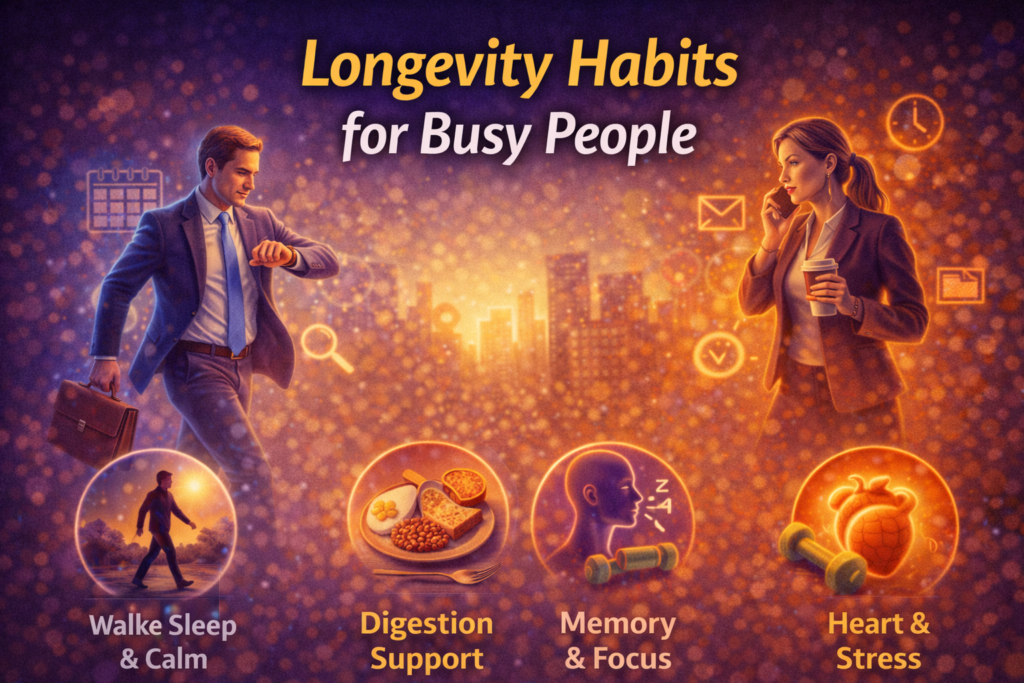
- Read: Longevity Habits for Busy People
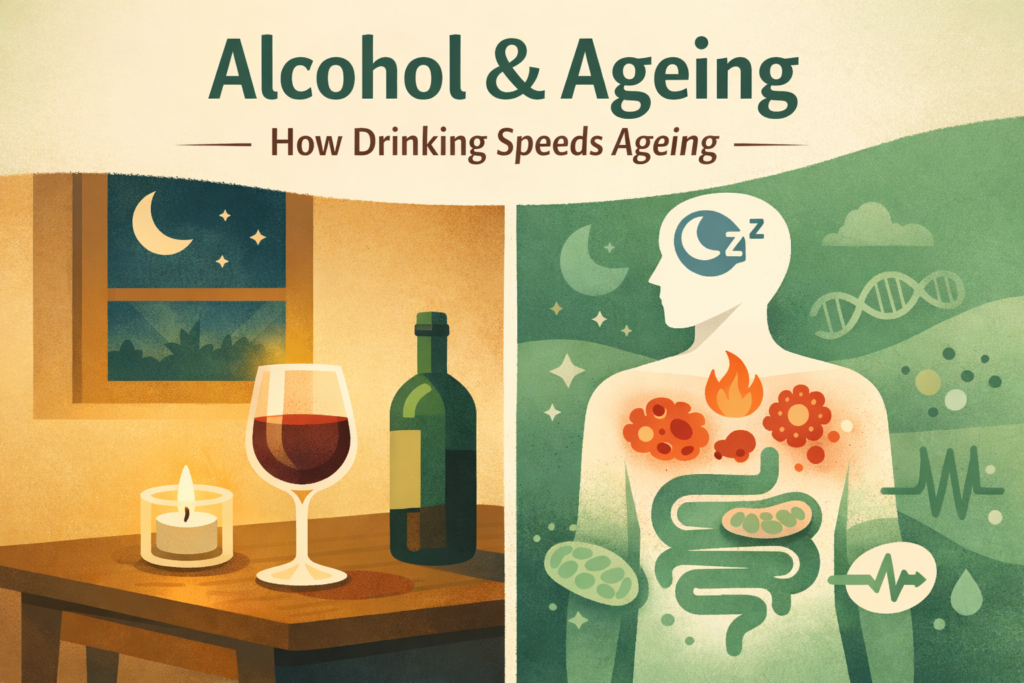
- Read: Alcohol & Ageing: What Science Really Says
Coming soon (Habits)
- Social Connection & Longevity: The Underrated Pillar
- Purpose and Meaning: Why It Changes Health Outcomes
- Designing a Longevity-Friendly Home
- Breaking All-or-Nothing Thinking (So You Don’t Quit)
How to improve lifestyle without overwhelm
Here’s the method I keep coming back to: reduce before you add. Most people try to stack new habits on top of a draining baseline. It works for a week, then life happens.
- Start with the biggest drain. Poor sleep environment, constant stimulation, inconsistent routine — pick one.
- Change the default. Adjust the environment so the better choice is easier than the worse one.
- Keep it small. One change that sticks beats five changes that collapse.
- Reassess monthly. Lifestyle compounds. Give it time to work.
How this fits with your other longevity pillars
Environment & lifestyle isn’t a replacement for the big levers — it’s the foundation that makes them work. If your baseline is chaotic, your nutrition plan becomes fragile, training becomes inconsistent, and recovery becomes shallow.
Sleep & Recovery
Light, temperature, noise, and routines are powerful sleep levers.
Stress & Nervous System
Reducing baseline stimulation helps your system downshift and recover.
Nutrition
Environment shapes what you eat by default (and when you eat it).
Movement & Strength
Daily context determines how much you move without “trying”.
Where to start (quick decision guide)
- If you’re overwhelmed: start with air quality and a calmer evening environment.
- If you’re tired all the time: focus on routines + light timing (and visit Sleep & Recovery next).
- If you’re always “wired”: start with digital overstimulation and low-stimulation evenings.
- If you love data: use wearables to find patterns, not perfection.
- If weekends undo your progress: build a simple weekly reset and reduce alcohol exposure (guide here).
Guides in this hub
Want the organised “map” version? Head back to the hub page: Environment & Lifestyle Hub.
FAQ
Do I need to optimise everything in my environment?
No. Start with one domain that feels easy. The win is changing your defaults so you need less willpower. Lifestyle works best when it’s sustainable.
Is cold exposure or sauna essential for longevity?
They can be useful tools, but they’re optional. If your baseline is poor (sleep, stress load, routines), focus there first. Then layer “good stress” later if it fits your life.
Are wearables worth it, or do they just create anxiety?
They’re worth it if you treat them as trend trackers and behaviour guides. If they increase stress, simplify what you track or take breaks from metrics.
What’s the single highest-impact change for most people?
Usually it’s not one magic thing — it’s reducing the chronic drains: cleaner air indoors, less late-night bright light, and lower stimulation in the evening. Those changes improve recovery and make everything else easier.
How does this relate to the Hallmarks of Ageing?
The Hallmarks describe mechanisms; environment and lifestyle influence the upstream signals that nudge those mechanisms over time. If you want the deeper “why”, read Hallmarks of Ageing and then return here for the practical layer.
Disclaimer
This article is for educational purposes only and does not provide medical advice. If you have a medical condition, take medication, or have concerns about symptoms, speak with a qualified healthcare professional.
Final takeaway
You don’t need a perfect lifestyle. You need an environment that makes good choices easier than bad ones — and a few simple routines that keep your baseline calm enough to recover.
When you’re ready, go back to the hub and pick one domain to improve this week: Environment & Lifestyle Hub.
— Longevity Simplified
References
- World Health Organization (WHO) — Air pollution and health (overview and health impacts). Source
- National Institute on Aging (NIA) — Lifestyle factors and healthy ageing (general guidance). Source
- Centers for Disease Control and Prevention (CDC) — Alcohol and health (public health guidance). Source
- National Institutes of Health (NIH) — Sleep and circadian rhythm basics (background reading). Source

Simon is the creator of Longevity Simplified, where he breaks down complex science into simple, practical habits anyone can follow. He focuses on evidence-based approaches to movement, sleep, stress and nutrition to help people improve their healthspan.