Biology • Mechanisms • Healthspan
Biology of Ageing Explained Simply: The Mechanisms That Drive Healthspan
A clear “under-the-surface” map of why we age — and which levers reliably improve resilience, repair, energy, and long-term risk.
Disclaimer: This article is for educational purposes only and does not constitute medical advice. If you have a medical condition or take medication, speak with a qualified clinician before changing diet, training, sauna/cold exposure, or supplements.
Most longevity advice tells you what to do — walk more, lift weights, eat better, sleep properly. However, the real advantage comes when you understand why those habits work.
In practice, ageing is not random. It’s a set of repeatable biological processes: damage accumulates, repair slows, energy becomes less efficient, inflammation rises, and metabolic signalling drifts.
Personal note: the moment longevity clicked for me was realising most “protocols” are just different ways of turning the same few dials — sleep, movement, metabolic health, stress load, and recovery. Once you see the dials, hype gets easier to ignore.
In this guide, you’ll learn:
- a simple model of ageing you can remember
- the 6 key mechanism clusters that show up in almost every longevity conversation
- which practical hubs to use to apply each mechanism
- where to go next inside Longevity Simplified
Foundations (optional but helpful)
If you want the big picture first, these are the core foundations:
1) The simple explanation
Your body is constantly balancing two forces: damage and repair. Ageing speeds up when damage piles up faster than repair can keep up.
The good news is that a small set of habits moves many mechanisms at once: movement, sleep, metabolic health, stress regulation, and sensible recovery. Therefore, the goal is not “biohacking” — it’s consistent signals.
2) The 6-dial model of ageing (a mental model that works)
If you remember nothing else, remember this: most longevity strategies are turning one (or more) of these six dials.
- Repair & recycling (cleanup, maintenance, protein quality control)
- Energy production (mitochondria, recovery capacity, resilience)
- Redox balance (oxidative stress vs antioxidant systems)
- Inflammation (senescence, immune ageing, “inflammaging”)
- Resilience (hormesis: appropriate stress + recovery)
- Metabolic signalling (insulin resistance, appetite hormones, nutrient sensing)
Next, we’ll map each dial to your existing Biology posts — and show where to go to apply it (nutrition, movement, sleep, stress).
3) Cellular damage & repair
Ageing accelerates when damage builds up and repair systems fall behind. This includes protein quality control, cellular cleanup, and recycling pathways.
- Start here: Protein Folding & Repair
- Core pillar: Autophagy Explained Simply
What tends to move this dial: resistance training, adequate protein, sleep, energy balance, and metabolic flexibility.
Apply it via: Movement & Strength • Nutrition • Sleep & Recovery
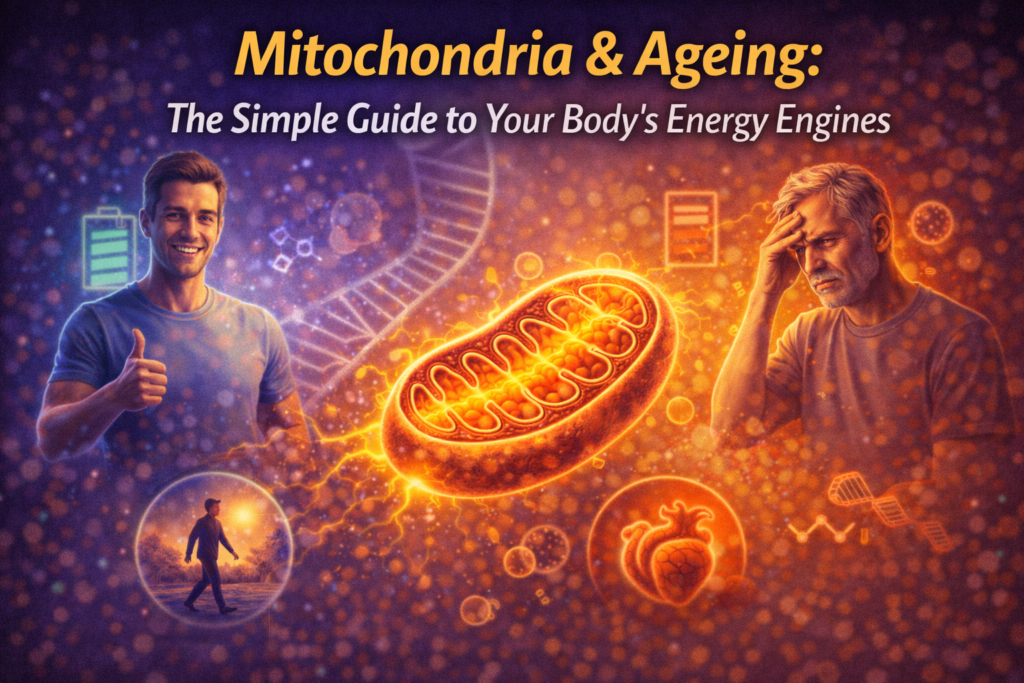
4) Mitochondria & energy decline
Mitochondria are your cell “energy engines”. When they become less efficient, recovery slows, mood and cognition can dip, and metabolic health tends to drift.
- Start here: Mitochondria & Ageing: The Simple Guide
- Support tool (if relevant): CoQ10 & Ubiquinol (your existing post)
What tends to move this dial: Zone 2 cardio, strength training, sleep consistency, and reducing chronic stress load.
Apply it via: Zone 2 • Movement & Strength • Sleep & Recovery
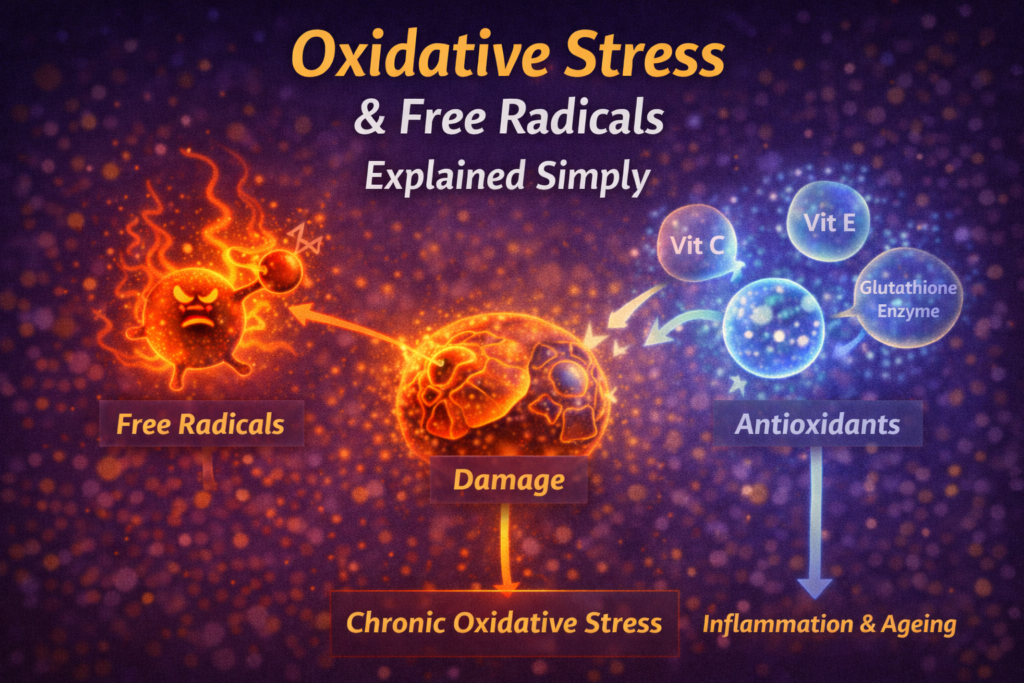
5) Oxidative stress & redox balance
“Free radicals” aren’t the villain — imbalance is. Oxidative stress rises when stressors outweigh recovery and antioxidant systems.
- Start here: Oxidative Stress & Free Radicals Explained Simply
- Support tool (if relevant): NAC (your existing post)
What tends to move this dial: sleep, exercise (right dose), whole-food nutrition, and lowering chronic inflammation drivers.
Apply it via: Anti-inflammatory foods • Sleep & Recovery • Stress & Nervous System
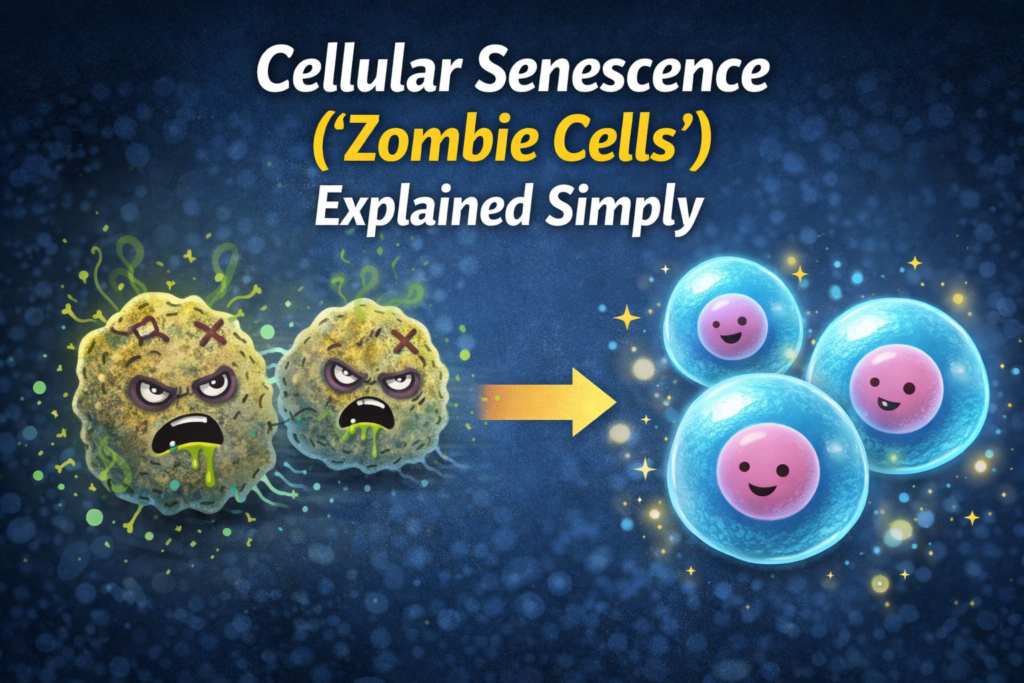
6) Cellular senescence & inflammation
Senescent (“zombie”) cells can linger and broadcast inflammatory signals. Over decades, this contributes to “inflammaging” and declining tissue function.
What tends to move this dial: movement, muscle maintenance, sleep, gut health foundations, and reducing chronic stress.
Apply it via: Movement & Strength • Sleep & Recovery • Nutrition
7) Hormesis & resilience
Hormesis is a simple idea: the right dose of stress, paired with recovery, builds resilience. The key is dose — too little does nothing, too much backfires.
- Start here: Hormesis Explained Simply
- Practical tools: Cold Exposure • Heat Therapy & Sauna (your slug may differ; keep your existing)
What tends to move this dial: exercise, temperature stressors (carefully), and recovery hygiene (sleep, nutrition, deloads).
Apply it via: Movement • Stress regulation • Sleep
8) Metabolic signalling & ageing drivers
Metabolic health acts like a master control dial. When insulin resistance rises and appetite signalling gets dysregulated, many downstream ageing pathways worsen.
- Start here: Insulin Resistance — The Hidden Metabolic Driver of Ageing
- Helpful next: GLP-1 & Satiety Hormones (Natural Support)
- Core foundation: Metabolic Flexibility Explained Simply
What tends to move this dial: strength training, walking after meals, protein-first meals, sleep, and stress reduction.
Apply it via: Blood Sugar & Longevity • Nutrition • Movement
9) How to apply this without obsessing
Mechanisms are useful, but only if they lead to repeatable actions. A simple way to “use the biology” is to pick one lever per pillar and keep it boring:
- Movement: daily steps + 2–3 strength sessions/week
- Metabolic: protein-first meal + short post-meal walk
- Recovery: consistent sleep window
- Stress: 1–2 minutes of downshifting between tasks
Want the simplest “do this most days” template?
The Daily Longevity Checklist turns these mechanisms into a calm default day you can actually stick to.
10) FAQs
Do I need to understand biology to improve longevity?
No. However, it helps you prioritise and avoid hype. Understanding mechanisms makes habits feel more “logical” — which improves consistency.
What’s the single highest-return lever?
If I had to choose one, it’s metabolic health (movement + muscle + stable blood sugar). It touches almost everything else.
Is inflammation always bad?
No. Acute inflammation is part of repair. The issue is chronic inflammation and persistent inflammatory signalling over years.
Are cold/heat exposure necessary?
No. They can be useful tools, but they’re optional. Build foundations first: movement, sleep, nutrition, stress regulation.
If you take one thing from this…
Most longevity advice is just different ways of turning the same six dials. Learn the dials once, then keep your habits simple and repeatable.
References
- World Health Organization. Physical activity guidelines and health recommendations.
- NIA (National Institute on Aging). Healthy ageing overview and lifestyle factors (public guidance).
- Primary research & reviews on the “hallmarks of ageing” framework and related mechanisms (overview level).
If you want a mainstream, plain-English overview of healthy ageing from a public institution, start with the National Institute on Aging (NIA) healthy aging guide.
— Simon, Longevity Simplified

Simon is the creator of Longevity Simplified, where he breaks down complex science into simple, practical habits anyone can follow. He focuses on evidence-based approaches to movement, sleep, stress and nutrition to help people improve their healthspan.