Autophagy: What It Is and How to Activate It
Your body’s built-in recycling system, explained simply – and how to support it with realistic daily habits.
Table of contents
Your body’s built-in repair and recycling system, explained in simple terms.
Autophagy is one of the most important processes for long-term health and longevity. It is your body’s method of cleaning out damaged cells, removing waste and recycling the useful parts so your tissues keep working smoothly. Think of it as a deep-clean cycle running inside your cells.
The word “autophagy” literally means self-eating, but not in a harmful way. It is how your body gets rid of broken proteins, faulty mitochondria and cellular junk that would otherwise build up and accelerate ageing.
As we get older, autophagy tends to slow down. That can contribute to higher inflammation and slower repair. The good news is that you can support autophagy through simple lifestyle choices – without extreme dieting or complicated routines.
If you have not yet read the earlier Foundations articles, it helps to start with Why longevity matters and The nine hallmarks of ageing.
Note: This article is for education only and is not medical advice. If you have a health condition, take medication or have a history of disordered eating, speak with your GP or a qualified clinician before changing eating patterns, training, or heat/cold routines.
What autophagy actually is
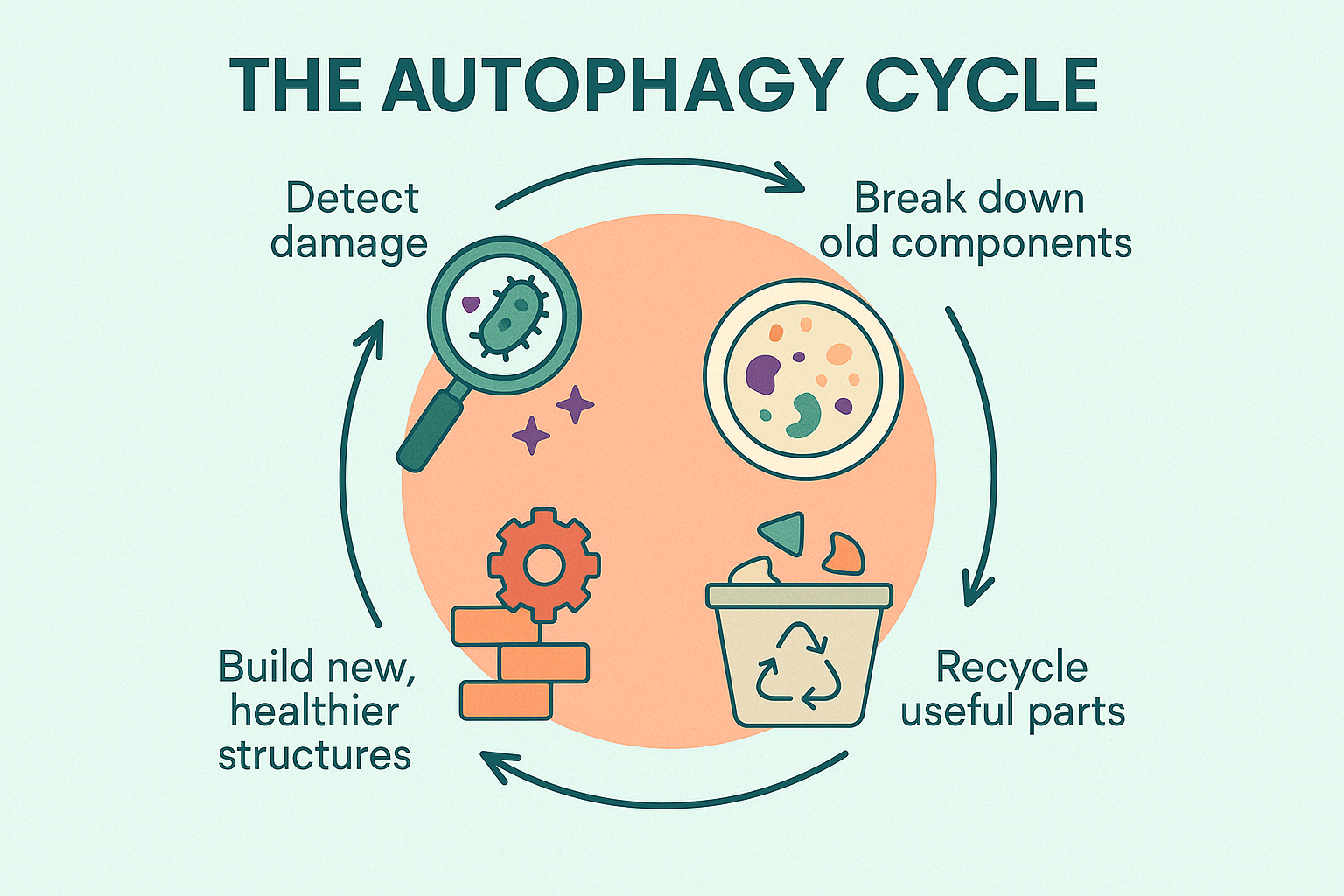
Every cell in your body produces waste. Proteins become damaged, mitochondria wear out and bits of broken material accumulate. Autophagy identifies this debris, wraps it up, breaks it down and recycles what can be reused as fresh building blocks.
Without autophagy, cells gradually become cluttered and less efficient. With regular autophagy, cells stay more responsive and resilient to stress. In other words, autophagy is one of the ways your body maintains internal “housekeeping” as you age.
Why autophagy matters for ageing
Autophagy supports several of the major hallmarks of ageing by helping cells stay clean and functional. It is not the only lever, but it is a central one.
- Reduces cellular clutter: clearing damaged proteins and organelles reduces chronic stress inside tissues.
- Supports mitochondrial health: removes worn-out mitochondria so newer, more efficient ones can form.
- Improves energy reliability: cleaner cells can produce energy more consistently.
- Supports brain health: contributes to clearing proteins linked with cognitive decline.
- Works quietly in the background: many longevity-friendly lifestyles naturally include habits that nudge autophagy gently and repeatedly.
You do not need to obsess over the biology. It is enough to understand that autophagy is one of the body’s core repair tools – and that everyday habits either support it or get in its way.
How to activate autophagy (science + practical levers)
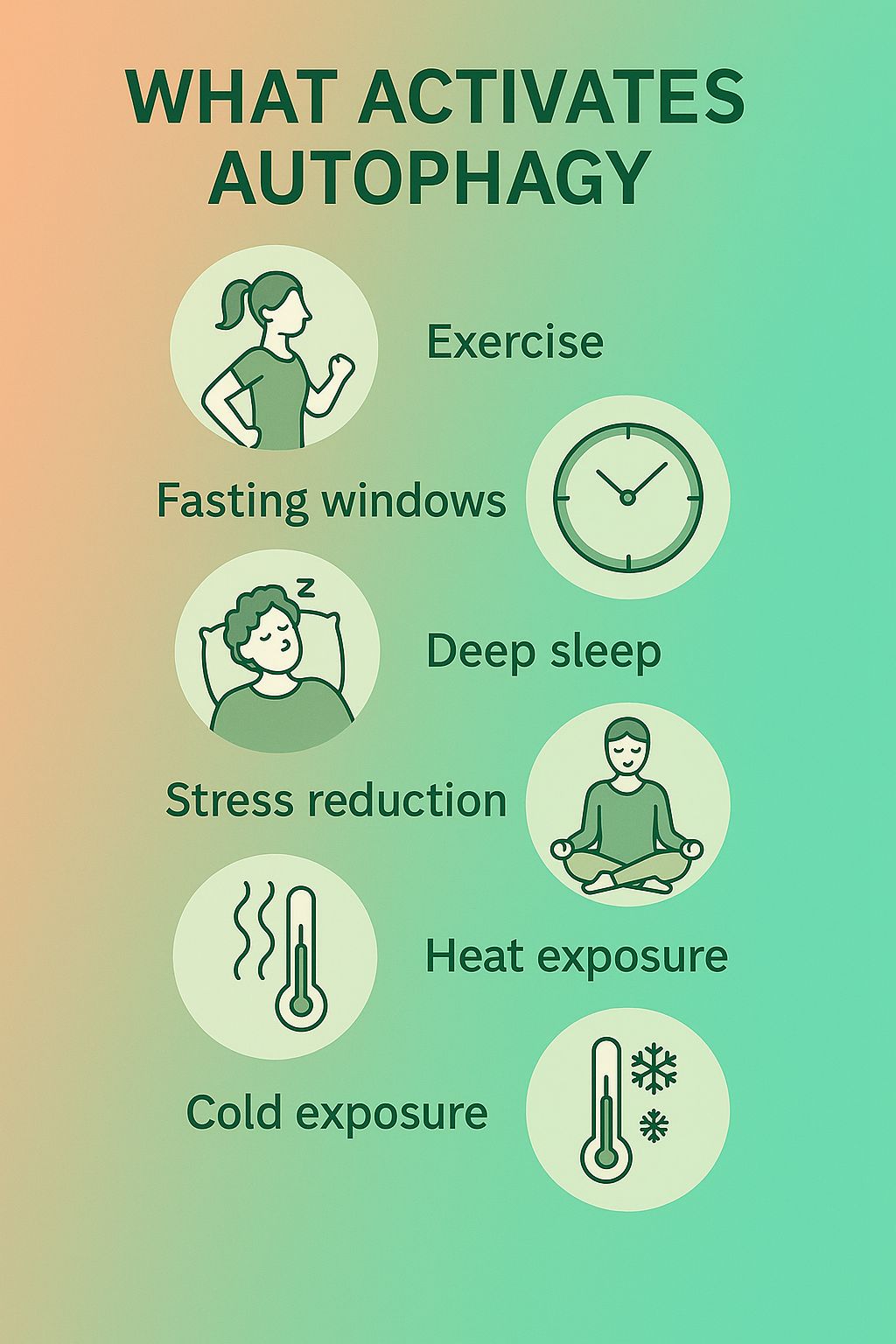
Autophagy rises when the body senses controlled, manageable “cellular stress” – for example, a break from constant eating, movement that challenges your muscles, or short exposure to heat or cold. These signals tell your cells to clear out damaged parts and improve efficiency.
Below are the most reliable, science-aligned ways to stimulate autophagy in a safe, realistic way.
1. Time-restricted eating (TRE)
When you stop eating for a period of time, insulin levels tend to fall and the body shifts away from constant “growth mode” toward more repair and maintenance. Autophagy rises gradually as your body gets a consistent break from constant nutrient intake.
- Science: Lower insulin and lower circulating amino acids can support cellular clean-up pathways.
- Practical: Start with a 12-hour eating window (for example, 8 a.m.–8 p.m.). Only experiment with 14–16 hours if you feel well and your life supports it.
- Tip: You do not need long or extreme fasts. Gentle, repeatable patterns beat occasional “heroic” fasts for most people.
2. Exercise (especially Zone 2, plus optional intensity)
Movement increases energy demand and creates a healthy form of cellular stress. This supports autophagy in muscle cells and improves mitochondrial turnover – the removal of older, less efficient mitochondria.
- Science: Exercise influences AMPK, a key energy sensor linked to autophagy and better fuel use.
- Practical: Build around regular Zone 2 cardio and 2–3 short strength sessions per week.
- Tip: Even brisk walking, done consistently, creates the right kind of “good stress” for your cells.
3. Sleep (your overnight repair window)
Autophagy and related “clean-up” processes rise during sleep, supporting repair and waste clearance – especially in the brain. If sleep is poor, many longevity systems run less efficiently even if diet and exercise are good.
- Science: Deep sleep supports waste clearance and cellular maintenance.
- Practical: Protect a regular sleep window, keep your bedroom cool and dark, and avoid heavy meals right before bed.
- Next read: How to improve sleep for longevity.
4. Heat exposure (sauna)
Short bouts of heat stress (like sauna) increase heat shock proteins. These help stabilise damaged proteins and support resilience, which connects to proteostasis and autophagy.
- Science: Heat shock proteins assist protein folding and cellular resilience.
- Practical: If it is safe for you, 10–20 minutes in a sauna 2–3 times per week is a realistic starting point.
- Tip: Hydrate, and step out sooner if you feel light-headed or unwell.
5. Mild cold exposure (cool showers)
Cold exposure activates energy and stress-resilience pathways. Over time, this can support metabolic health and mitochondrial function, which often overlaps with autophagy-supporting signalling.
- Science: Cold can influence pathways related to energy sensing and metabolic adaptation.
- Practical: Start with 20–30 seconds of cool water at the end of your normal shower, then extend gradually if it feels okay.
- Tip: You do not need ice baths. Small, repeatable doses are enough for most people.
Common mistakes when trying to boost autophagy
Because autophagy sounds powerful, it is easy to chase extreme protocols. In reality, going too far can backfire and harm the very systems you are trying to support.
- Over-fasting: Very long or frequent fasts can raise stress hormones, reduce muscle mass and worsen energy.
- Skipping protein: Autophagy does not replace the need for protein. You still need enough protein for repair and muscle maintenance.
- Training too hard while fasting: Intense workouts + long fasts can increase fatigue and slow recovery.
- Using autophagy as a “hack”: It works best as part of a balanced lifestyle, not an occasional extreme intervention.
A useful rule: if your autophagy plan leaves you constantly exhausted, cold, irritable or obsessing about food, it is probably too aggressive. Gentle, sustainable habits win over the long term.
Who should be cautious
Autophagy-supporting practices can be helpful for many people, yet some groups need extra care or personalised guidance before changing eating patterns or adding heat/cold exposure.
- People with diabetes, reactive hypoglycaemia or blood sugar instability
- Anyone underweight, very frail or with a history of disordered eating
- Pregnant or breastfeeding individuals
- People on medication that requires food at set times
- Anyone with cardiovascular disease or low blood pressure (especially with sauna use)
- Those with conditions affected by cold exposure, such as Raynaud’s phenomenon
If you fall into one of these groups, focus first on sleep, gentle movement and food quality, and ask your clinician before introducing fasting, sauna or cold therapy.
A simple weekly protocol to support autophagy
You do not need extreme fasting or complicated schedules. A consistent, balanced approach tends to work better and supports several hallmarks of ageing at the same time.
- Daily:
- Use a gentle 12–14 hour overnight break from eating (for example, 8 a.m.–8 p.m. or 9 a.m.–7 p.m.).
- Move most days (walking counts). Add regular Zone 2 sessions when possible.
- Base meals on whole foods with enough protein, fibre and healthy fats.
- Protect sleep with a consistent schedule (see sleep for longevity).
- If tolerated, add a short cool finish to showers (20–60 seconds).
- 2–3 times per week:
- Strength training sessions to protect muscle and metabolic health.
- Optional: brief higher-intensity intervals if you are healthy and cleared for it.
- Optional: 10–20 minutes of sauna or other safe heat exposure where available.
- Once per week (optional):
- Try one slightly longer overnight break (14–16 hours) only if you feel well and it does not disrupt sleep, mood or training.
- Plan a “restorative day” focused on walking, hydration, calm and early bedtime.
This approach stimulates autophagy quietly in the background, while still protecting muscle, hormones and energy. You can dial it up or down depending on age, health status and how you feel week to week.
FAQs
How long do I need to fast to trigger autophagy?
There is no single exact hour at which autophagy “switches on”. It happens at a low level all the time and increases gradually as your body spends more time without food. For most people, regular 12–14 hour overnight breaks from eating, plus food quality and movement, are a safe starting point.
Does coffee during a fast stop autophagy?
Plain black coffee is unlikely to fully switch off fasting-related signalling for most people, especially in modest amounts. Adding sugar, milk or cream adds calories and can reduce the fasting signal. If you are experimenting, start with water or herbal tea and add coffee later if you tolerate it.
Is autophagy just another weight-loss tool?
No. Weight can change when you adjust eating windows and activity, but autophagy is primarily a repair and recycling process. The goal is healthier, more resilient cells — not simply a lower number on the scale. Protecting muscle and energy matters, too.
Are there supplements that boost autophagy?
Some compounds are being researched for their effects on autophagy, but evidence is still evolving and they are not a shortcut. In practice, lifestyle levers like sleep, movement and nutrition matter most. If you are considering supplements, discuss them with a clinician who understands your history.
References
Key scientific papers and reliable sources behind this simplified guide:
- Levine B. & Kroemer G. (2019). Biological Functions of Autophagy Genes. Cell.
- Mizushima N. & Komatsu M. (2011). Autophagy: Renovation of Cells and Tissues. Cell.
- López-Otín C. et al. (2013). The Hallmarks of Aging. Cell.
- Yoshimori T. (2014). Autophagy and Longevity. Nature Reviews Molecular Cell Biology.
- Madeo F. et al. (2015). Caloric Restriction and Autophagy. Nature Reviews Molecular Cell Biology.
- Mattson M. (2019). Effects of intermittent fasting on health, aging, and disease. New England Journal of Medicine.
- Research on exercise & autophagy (reviews across physiology and sports medicine literature).
These references contain the detailed mechanisms behind autophagy. Here we focus on practical takeaways so you can support healthy cellular recycling in everyday life.
Next steps: make autophagy part of the bigger longevity picture
Autophagy is one of the body’s key repair processes. It clears damaged parts, supports mitochondrial health, lowers inflammation and helps tissues stay resilient. You do not need extreme protocols to benefit. Simple habits — regular movement, balanced meals, consistent sleep and manageable metabolic “stress” — support autophagy steadily.
To see how autophagy fits into the wider biology of ageing, revisit the nine biological hallmarks of ageing. For practical habits that complement autophagy, you might also like:
- Best exercises for longevity (no gym required)
- How to improve sleep for longevity
- Blood sugar and longevity
- Stress and longevity
Next in the Foundations series: Metabolic flexibility explained simply.
Want a simple, printable starting point? Our free Longevity Starter Guide brings together movement, nutrition, sleep and stress into one easy daily routine.
Written by Longevity Simplified – turning complex longevity science into simple daily actions.
Affiliate Disclaimer: Some links may be affiliate links. If you click and purchase, we may earn a small commission at no extra cost to you. We only recommend products we believe offer good quality and value.
Medical Disclaimer: This content is for information only and does not replace personalised medical advice. Always consult your doctor or a qualified health professional before making significant changes to diet, exercise, fasting, sauna or cold exposure.

Simon is the creator of Longevity Simplified, where he breaks down complex science into simple, practical habits anyone can follow. He focuses on evidence-based approaches to movement, sleep, stress and nutrition to help people improve their healthspan.