Stress • Nervous System • Foundations
Stress and Longevity: Simple Ways to Calm Your Body and Age Better
Chronic stress quietly accelerates ageing — but simple, daily habits can help your body switch from “fight or flight” back into “rest and repair”. This guide keeps it practical, science-informed and easy to follow.
Longevity isn’t just about your genes or how many steps you walk. Your stress levels — and how well your body recovers from them — play a huge role in how you age.
Short bursts of stress are normal and sometimes helpful. They help you focus, respond to danger and get things done. The problem is chronic stress — the kind that never really switches off. Over months and years, it can raise inflammation, disturb sleep, alter hormones, and quietly speed up biological ageing.
If you’re building the bigger picture, you may also find it useful to read: Why longevity matters and The nine hallmarks of ageing. Stress management is a core pillar alongside sleep, movement and nutrition.
How I Noticed Stress Affecting My Own Health
For a long time, I judged my stress by how busy my diary looked. If I wasn’t in a crisis, I assumed I was “fine”. What gave the game away were the quieter patterns: waking up at 3 a.m. with my mind racing, needing more caffeine to get going, and feeling wired but exhausted by the end of the week.
Small changes made the biggest difference. Short walks outside between tasks, a few minutes of slow breathing before bed, and deliberately protecting my sleep window did more for my sense of calm than any big mindset overhaul.
My aim isn’t to avoid stress completely — that isn’t realistic — but to give my body enough chances each day to drop back into “rest and repair”. That’s the mindset behind this guide.

Why Stress Matters for Longevity
Stress is your body’s built-in alarm system. When something feels threatening — a deadline, an argument, a near-miss in traffic — your body releases hormones like adrenaline and cortisol to help you react quickly. In short bursts, this is protective.
The problem comes when that alarm system is left switched on for too long. Chronic stress keeps your body in a low-level “fight or flight” state, even when nothing dangerous is happening. Over time, this can:
- Raise inflammation, one of the key drivers of accelerated ageing
- Disrupt sleep quality, reducing repair and recovery overnight
- Increase cardiovascular strain (blood pressure, heart rate, tension)
- Destabilise blood sugar, increasing crashes, cravings and fatigue
- Shift immune balance, leaving you more run-down
Learning to regulate stress doesn’t mean living a life with no challenges. It means helping your body return to baseline more often — the state that supports repair.
If stress is affecting your sleep, start here next: Nervous System Reset Techniques and Breathwork That Lowers Cortisol Fast.
You can also find practical resources on the NHS mental health self-help page .
What Stress Does Inside Your Body
Think of stress as short-term survival mode. When it’s active, your body shifts resources away from long-term repair and towards immediate action. Staying stuck there speeds up ageing biology.
- Fight-or-flight stays switched on: tension, alertness, irritability, rumination.
- Stress hormones stay elevated: cortisol and adrenaline remain high, affecting mood, appetite and energy.
- Inflammation creeps up: chronic stress is linked with higher inflammatory signalling.
- Blood sugar becomes less stable: stress raises glucose, then you crash and crave quick fixes.
- Sleep and recovery suffer: difficulty falling asleep, early waking, fragmented nights.
- Immune function shifts: more “run-down” days, slower bounce-back.
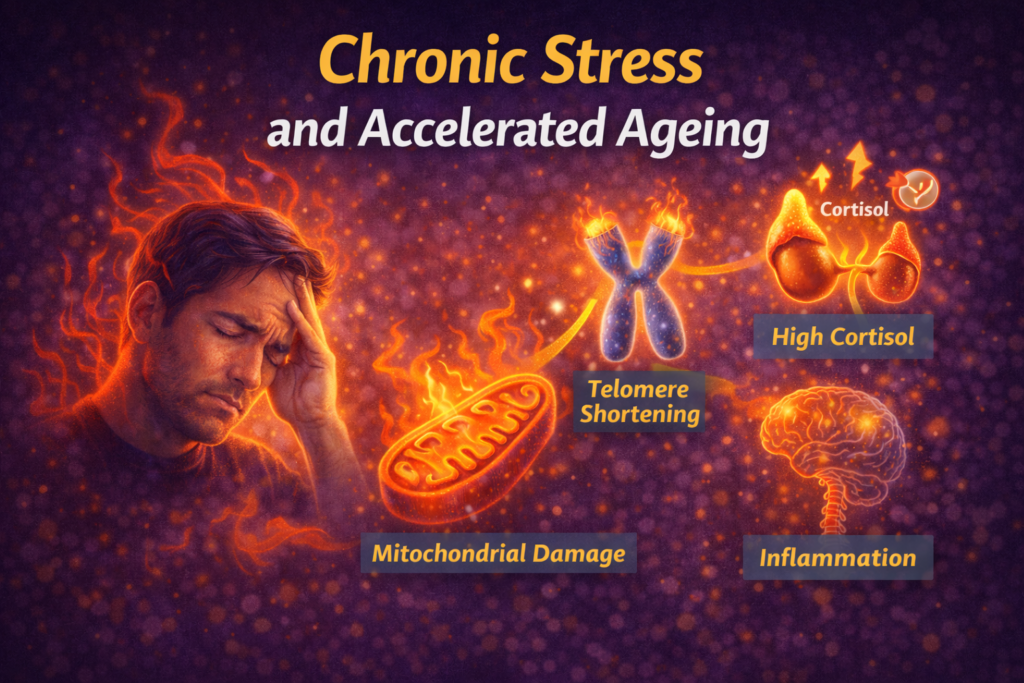
The takeaway: short stress is normal. Long-term, unrelieved stress load is the issue. If you want the deeper biology (and why this accelerates ageing), read: Chronic Stress and Accelerated Ageing.
Signs of Chronic Stress You Shouldn’t Ignore
Stress doesn’t always look like panic. Often, it’s gradual. If several show up regularly, your system may be stuck in a stress loop:
- Tired but wired: exhausted but can’t switch off, especially at night
- Sleep issues: trouble falling asleep, waking at 3–4 a.m., waking unrefreshed
- Tension: jaw, shoulders, headaches, neck pain
- Digestive changes: heartburn, churning stomach, bloating during stress
- Short fuse or overwhelm: snappy, tearful, overstimulated
- Cravings: sugar/caffeine/alcohol as quick relief
- Run-down: frequent colds or slow recovery
If anxiety is a big part of your pattern, go here next: Anxiety, Cortisol & Ageing.
Simple, Science-Backed Ways to Reduce Stress
You don’t need exotic retreats. You need small, repeatable “downshifts” that tell your body it’s safe enough to recover. The goal is to reduce total cortisol load over the day, not create a perfect routine.
1) Use Your Breath to Calm Your Nervous System
Slow breathing is one of the fastest ways to shift out of “alarm mode”. It increases parasympathetic activity — the branch responsible for rest and repair.
- 4–6 breathing: in for 4 seconds, out for 6 seconds (1–3 minutes)
- Box breathing: in 4 → hold 4 → out 4 → hold 4
- Use it before bed, between tasks, or during a spike of stress
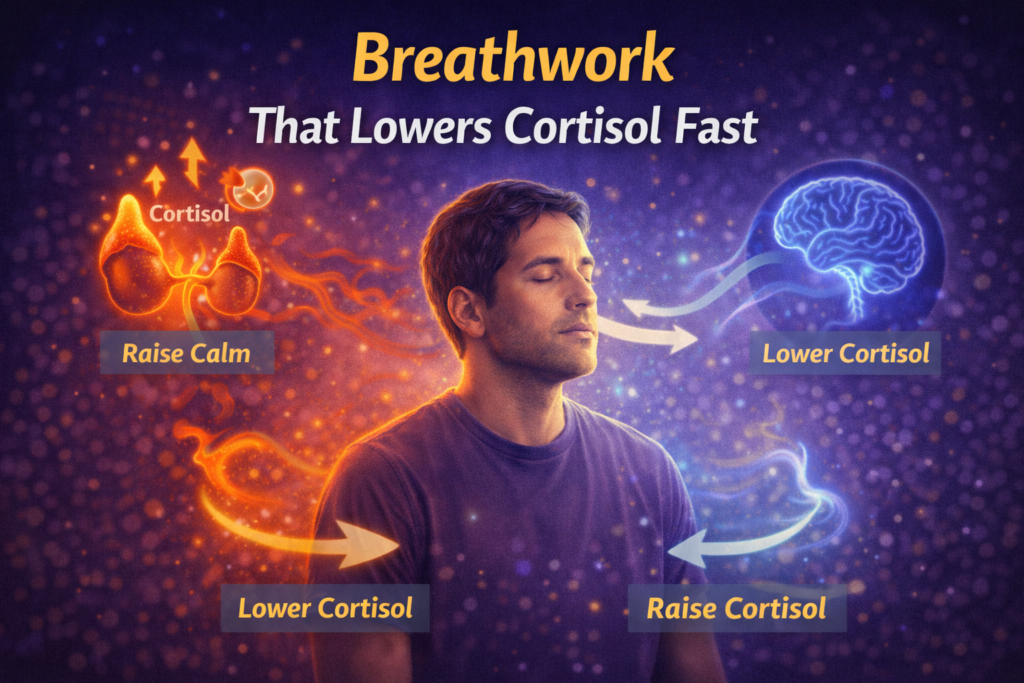
If you want a quick, structured approach: Breathwork That Lowers Cortisol Fast and Nervous System Reset Techniques.
2) Move Gently but Regularly
Movement is one of the most reliable stress regulators. It helps metabolise stress hormones, improves mood, and supports sleep and metabolic health.
- 10–20 minutes of walking most days (outdoors if possible)
- Light strength or yoga 2–3x/week for resilience
- “Movement snacks”: short bouts across the day count
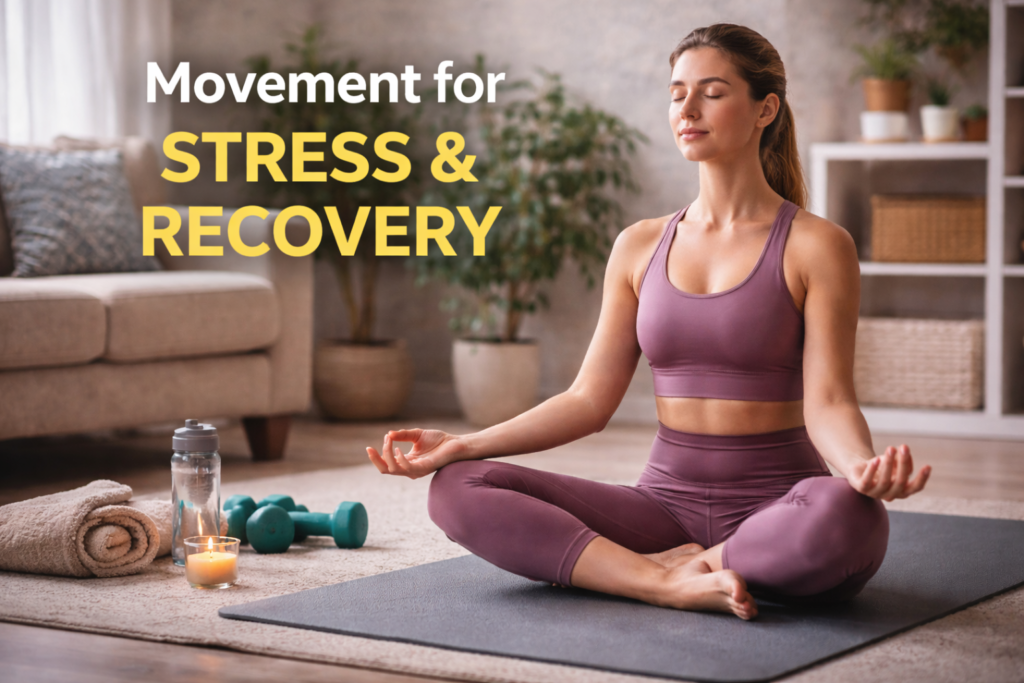
Use this guide for a stress-first approach: Movement for Stress & Recovery.
3) Protect Your Sleep Window
Sleep is when your brain processes emotion, clears waste, and resets stress hormones. Poor sleep makes stress feel louder the next day.
- Keep a consistent bedtime/wake time as often as you can
- Dim lights + reduce screens in the last hour
- Use a short wind-down: reading, stretching, or breathing
If sleep is part of your stress loop, link these together: Sleep & Recovery Hub and How to Improve Sleep for Longevity.
4) Eat in a Way That Supports a Calmer Body
Food influences blood sugar stability and inflammation — and both affect how resilient you feel under stress.
- Prioritise whole foods: protein, colourful plants, fibre, healthy fats
- Reduce big spikes of sugar and ultra-processed snacks (they amplify crashes)
- Be mindful with caffeine timing (especially if anxiety is present)
Useful pairings: Anti-inflammatory foods and Blood sugar & longevity.
5) Give Your Mind a Daily “Declutter”
You don’t need long meditation sessions. You need a short pause that stops your brain carrying everything to bed.
- 5 minutes: write tomorrow’s tasks earlier in the evening
- 2 minutes: sit with no phone and let your thoughts slow down
- If you like apps: guided practices can help (use what you’ll actually repeat)
If training is part of your stress story (wired, sore, overreaching), read: High vs Low Cortisol Training Days.
A Realistic Weekly Routine for Calmer Ageing
Use this as a template and adjust based on your schedule. You don’t need to tick every box — consistency beats intensity.
- Daily (5–10 minutes): breathing + a short “mind declutter”
- Most days: 10–20 minutes of walking (ideally outdoors)
- 2–3x/week: strength/yoga/mobility (keep it easy if life stress is high)
- Evenings: same 2–3 wind-down cues before bed
- Weekly: one longer low-stress activity you enjoy (nature walk, swim, cycle)
If you want a “choose-your-tool” framework for different stress states, the next best read is: The Nervous System Ladder.
When to Seek Professional Help
Self-care habits are powerful, but not always enough on their own. Speak with your GP or a qualified professional if you notice:
- Persistent low mood, anxiety, or loss of interest
- Frequent panic attacks or intense worry you can’t control
- Ongoing sleep problems that don’t improve with basics
- Physical symptoms like chest pain, shortness of breath, or dizziness (urgent)
- Using alcohol/drugs/behaviours to cope
Getting support is a strength. The sooner stress is addressed, the easier it is to protect long-term health and quality of life.
FAQs
Does chronic stress really shorten lifespan?
Chronic stress is linked with higher inflammation, sleep disruption, and metabolic strain. It doesn’t act alone, but it can accelerate several ageing pathways. The goal is better recovery — returning to calm more often.
How long does it take to feel a difference?
Fast tools (breathing, walking, evening wind-down) can help within days. The deeper benefits build over months — especially when sleep improves and total stress load comes down.
What type of exercise is best for stress?
Walking, gentle strength, yoga, and cycling are reliable. Very high intensity can add stress if you’re already overloaded — balance harder sessions with easier days and strong sleep habits.
Are there supplements that help with stress?
Some people find magnesium or omega-3 helpful, but they work best on top of sleep, movement and nutrition. If you want a UK-focused overview: Best supplements for longevity (UK). Check with your GP if you take medication.
Next Steps
You can’t remove all stress — and you don’t need to. What matters most for longevity is how often your body gets a chance to return to calm, recover and repair.
Start with one habit: a daily 2-minute breathing reset, a short outdoor walk, or writing tomorrow’s to-do list before bed. Once that’s normal, add another. Over time, these small steps reshape how your body responds to stress.
Want a fast “pick a tool” system for any stress state?
Use the ladder to move from activated → settled → restored.
Related reading in this hub
References
— Simon, Longevity Simplified
Affiliate Disclaimer: Some links may be affiliate links. If you click and purchase, we may earn a commission at no extra cost to you. We only recommend products we believe offer good quality and value. This content is for information only and is not medical advice.

Simon is the creator of Longevity Simplified, where he breaks down complex science into simple, practical habits anyone can follow. He focuses on evidence-based approaches to movement, sleep, stress and nutrition to help people improve their healthspan.