Proteostasis Explained Simply: Why Protein Quality Control Matters for Ageing
Your body is constantly building, folding, repairing and recycling proteins. When that quality control system slows, ageing quietly accelerates.
← Back to: Biology of Ageing Explained
Disclaimer: This article is for educational purposes only and does not provide medical advice. It is not intended to diagnose, treat, or prevent any disease. Always consult a qualified professional before making major health changes.
Most people think ageing happens because cells “wear out”. That’s partly true — but the deeper story is about maintenance.
Every cell in your body depends on millions of proteins working correctly. Those proteins must be built accurately, folded into the right shape, repaired when damaged, and recycled when broken.
The system that manages this is called proteostasis — short for protein homeostasis. When proteostasis runs well, cells stay functional and resilient. When it slows or becomes overwhelmed, damaged proteins accumulate and ageing accelerates.
This guide explains proteostasis in plain language, why it declines with age, and how lifestyle factors quietly influence protein quality control over decades.
Personal observation: What changed my perspective on ageing was realising that most decline isn’t dramatic failure — it’s gradual maintenance backlog. When repair systems fall slightly behind year after year, dysfunction slowly compounds.
1) The simple explanation
Think of your body as a factory producing millions of tiny machines (proteins) every second.
For the factory to work well:
- new machines must be built correctly
- each machine must fold into the right shape
- damaged machines must be repaired or removed
- worn-out machines must be recycled
Proteostasis is the system that keeps this production line running smoothly. When it works well, cells stay efficient and adaptable. When it degrades, faulty proteins accumulate and interfere with normal function.
Many age-related diseases — neurodegeneration, metabolic dysfunction, chronic inflammation — involve impaired proteostasis.
2) What proteostasis actually means
Proteostasis refers to the balance between:
- protein synthesis (building proteins)
- protein folding (shaping them correctly)
- quality control (detecting damage or misfolding)
- repair and recycling (removing broken proteins)
Proteins only work when their three-dimensional structure is correct. Even small misfolds can impair function or make proteins clump together.
You explored part of this already in: Protein Folding & Repair.
Proteostasis ensures that damaged or misfolded proteins don’t accumulate faster than the cell can manage them.
3) Why proteostasis matters for ageing
Ageing isn’t just time passing — it’s the gradual accumulation of molecular errors.
When proteostasis weakens:
- misfolded proteins build up
- cellular signalling becomes noisy
- energy production becomes less efficient
- inflammation rises
- cells become more fragile under stress
Over decades, this contributes to:
- neurodegenerative risk
- metabolic dysfunction
- reduced tissue repair
- loss of resilience
Proteostasis failure is considered one of the core mechanisms underlying biological ageing.
4) Why proteostasis declines with age
Accumulated molecular damage
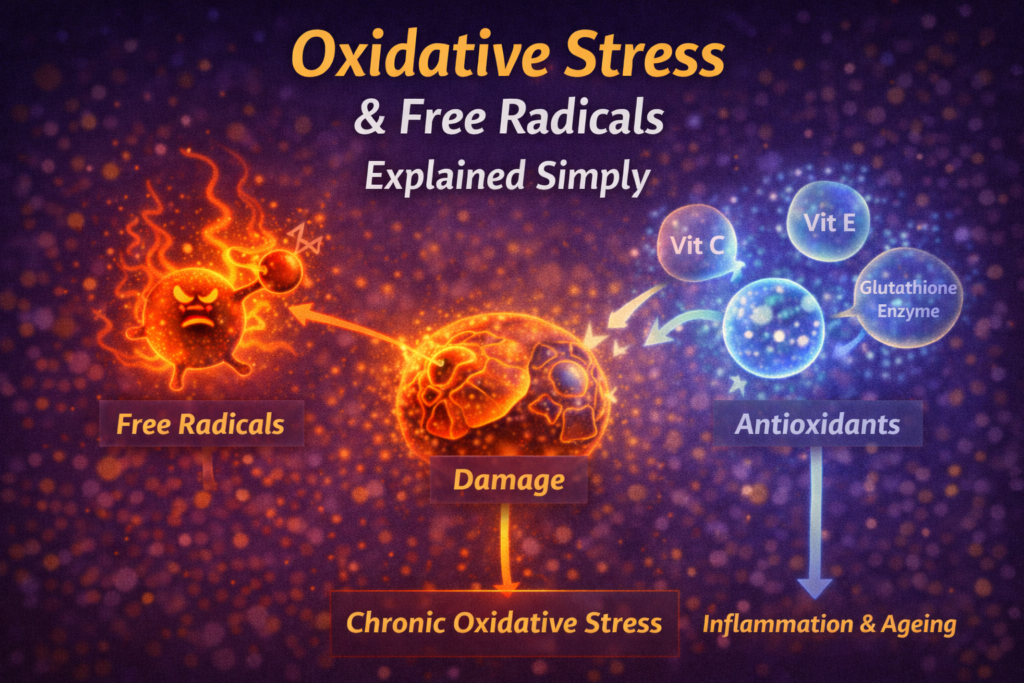
Oxidative stress, glycation and metabolic by-products slowly damage proteins over time. See: Oxidative Stress Explained Simply and Glycation & AGEs.
Slower recycling systems
Autophagy and proteasome activity decline with age, allowing damaged proteins to linger longer.
Related: Autophagy Explained Simply and Autophagy vs Apoptosis.
Chronic inflammation
Inflammatory signalling interferes with repair systems and increases protein damage load.
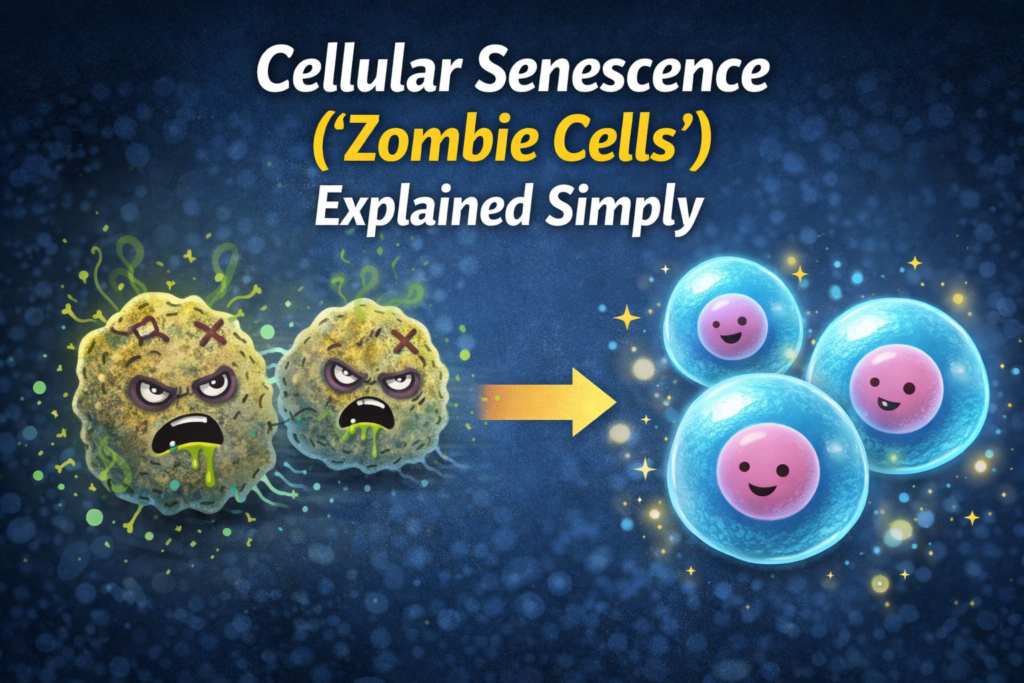
See: Cellular Senescence Explained Simply and Stress and Inflammation.
Energy constraints
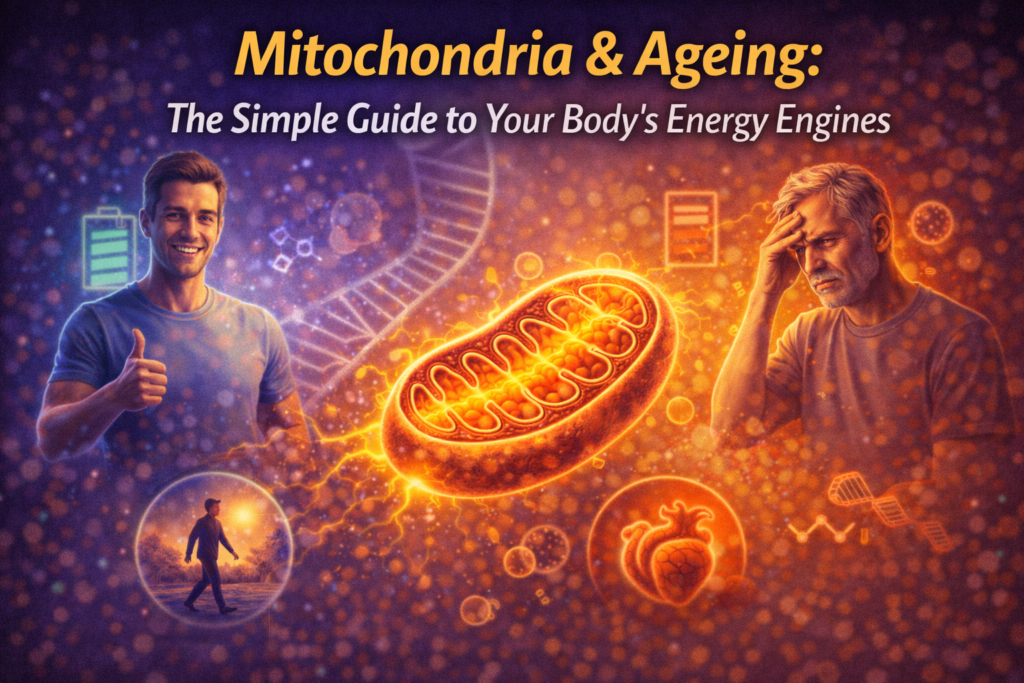
Protein repair and recycling require energy. As mitochondrial function declines, maintenance capacity falls.
Related: Mitochondria & Ageing.
5) The main protein quality control systems
Molecular chaperones
Chaperone proteins help newly built proteins fold correctly and refold damaged ones. Heat shock proteins are a major subgroup.
See: Heat Shock Proteins.
Proteasome system
The proteasome breaks down damaged or unnecessary proteins into recyclable components.
Autophagy pathways
Autophagy clears larger protein aggregates and damaged cellular components.
Mitophagy
Specialized autophagy removes damaged mitochondria to preserve cellular energy quality.
See: Mitophagy Explained.
6) How proteostasis connects to other ageing pathways
- Mitochondria: damaged proteins impair energy production
- Inflammation: protein debris triggers immune activation
- Senescence: poor maintenance accelerates cellular dysfunction
- Metabolic signalling: insulin resistance and mTOR influence protein turnover
Explore: Insulin Resistance and mTOR & AMPK Explained.
7) How to support proteostasis in real life
Prioritise sleep
Sleep supports protein repair, clearance and hormonal regulation. See: Sleep for Longevity.
Exercise consistently (not excessively)
Exercise stimulates protein turnover, autophagy and mitochondrial renewal. Avoid chronic overtraining.
Related: Hormesis Explained Simply and Overtraining and Ageing.
Stabilise blood sugar
Glycation damages proteins when glucose swings are high.
See: Blood Sugar & Longevity.
Support adequate protein intake
Protein provides raw material for repair and turnover. Quality and distribution matter.
Reduce chronic inflammation and stress
Lowering baseline stress protects repair capacity.
See: Stress and Longevity.
FAQ
Is proteostasis the same as autophagy?
No. Autophagy is one component of the broader proteostasis network.
Can supplements improve proteostasis?
Evidence is mixed. Lifestyle factors have much larger impact long-term.
Does proteostasis affect brain ageing?
Yes. Protein aggregation is a major factor in neurodegenerative diseases.
Can proteostasis be restored with age?
It can often be partially improved through exercise, metabolic health, sleep and reduced inflammation.
Final takeaway
Ageing is not just about damage — it’s about the speed of repair.
Proteostasis keeps your cellular machinery clean, functional and resilient. Protecting it quietly supports longevity across every system in the body.
— Simon
References
- López-Otín C et al. (2013). The Hallmarks of Aging. Cell.
- Hipp MS et al. (2019). Proteostasis impairment in aging and disease. Nature Reviews Molecular Cell Biology.

Simon is the creator of Longevity Simplified, where he breaks down complex science into simple, practical habits anyone can follow. He focuses on evidence-based approaches to movement, sleep, stress and nutrition to help people improve their healthspan.