Mitophagy Explained: How Your Body Removes Broken Mitochondria
Mitophagy is the cellular cleanup system that removes damaged mitochondria so energy production stays efficient, resilient and low-inflammation as you age.
← Back to: Biology of Ageing Explained
Disclaimer: This article is for educational purposes only and does not provide medical advice. It is not intended to diagnose, treat or prevent disease. Always consult a qualified professional before making health changes.
Most people think ageing happens because the body slowly “runs out of energy”. In reality, a large part of ageing comes from energy systems becoming dirty, inefficient and inflamed.
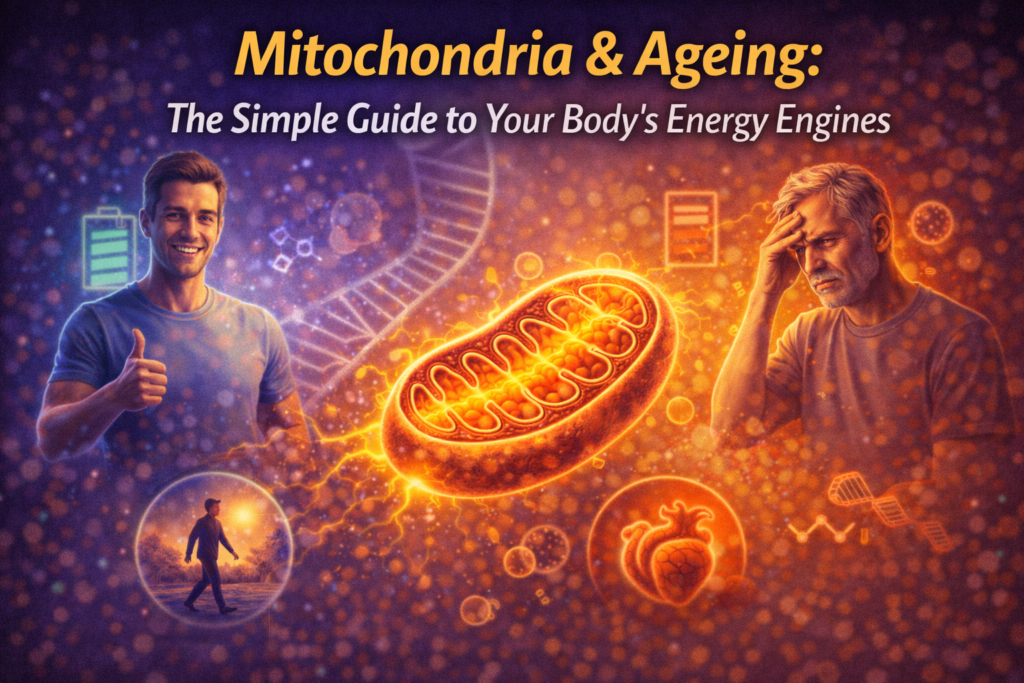
Mitochondria — your cellular power plants — constantly experience wear and tear from normal metabolism, oxidative stress and environmental load. When damaged mitochondria accumulate, they produce less energy and more inflammatory by-products.
This is where mitophagy matters. It is the process that identifies broken mitochondria and safely removes them so healthier ones can take over.
Supporting mitophagy helps preserve energy production, metabolic health, brain function and long-term resilience.
Personal observation: What shifted my thinking about mitophagy was realising that energy isn’t just about making more mitochondria — it’s about keeping the existing ones clean. Many people chase stimulation while ignoring cellular cleanup.
1) The simple explanation
Think of mitochondria like rechargeable batteries inside your cells.
Over time, some batteries become inefficient, leak energy and generate more waste. If you keep using broken batteries, performance drops and damage spreads.
Mitophagy is the recycling system that removes damaged batteries so new, healthy ones can replace them.
Good mitophagy keeps energy production clean, stable and resilient.
2) What mitophagy actually is
Mitophagy is a specialised form of autophagy that targets mitochondria specifically.
When a mitochondrion becomes damaged:
- its membrane potential drops
- quality control proteins (PINK1, Parkin) tag it
- the cell encloses it in a recycling vesicle
- it is broken down and recycled safely
This prevents dysfunctional mitochondria from accumulating and disrupting cellular signalling.
Related: Autophagy Explained Simply and Autophagy vs Apoptosis.
3) Why mitophagy matters for ageing
Preserves energy efficiency
Healthy mitochondria produce more ATP with less waste.
See: Mitochondria & Ageing.
Reduces oxidative stress
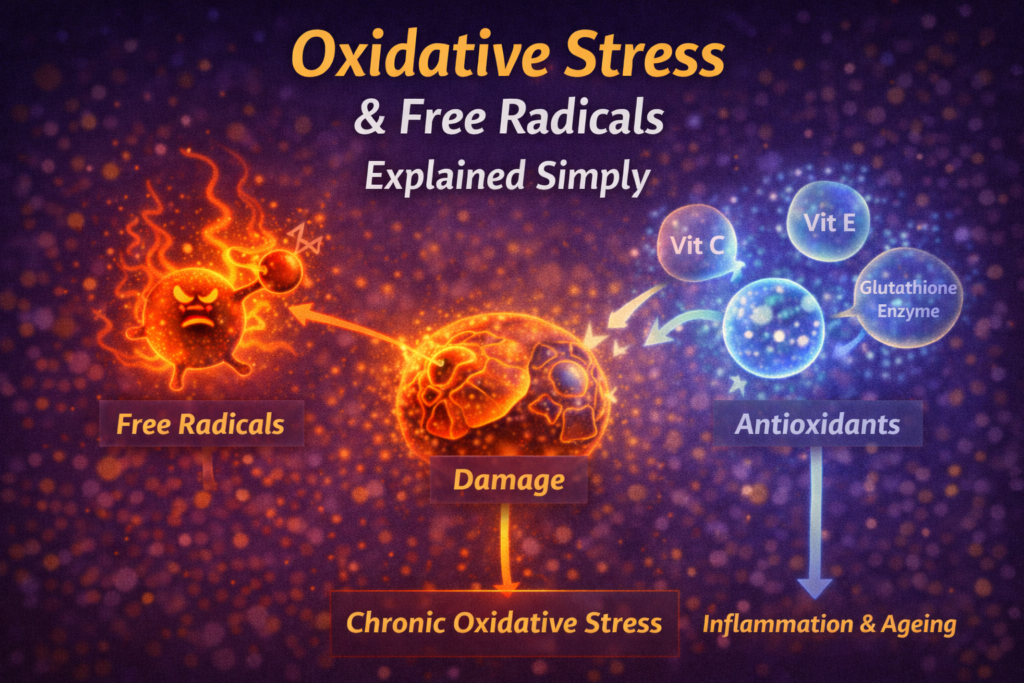
Damaged mitochondria generate excess reactive oxygen species.
Related: Oxidative Stress Explained.
Lowers inflammation
Broken mitochondria trigger immune activation and inflammatory signalling.
See: Stress and Inflammation.
Protects brain and muscle function
Neurons and muscle cells depend heavily on mitochondrial quality.
4) What activates mitophagy
Exercise and energy demand
Movement stimulates mitochondrial turnover and renewal.
Related: Zone 2 Cardio and Mitochondrial Biogenesis.
Energy sensing pathways
AMPK activation signals cells to clean up inefficient mitochondria.
See: mTOR & AMPK Explained.
Short-term metabolic stress
Mild nutrient stress can increase cellular recycling signalling.
Sleep and recovery
Repair processes peak during deep sleep.
Related: Sleep for Longevity.
5) Why mitophagy declines with age
Proteostasis impairment
Protein quality control systems slow with age.
See: Proteostasis Explained.
Chronic inflammation
Inflammatory signalling suppresses efficient recycling pathways.
Mitochondrial DNA damage
Accumulated mutations impair signalling accuracy.
Related: DNA Damage & Repair.
Reduced NAD+ availability
Lower NAD+ weakens metabolic signalling capacity.
See: NAD+ Explained.
6) How mitophagy connects to other ageing pathways
- Biogenesis: removes old mitochondria so new ones replace them
- Insulin sensitivity: cleaner mitochondria improve glucose handling
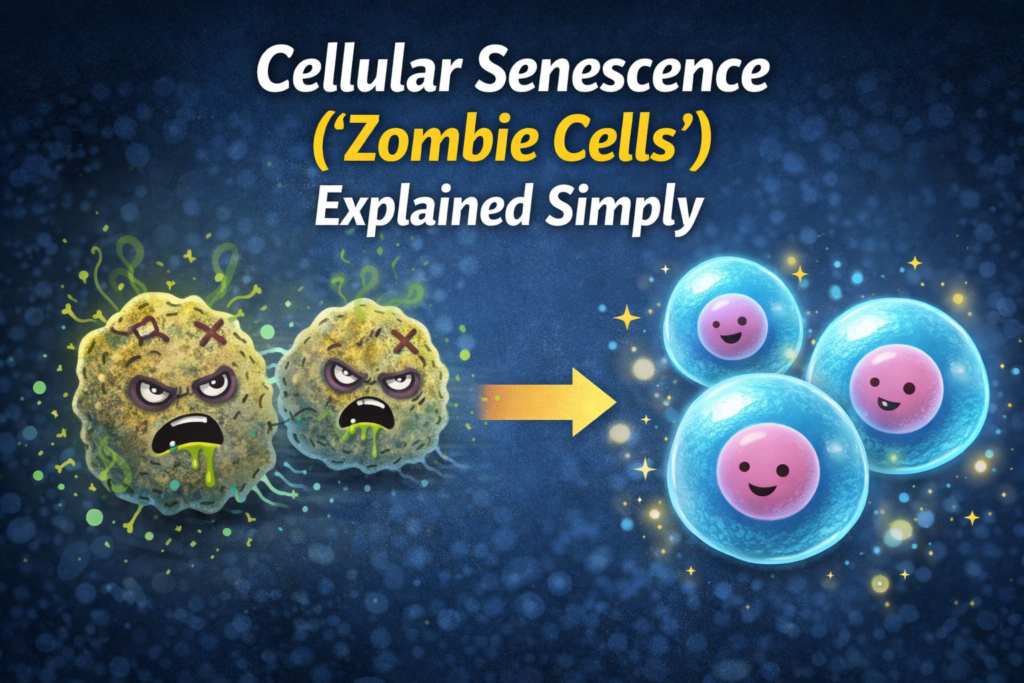
- Senescence: dysfunctional mitochondria accelerate cellular ageing
- Brain ageing: neuronal energy stability protects cognition
- Hormesis: adaptive stress stimulates renewal pathways
Explore: Cellular Senescence, Insulin Resistance and Hormesis Explained Simply.
7) How to support mitophagy safely
Maintain regular aerobic movement
Consistent movement stimulates mitochondrial turnover.
Avoid chronic overfeeding
Constant surplus suppresses cellular recycling signals.
Protect sleep and circadian rhythm
Cellular cleanup depends on adequate recovery time.
Layer occasional metabolic challenges
Mild stress can stimulate renewal when recovery is adequate.
Avoid extreme restriction or overtraining
Excess stress suppresses adaptation and repair.
Related: Overtraining and Ageing.
FAQ
Is mitophagy the same as autophagy?
Mitophagy targets mitochondria specifically; autophagy covers broader cellular recycling.
Can supplements increase mitophagy?
Evidence remains limited. Lifestyle signals dominate regulation.
Does fasting increase mitophagy?
Short-term metabolic stress may stimulate recycling pathways, but human data remains mixed.
Is more mitophagy always better?
Balance matters. Excess breakdown without recovery can impair function.
Final takeaway
Mitophagy keeps your cellular energy system clean and efficient.
Consistent movement, recovery and metabolic balance preserve mitochondrial quality far more effectively than extreme interventions.
— Simon
References
- Pickles S et al. (2018). Mitophagy and quality control mechanisms. Nature Reviews Molecular Cell Biology.
- Palikaras K et al. (2018). Mechanisms of mitophagy in ageing and disease. Nature Cell Biology.

Simon is the creator of Longevity Simplified, where he breaks down complex science into simple, practical habits anyone can follow. He focuses on evidence-based approaches to movement, sleep, stress and nutrition to help people improve their healthspan.