Nutrition • Gut Health • Microbiome
Gut Health and the Microbiome: The Hidden Engine of Longevity
How the bacteria in your gut shape immunity, metabolism, inflammation, and healthy ageing.
Gut health at a glance
Gut health gets overcomplicated fast. In my own reading, the same themes come up repeatedly: more plant diversity, more fibre, fewer ultra-processed foods, steadier routines — and a bit less stress.
- Your gut lining, immune system and microbiome act like a hidden control panel for inflammation and metabolism.
- Diet is the main daily signal your microbes receive — diversity and fibre tend to support diversity in return.
- Sleep, movement and stress also reshape your gut over time, not just what’s on your plate.
- You don’t need a microbiome test to start — most people benefit from simple, repeatable habits.
Table of contents
- Introduction
- 1. Why gut health matters for longevity
- 2. Meet your microbiome (in plain English)
- 3. Food for a long-lived gut
- 4. Daily habits that support the gut
- 5. Gut, inflammation and immunity
- 6. Gut, brain and mood
- 7. When to consider getting help
- Putting it all together
- Next steps (cluster links)
- Gut health FAQ
- References
- Disclaimer
Introduction
When most people think about nutrition for longevity, they think calories, carbs, or protein. Very few think about the trillions of microbes living in the gut — yet those microbes influence inflammation, blood sugar, immunity, mood, and how your body ages over time.
This is your calm, practical guide to gut health and the microbiome. You’ll learn what the microbiome is, how it links to longevity, and which daily choices support a more diverse and resilient gut — without chasing perfect probiotics or strict rules.
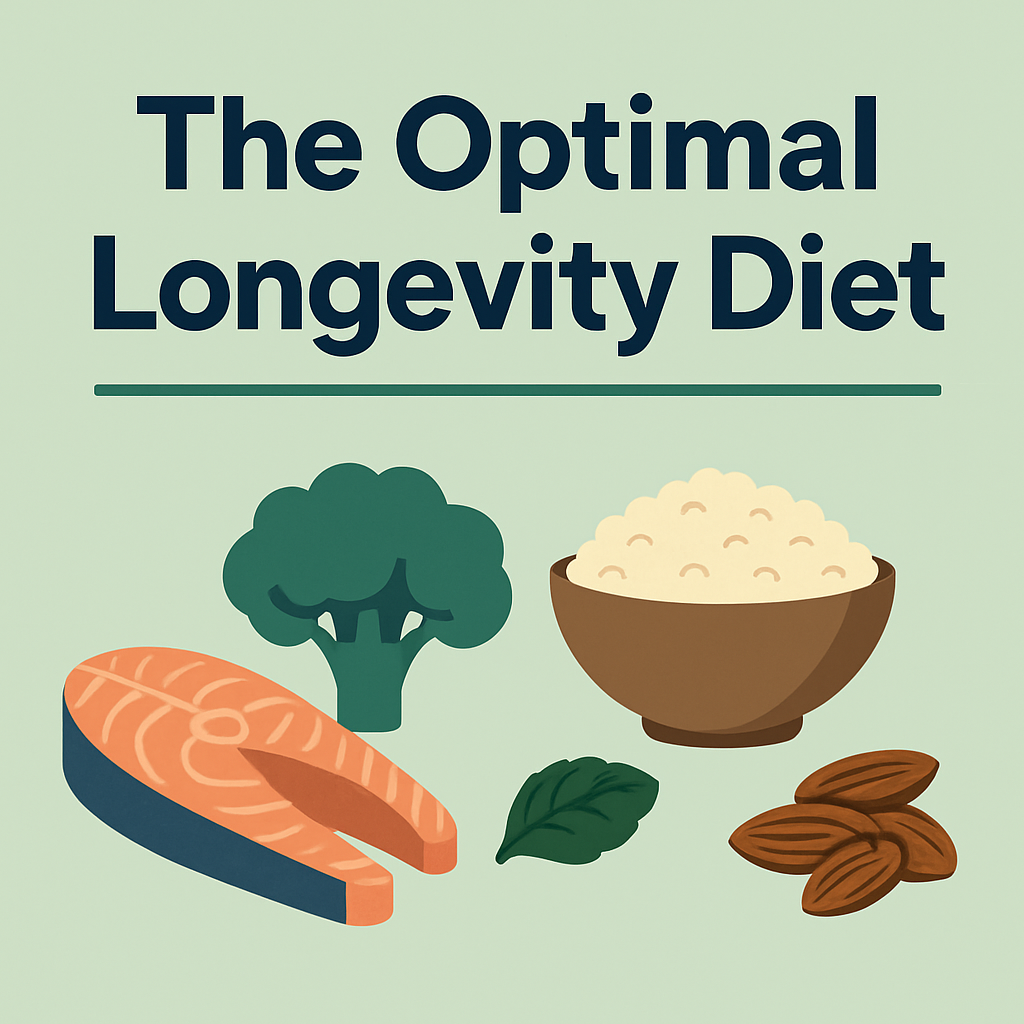
For the “big picture” nutrition system this sits inside, start with: The Longevity Nutrition Blueprint. For ageing context, the background layer is: Hallmarks of Ageing.
1. Why gut health matters for longevity
Your gut is more than a digestion tube. It’s a major interface between the outside world and your internal environment. The gut lining, the immune cells underneath it, and the microbes living on top of it all work together.
When this system is in balance, you absorb nutrients well, keep unwanted substances out, and signal “calm” to the immune system. When it’s out of balance, it can contribute to chronic low-grade inflammation, metabolic stress, and even changes in mood.
- The gut hosts a large part of your immune system.
- Microbes help break down food and produce beneficial compounds.
- Disruption can push inflammation and blood sugar regulation in the wrong direction.
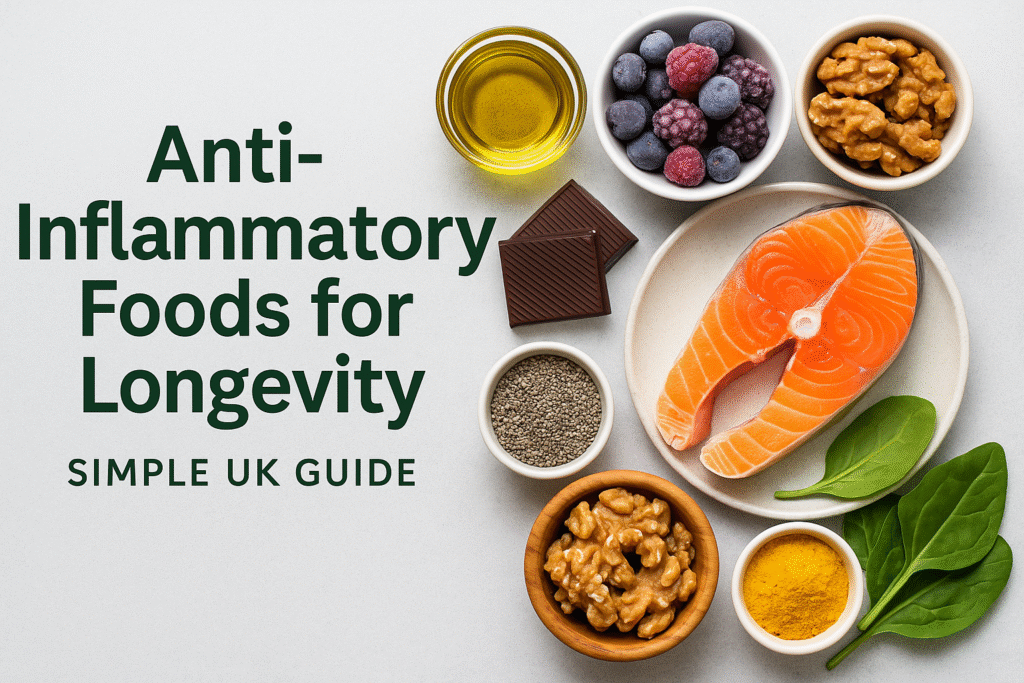
This matters because inflammation and metabolic dysfunction show up again and again in longevity research. If you want the practical anti-inflammatory layer, use: Anti-Inflammatory Foods and The Anti-Inflammatory Plate.

2. Meet your microbiome (in plain English)
Your microbiome is the community of bacteria, fungi and other microbes living in and on you. When we talk about gut health, we usually mean the microbes in your large intestine. They feed on parts of food you can’t digest — especially different types of fibre and plant compounds.
Different microbes do different jobs. Some produce short-chain fatty acids (like butyrate) that help nourish the gut lining and support immune balance. Others influence vitamin production, bile acid metabolism, and more.
- Diversity is a useful marker of a resilient microbiome.
- Diet, stress, sleep, movement and medication history all influence your microbes.
- Diet can shift the microbiome quickly, but long-term habits shape it most.
You don’t need to memorise bacteria names to improve gut health. Focus on inputs the microbiome reliably responds to: fibre, plant diversity, and consistency. A helpful “next step” read here is: Fibre for Longevity.
3. Food for a long-lived gut
Food is the main daily input your microbiome receives. Your choices decide which microbes thrive and which fade. Fibre-rich, plant-forward patterns tend to support a more diverse and stable microbiome, while very low-fibre and ultra-processed diets can reduce diversity over time.
The simple “feed your microbes” checklist
- Increase plant variety. Rotate vegetables, fruit, beans, nuts, seeds, and whole grains across the week.
- Use beans and lentils. Great for fibre and resistant starch.
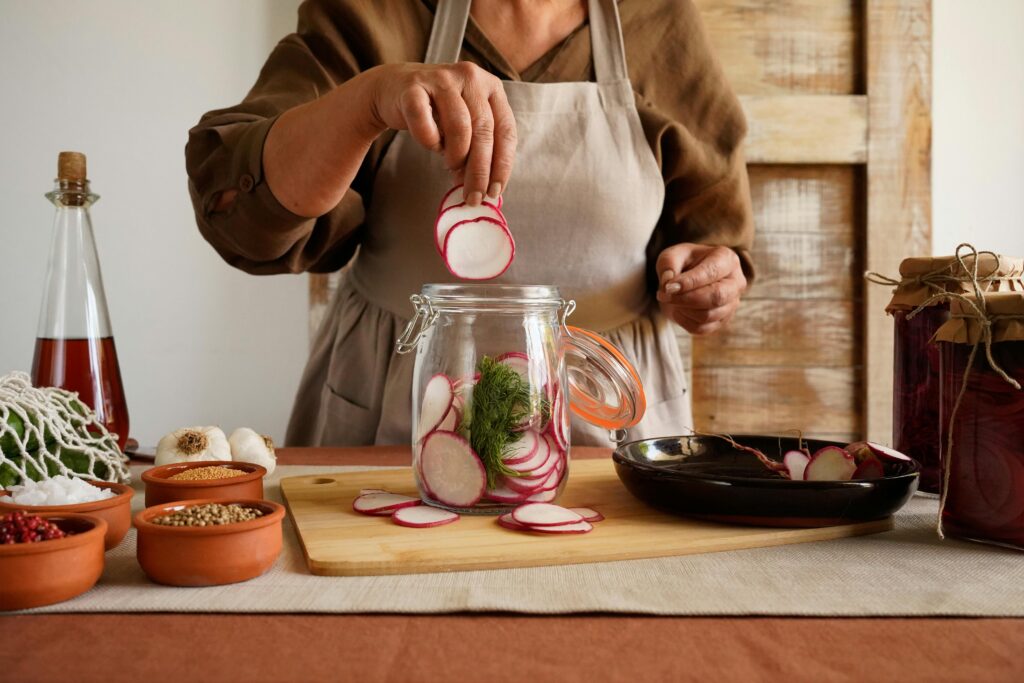
- Include fermented foods if you enjoy them. Live yoghurt/kefir, kimchi, sauerkraut, etc.
- Add herbs and spices. Small amounts, big flavour, extra plant compounds.
If you want a dedicated deep dive on plant compounds: Polyphenols Explained. And if you’re deciding whether probiotic supplements are worth it: Probiotics & Gut Longevity Guide.
4. Daily habits that support the gut
Gut health isn’t only about food. Your nervous system, sleep and movement shape motility, sensitivity, and inflammation signals. The gut and brain communicate both ways — which is why stress can worsen symptoms, and why gut issues can affect how you feel.
- Slow down meals. Chew more, rush less — digestion starts in the mouth.
- Move daily. Walking supports motility and may help microbiome composition over time.
- Sleep consistently. Poor sleep can disrupt appetite and inflammatory balance.
- Reduce chronic stress. Even small calming habits can change gut symptoms for some people.
If blood sugar spikes are part of your gut story (they often are), these two posts pair well here: Blood Sugar and Longevity and Why Walking After Meals Extends Lifespan.
5. Gut, inflammation and immunity
The lining of the gut is a selective barrier: it allows digested nutrients through while keeping larger, potentially harmful particles out. When this barrier is supported, it tends to send calmer signals to the immune system. When it’s compromised, it can contribute to chronic low-grade inflammation.
Fibre is a key lever here, because microbes ferment fibre into compounds that nourish the gut lining. That’s one reason fibre shows up repeatedly in longevity nutrition: Fibre for Longevity.
- Fibre-rich plants can help microbes produce gut-supportive compounds.
- Ultra-processed exposure can work against gut balance over time.
- Supporting the gut is a practical way to influence background inflammation.
For the simplest anti-inflammatory meal template that supports gut + immune balance, use: The Anti-Inflammatory Plate.
6. Gut, brain and mood
The gut and brain communicate constantly via nerves, immune messengers, and compounds made by gut microbes. This doesn’t mean every mood issue is “a gut issue” — but it does explain why stress can worsen digestion, and why long-standing gut symptoms can affect how you feel day-to-day.
From a longevity perspective, protecting brain health includes supporting sleep, vascular health, inflammation balance, and gut stability. This is one more reason gut health sits inside your Nutrition pillar and not as a niche topic.
7. When to consider getting help
Gut symptoms are common and can have many causes. Lifestyle changes can help a lot of people, but it’s important to speak to a healthcare professional if you notice red-flag symptoms.
- Unintentional weight loss
- Blood in stool or black stools
- Persistent pain that doesn’t settle
- Difficulty swallowing
- Ongoing bowel habit changes without a clear reason
If any of these apply, get individual medical guidance. You can still use the ideas in this guide as supportive habits, but safety comes first.
Putting it all together
Your gut and microbiome act like a hidden engine for longevity. They influence digestion, immune balance, inflammation, and metabolic health. By supporting your gut, you’re not only helping symptoms — you’re also supporting steadier energy and healthier ageing over the long term.
The good news is you don’t need complicated protocols. More plant diversity, more fibre, fewer ultra-processed foods, regular movement and consistent sleep are the big levers — and they compound.
Next steps and related reading
- Start with the pillar: The Longevity Nutrition Blueprint
- Next in the pathway: Fasting, Autophagy & Metabolic Flexibility
- Gut deep dives: Fibre for Longevity • Polyphenols Explained • Probiotics & Gut Longevity Guide
- Centenarian microbiome: 4 Standout Bacteria in Centenarians
- Anti-inflammatory baseline: Anti-Inflammatory Foods • The Anti-Inflammatory Plate
- Back to hub: Nutrition Hub
Gut health FAQ
Do I need a microbiome test to improve gut health?
Most people don’t. A diverse, plant-rich diet, enough fibre, regular movement, good sleep, and reduced ultra-processed exposure are helpful regardless of the exact microbiome profile. Testing can sometimes help in medical contexts, but it’s rarely the first step.
Should I take a probiotic for longevity?
Probiotics can help some people in specific situations, but for general longevity the best first move is usually feeding your existing microbes: fibre, plant diversity, and fermented foods if you tolerate them. If you want a practical guide: Probiotics & Gut Longevity Guide.
Can increasing fibre upset my gut at first?
Yes — especially if you jump quickly. Increase gradually, add one change at a time, and drink enough fluid. If symptoms are severe or persistent, speak to a clinician.
Is there a perfect gut-health diet for everyone?
No. People differ in genetics, medical history, tolerances and preferences. The principles here are a strong baseline, but it’s normal (and smart) to adapt them to your real life.
References (selected)
Important note
This guide is for general information and education. It is not medical advice and not a replacement for seeing your GP, dietitian or other qualified professional. Never ignore medical advice or delay seeking it because of something you read online.
Affiliate disclaimer: Some resources on Longevity Simplified may include affiliate links. If you choose to buy through these links it supports the site at no extra cost to you.
Written by Longevity Simplified — turning complex health science into practical daily habits.

Simon is the creator of Longevity Simplified, where he breaks down complex science into simple, practical habits anyone can follow. He focuses on evidence-based approaches to movement, sleep, stress and nutrition to help people improve their healthspan.