Glycation & AGEs Explained: The “Sugar Damage” Link to Ageing
When excess sugar sticks to proteins and tissues, it quietly stiffens, inflames and ages the body from the inside out.
← Back to: Biology of Ageing Explained
Disclaimer: This article is for educational purposes only and does not provide medical advice. It is not intended to diagnose, treat, or prevent disease. Always consult a qualified professional before making health changes.
Most people associate sugar with weight gain or energy crashes. However, sugar also causes something far more subtle and long-lasting inside the body: glycation.
Glycation happens when glucose sticks to proteins, fats, or DNA and forms damaged structures called advanced glycation end products (AGEs).
Over time, these sugar-damaged molecules stiffen tissues, disrupt protein function, increase inflammation, and accelerate biological ageing — even in people who appear outwardly healthy.
This guide explains glycation in simple terms, why it rises with age, and how everyday habits influence long-term damage accumulation.
Personal observation: What surprised me most when learning about glycation was how “normal” blood sugar spikes — not just diabetes — quietly create cumulative damage over decades. It shifted my focus from short-term energy to long-term tissue health.
1) The simple explanation
Imagine spilling sugar syrup onto a piece of fabric and letting it dry. The fabric becomes stiff, sticky and harder to clean.
Glycation is similar — except it happens inside your body. Sugar molecules bind to proteins and tissues, making them less flexible and harder to repair.
Over time, these sugar-damaged structures accumulate and interfere with normal cellular function. That’s why glycation is sometimes described as “sugar rusting” the body.
2) What glycation and AGEs actually are
Glycation is a non-enzymatic chemical reaction where glucose attaches to proteins, lipids, or nucleic acids.
The early products of this reaction can further rearrange and cross-link to form advanced glycation end products (AGEs).
AGEs:
- alter protein shape and function
- make tissues stiffer and less elastic
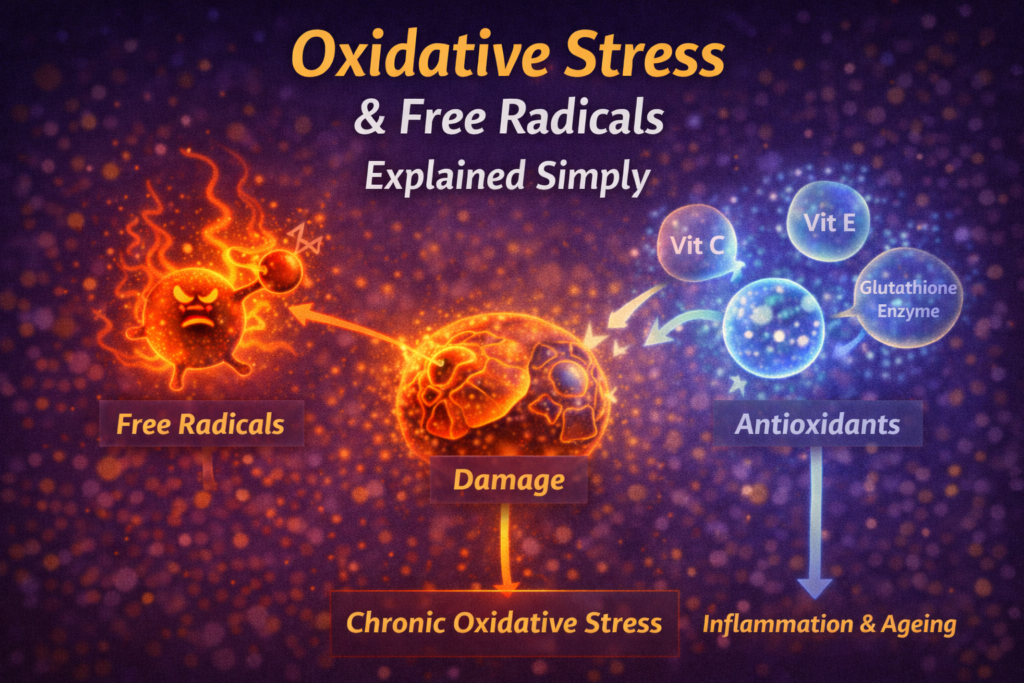
- increase oxidative stress
- trigger inflammatory signalling
Once formed, AGEs are difficult for the body to remove completely.
3) Why glycation matters for ageing
Glycation affects many tissues that define how well we age:
- Skin: collagen stiffens → wrinkles and loss of elasticity
- Blood vessels: reduced flexibility → higher cardiovascular risk
- Joints: cartilage becomes more brittle
- Nerves: impaired signalling and repair
- Kidneys and eyes: cumulative microdamage
AGEs also bind to receptors that amplify inflammation and oxidative stress, accelerating cellular dysfunction.
This links directly to: Oxidative Stress Explained Simply and Stress and Inflammation.
4) Where AGEs come from
Blood sugar exposure
Repeated glucose spikes increase glycation rate. Even in non-diabetics, large swings create cumulative exposure.
See: Blood Sugar & Longevity and Stress and Blood Sugar Instability.
Dietary AGEs
High-temperature cooking (grilling, frying, roasting) creates AGEs directly in food. These can be absorbed and contribute to systemic load.
Oxidative stress
Oxidative environments accelerate AGE formation.
Age-related clearance decline
Kidneys and cellular recycling systems become less efficient at removing damaged molecules with age.
Related: Proteostasis Explained Simply and Autophagy Explained Simply.
5) How glycation connects to other ageing pathways
- Proteostasis: glycated proteins resist repair and recycling
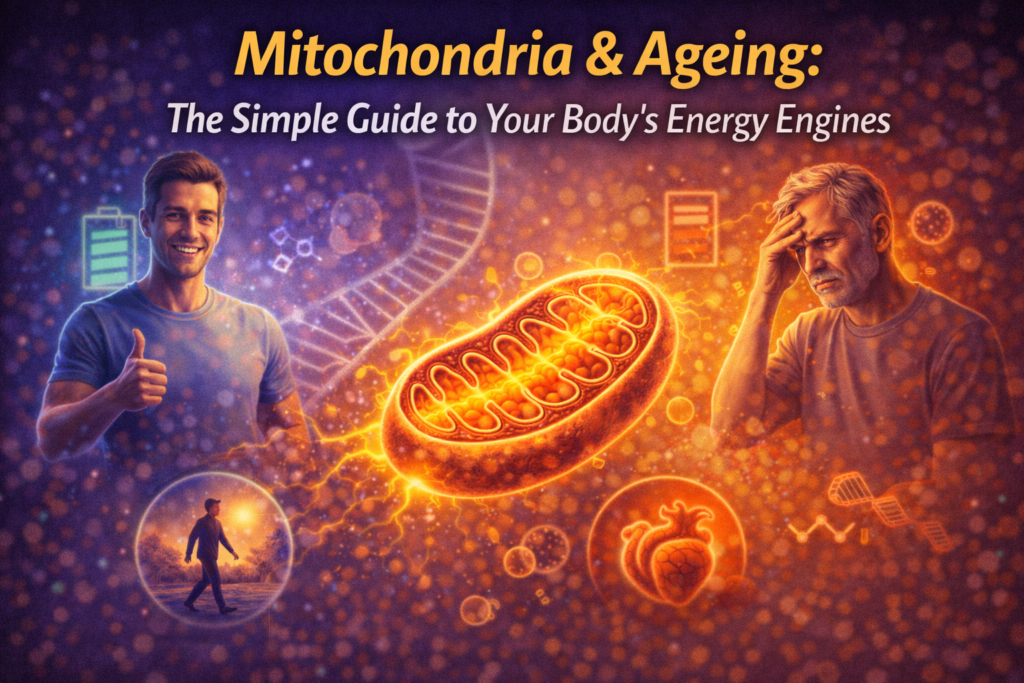
- Mitochondria: AGEs impair energy production efficiency
- Inflammation: AGE receptors amplify immune activation
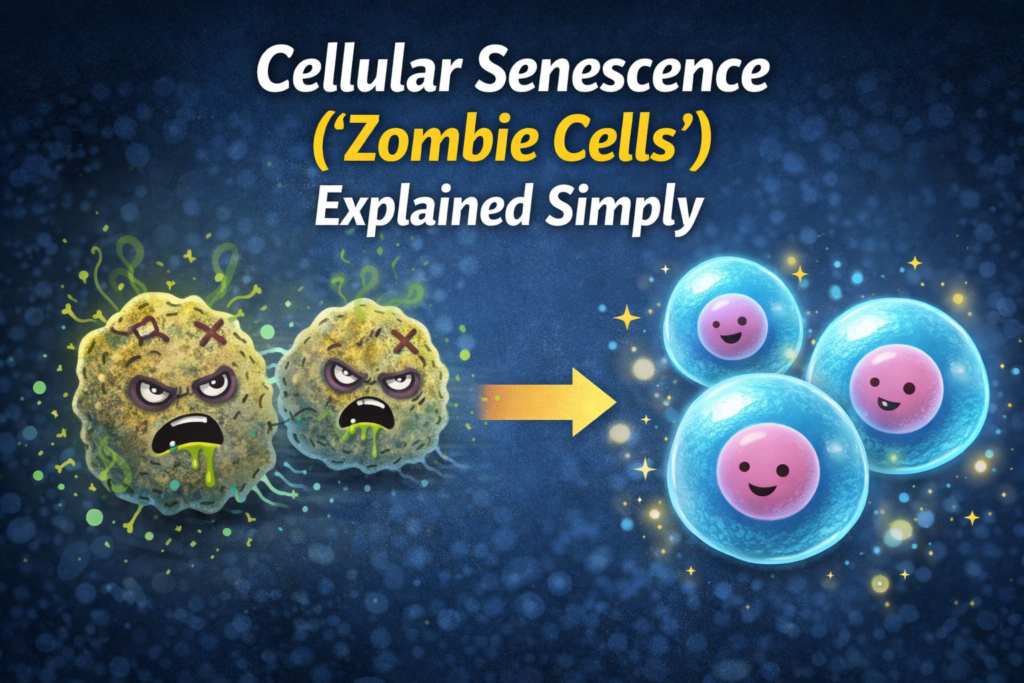
- Senescence: accumulated damage promotes cellular dysfunction
- Metabolic signalling: insulin resistance increases exposure
Explore: Mitochondria & Ageing, Cellular Senescence and Insulin Resistance.
6) How to reduce glycation in real life
Stabilise blood sugar
Avoid frequent spikes by prioritising protein, fibre, and consistent meal timing.
Walk after meals
Light activity lowers post-meal glucose exposure.
Use gentler cooking methods
Steaming, boiling and slow cooking produce fewer dietary AGEs than grilling or frying.
Support antioxidant systems
Whole foods rich in polyphenols help regulate oxidative balance.
See: Polyphenols Explained.
Protect sleep and stress regulation
Poor sleep and chronic stress destabilise glucose regulation.
Related: Sleep for Longevity and Stress and Longevity.
FAQ
Are AGEs only a problem for diabetics?
No. While diabetes accelerates glycation, everyone accumulates AGEs over time.
Can supplements block glycation?
Some compounds show promise in labs, but lifestyle remains the dominant driver.
Is fruit sugar dangerous for glycation?
Whole fruit contains fibre and polyphenols that moderate glucose response.
Can glycation damage be reversed?
Some turnover occurs, but prevention is far more effective than reversal.
Final takeaway
Glycation is slow, silent damage driven by sugar exposure over time.
Stabilising blood sugar, reducing oxidative stress, and supporting repair systems protects tissues from stiffening, inflammation and premature ageing.
— Simon
References
- Singh R et al. (2001). Advanced glycation end-products: a review. Diabetologia.
- Uribarri J et al. (2010). Dietary AGEs and their role in health and disease. Journal of the American Dietetic Association.

Simon is the creator of Longevity Simplified, where he breaks down complex science into simple, practical habits anyone can follow. He focuses on evidence-based approaches to movement, sleep, stress and nutrition to help people improve their healthspan.