Autophagy vs Apoptosis Explained: Two Very Different Cellular Cleanup Systems
One system repairs and recycles damaged parts. The other safely removes damaged cells. Both are essential for healthy ageing — but they’re often confused.
← Back to: Biology of Ageing Explained
Disclaimer: This article is for educational purposes only and does not provide medical advice. It is not intended to diagnose, treat or prevent disease. Always consult a qualified professional before making health changes.
In longevity discussions, the word autophagy gets a lot of attention — fasting, exercise, cellular cleanup, renewal. Meanwhile, apoptosis often gets ignored or misunderstood.
Both processes are essential. However, they serve very different purposes inside the body.
Autophagy helps cells stay healthy by recycling damaged components. Apoptosis removes entire cells when they become unsafe, dysfunctional, or no longer useful.
Confusing these two systems leads to poor biological assumptions — and sometimes risky optimisation behaviour. This guide explains the difference clearly, how each contributes to healthy ageing, and how lifestyle influences both systems safely.
Personal observation: Learning the difference between autophagy and apoptosis changed how I think about “optimising” biology. You’re not trying to push one pathway endlessly — you’re trying to keep a balanced, responsive maintenance system that adapts to real-world stress.
1) The simple explanation
Imagine your body as a large factory.
- Autophagy is the internal recycling department — it repairs, cleans, and reuses damaged parts.
- Apoptosis is the demolition team — it safely removes entire machines that are no longer safe to operate.
Both are necessary. Too little cleanup allows damage to accumulate. Too much destruction impairs tissue renewal and resilience.
2) What autophagy actually does
Autophagy means “self-eating.” It is a controlled recycling system inside cells.
It:
- breaks down damaged proteins
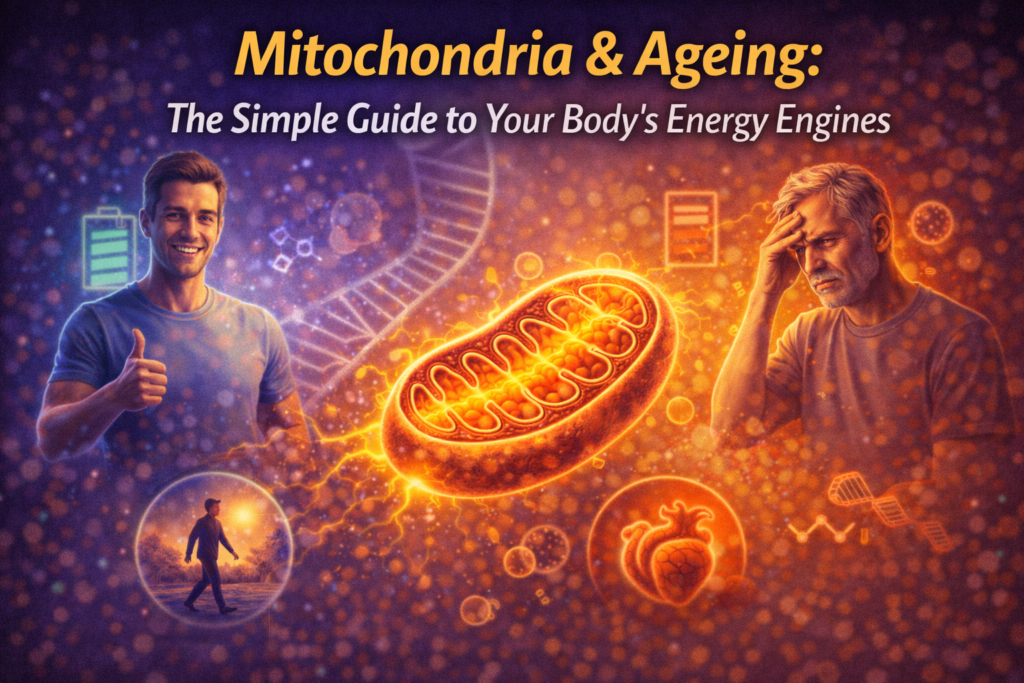
- removes dysfunctional mitochondria
- recycles building blocks for energy and repair
- reduces toxic accumulation
Autophagy supports:
- proteostasis (protein quality control)
- mitochondrial efficiency
- metabolic flexibility
- resilience to stress
Explore: Autophagy Explained Simply and Proteostasis Explained Simply.
3) What apoptosis actually does
Apoptosis is programmed cell death — a controlled process that safely dismantles and removes damaged or unnecessary cells.
Cells trigger apoptosis when:
- DNA damage becomes irreparable
- mutations increase cancer risk
- cells become dysfunctional or infected
- developmental turnover requires removal
Apoptosis prevents:
- tumour formation
- chronic inflammation from damaged cells
- propagation of genetic errors
It is tightly linked to: DNA Damage & Repair.
4) Key differences between autophagy and apoptosis
- Autophagy: repairs parts inside a cell
- Apoptosis: removes the entire cell
- Autophagy: promotes survival and adaptation
- Apoptosis: prevents dangerous survival
- Autophagy: reversible and dynamic
- Apoptosis: irreversible and final
- Autophagy: increases during mild stress
- Apoptosis: activates when damage crosses safety thresholds
Both systems cooperate to maintain tissue health across decades.
5) How both systems change with ageing
Autophagy declines
Cellular recycling becomes less efficient, allowing damaged proteins and mitochondria to accumulate.
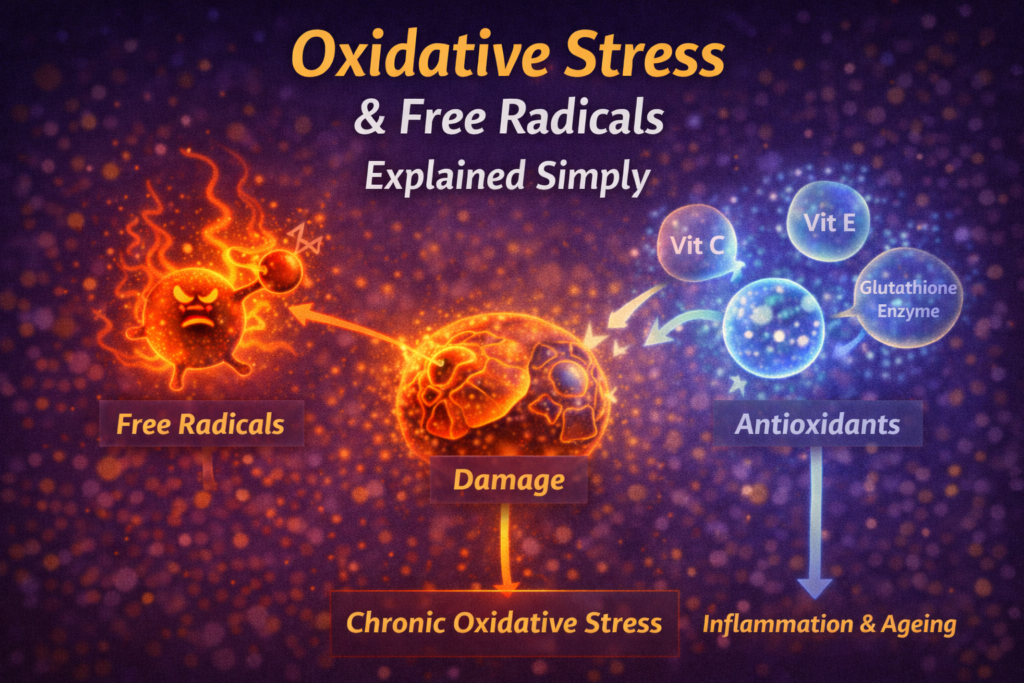
This contributes to: Mitochondrial Decline and Oxidative Stress.
Apoptosis becomes dysregulated
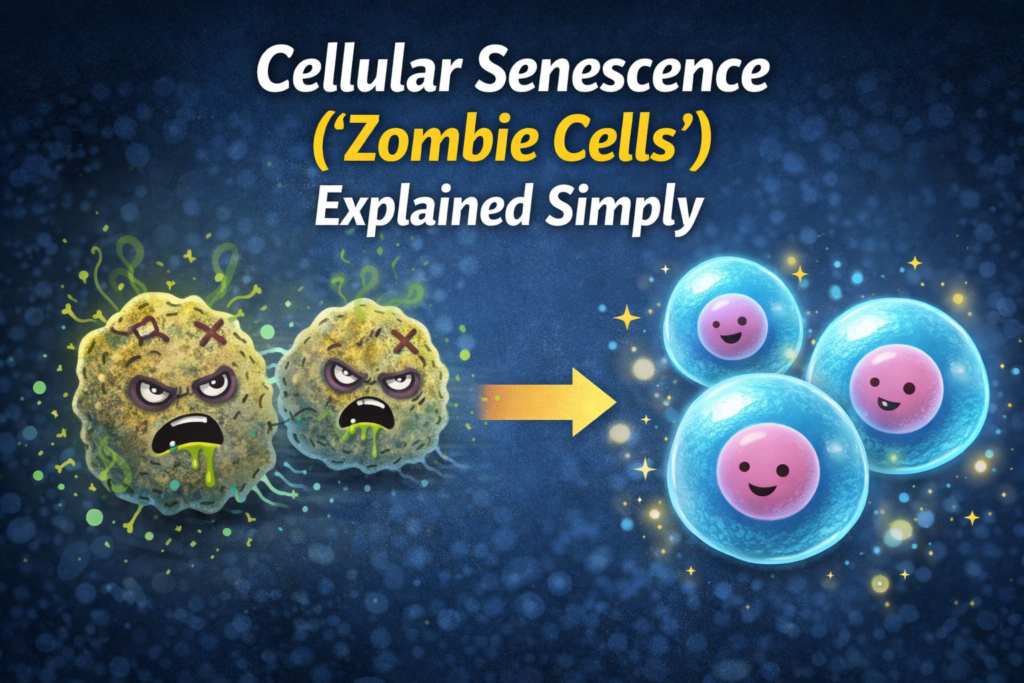
Some damaged cells escape apoptosis and linger as dysfunctional or senescent cells.
See: Cellular Senescence Explained Simply.
Inflammatory signalling increases
Poor cleanup allows inflammatory signals to persist.
Related: Stress and Inflammation.
6) How these systems connect to other ageing pathways
- Proteostasis: autophagy removes misfolded proteins
- Mitochondria: mitophagy maintains energy efficiency
- DNA repair: apoptosis removes irreparable cells
- Senescence: impaired apoptosis allows dysfunctional cells to accumulate
- Metabolic signalling: mTOR and AMPK regulate autophagy activation
Explore: Glycation & AGEs, Hormesis Explained Simply and Insulin Resistance.
7) How to support healthy cellular cleanup safely
Regular movement
Exercise stimulates autophagy and mitochondrial turnover.
Avoid constant overfeeding
Periods between meals allow recycling pathways to activate naturally.
Protect sleep
Repair systems are coordinated during sleep cycles.
See: Sleep for Longevity.
Manage chronic stress
Nervous system overload suppresses repair signalling.
Related: Stress and Longevity.
Avoid extreme biohacking
Excessive fasting, overtraining or supplementation can destabilise balance rather than improve resilience.
FAQ
Is more autophagy always better?
No. Excessive autophagy can impair tissue recovery. Balance matters.
Is apoptosis dangerous?
No — it protects against cancer and dysfunctional cells when properly regulated.
Does fasting trigger apoptosis?
Normal fasting primarily activates autophagy, not apoptosis.
Can supplements safely enhance these systems?
Evidence remains limited. Lifestyle remains the primary lever.
Final takeaway
Autophagy keeps cells clean and functional. Apoptosis removes cells that become unsafe.
Healthy ageing depends on both systems staying balanced, responsive and well regulated — not pushing either to extremes.
— Simon
References
- Mizushima N & Komatsu M. (2011). Autophagy: renovation of cells and tissues. Cell.
- Elmore S. (2007). Apoptosis: a review of programmed cell death. Toxicologic Pathology.

Simon is the creator of Longevity Simplified, where he breaks down complex science into simple, practical habits anyone can follow. He focuses on evidence-based approaches to movement, sleep, stress and nutrition to help people improve their healthspan.