Vagus Nerve Basics: What Actually Helps (and What’s Mostly Hype)
The vagus nerve matters for stress, recovery and longevity — but not every trending “hack” does.
← Back to: The Nervous System Ladder
Disclaimer: This article is for general education only and isn’t medical advice. Nervous system techniques are generally safe, but if you have cardiovascular disease, fainting episodes, implanted medical devices, or neurological conditions, speak with a clinician before attempting stimulation techniques.
The vagus nerve has quietly become one of the most over-marketed concepts in wellness. Social media promises that you can “activate” it instantly to cure anxiety, fix digestion, boost immunity, and even slow ageing — often with a single trick.
There is real science behind the vagus nerve. However, there is also a lot of exaggeration, misunderstanding, and gadget-driven hype.
This guide explains what the vagus nerve actually does, what reliably supports vagal tone, and which claims you should treat cautiously — so you can use this knowledge intelligently rather than chasing gimmicks.
Personal observation: The biggest improvements I’ve seen in calmness and recovery never came from a single “hack”. They came from boring consistency: better sleep timing, slower breathing, daily walking, and fewer artificial stress spikes. The vagus nerve responded — even when I wasn’t thinking about it.
1) What the vagus nerve actually is
The vagus nerve is the main nerve of your parasympathetic nervous system — the part responsible for rest, digestion, recovery, and internal regulation. It connects the brain to many organs including the heart, lungs, gut, and liver.
Rather than being a simple on/off switch, it acts more like a communication highway carrying signals both ways between your brain and body.
A useful way to think about it:
- Higher vagal activity → better stress recovery, calmer physiology, improved regulation.
- Lower vagal activity → higher baseline tension, slower recovery, greater stress sensitivity.
Researchers often estimate vagal activity indirectly using heart rate variability (HRV), especially high-frequency components associated with parasympathetic activity. If you track HRV, this provides a rough window into how regulated your system is over time. See: HRV Explained Simply.
2) Why it matters for stress and longevity
Strong vagal tone supports your ability to:
- recover quickly after stress
- maintain stable heart rhythm and blood pressure
- support digestion and gut signalling
- regulate inflammation
- sleep more consistently
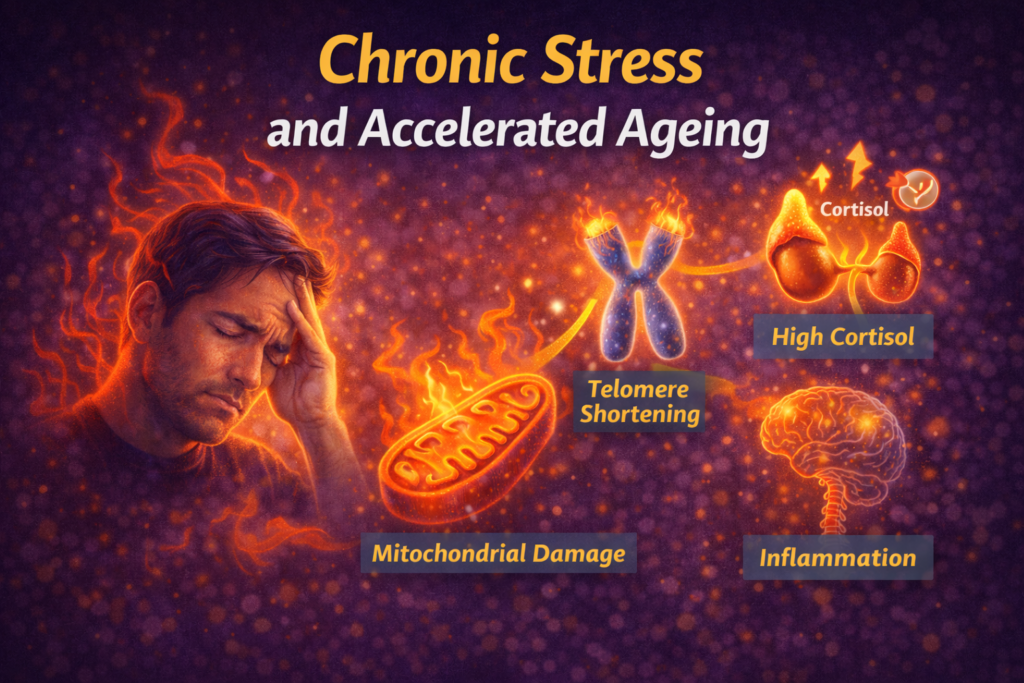
Chronic stress suppresses parasympathetic activity over time. That contributes to the familiar cascade: fragmented sleep, elevated inflammation, glucose instability, impaired recovery, and accelerated biological ageing.
This is why nervous system regulation shows up repeatedly across your longevity foundations: Stress & Longevity, Sleep for Longevity, and Movement for Stress & Recovery.
In short: you don’t need to “stimulate” the vagus nerve aggressively — you need to create conditions where it naturally stays active.
3) What actually helps vagal tone (evidence-aligned)
Slow breathing with longer exhales
Slow breathing consistently increases vagally mediated HRV during practice and improves autonomic balance over time. This is one of the strongest behavioural levers available.
Practical guides: Breathwork That Lowers Cortisol Fast, Box Breathing vs Physiological Sigh, The 2-Minute Downshift.
Regular low-intensity movement
Walking, easy cycling, and gentle movement improve autonomic flexibility and reduce baseline stress load. Overtraining does the opposite.
See: High vs Low Cortisol Training Days.
Consistent sleep timing
Circadian stability strongly influences autonomic balance. Late nights, irregular schedules, and fragmented sleep suppress parasympathetic recovery.
Social safety and emotional regulation
Feeling safe, connected, and regulated in daily life reduces background nervous system threat signalling. This is not “soft” biology — it directly affects autonomic tone.
Reducing chronic stimulants and late stressors
Excess caffeine, late-night screens, heavy evening meals, and constant alertness training keep sympathetic tone elevated unnecessarily.
4) What’s mostly hype or overstated
Cold exposure as a vagus “hack”
Cold exposure activates stress pathways first. While brief cold may have adaptive benefits for some people, it is not a reliable calming tool for already stressed nervous systems.
Electrical vagus nerve gadgets
Clinical vagus nerve stimulation exists in medical contexts, but consumer devices often overpromise and under-deliver for general wellness. Behavioural regulation usually produces better returns for most people.
Single-point stimulation tricks
Ear pulling, humming once, splashing cold water — these may feel pleasant, but they don’t replace consistent regulation habits.
Chasing “activation” metrics
Trying to constantly optimise vagal tone numbers can backfire by creating performance anxiety. Data should guide behaviour, not control it: How to Use Wearables Without Obsession.
5) A simple practical approach
If you want better vagal tone without gimmicks:
- Do 2–5 minutes of slow breathing daily.
- Walk or move gently every day.
- Protect sleep timing and consistency.
- Reduce unnecessary stimulants late in the day.
- Use fast resets when stress spikes.
Over weeks and months, this shifts baseline regulation far more reliably than chasing hacks.
If you’re tracking recovery data, watch trends rather than daily noise: Tracking Trends, Not Daily Noise and Wearables & Recovery Tracking.
FAQ
Can I directly “stimulate” my vagus nerve?
Not reliably outside clinical settings. You influence it indirectly through breathing, movement, sleep, and stress patterns.
Is HRV the same as vagal tone?
No — HRV is an indirect marker influenced by many factors. It’s useful for trends, not precise diagnosis.
How long does it take to improve vagal tone?
Many people notice subjective changes within weeks. Objective changes accumulate over months of consistency.
Can supplements improve vagal tone?
Some supplements may indirectly support sleep or stress tolerance, but lifestyle behaviours remain the primary drivers.
Does improving vagal tone increase lifespan?
It supports healthier regulation patterns associated with better cardiometabolic and inflammatory profiles. Longevity is multi-factorial — this is one supportive lever, not a magic switch.
Final takeaway
The vagus nerve is important — but it’s not something you need to micromanage or hack aggressively.
Build calm into your daily inputs. Let regulation emerge naturally. That’s how nervous system health supports long-term resilience and ageing well.
— Simon
References
- Thayer JF & Lane RD. A model of neurovisceral integration in emotion regulation and dysregulation. Journal of Affective Disorders.
- Laborde S et al. (2022). Effects of voluntary slow breathing on vagally mediated heart rate variability. Systematic review and meta-analysis.
- Cleveland Clinic. Vagus Nerve: What It Is, Function, Location & Conditions. Reference
- Harvard Health Publishing. Relaxation techniques: Breath control helps quell errant stress response. Reference

Simon is the creator of Longevity Simplified, where he breaks down complex science into simple, practical habits anyone can follow. He focuses on evidence-based approaches to movement, sleep, stress and nutrition to help people improve their healthspan.