Nutrition • Foundations
The Anti-Inflammatory Plate
A simple, visual way to build meals that lower inflammation and support healthy ageing.
Chronic inflammation quietly drives many of the problems we associate with ageing — low energy, poor recovery, blood sugar instability, digestive issues, and rising disease risk. However, you don’t need a complicated diet or a cupboard full of supplements to address it.
Instead, you need a repeatable way to build meals that calm inflammation day after day. That’s exactly what the Anti-Inflammatory Plate is designed to do.
This approach focuses on proportions rather than restriction. As a result, it’s simple, sustainable, and realistic for everyday life.
In this guide, you’ll learn:
- what anti-inflammatory eating really means
- how inflammation accelerates ageing
- the Anti-Inflammatory Plate formula
- practical ways to apply it immediately
1) The simple explanation
Every meal you eat either nudges inflammation up or helps bring it down.
The Anti-Inflammatory Plate is built around foods that:
- reduce oxidative stress
- stabilise blood sugar
- support digestion and gut health
- provide the raw materials for cellular repair
You don’t need to eliminate food groups. Instead, you focus on the right balance — letting nutrient-dense foods do most of the work.
2) The science (explained simply)
Inflammation increases with age.
This process — often called inflamm-ageing — accelerates tissue damage, metabolic decline, and disease risk.
Colourful plants actively reduce inflammation.
Polyphenols and antioxidants help neutralise oxidative stress and downregulate inflammatory signalling.
Blood sugar stability matters.
Repeated glucose spikes increase inflammatory markers and protein glycation, both of which speed up ageing.
Healthy fats are protective.
Omega-3s and monounsaturated fats support cell membranes, brain health, and inflammatory balance.
Ultra-processed foods amplify inflammation.
Especially when they’re high in refined carbohydrates, industrial seed oils, and additives.
For a well-researched visual framework, see the Harvard Healthy Eating Plate, which aligns closely with anti-inflammatory principles.
3) The Anti-Inflammatory Plate formula
Aim to use this structure for at least one meal per day — ideally lunch and dinner.
50% colourful plants
Vegetables and fruit rich in fibre, antioxidants, and polyphenols.
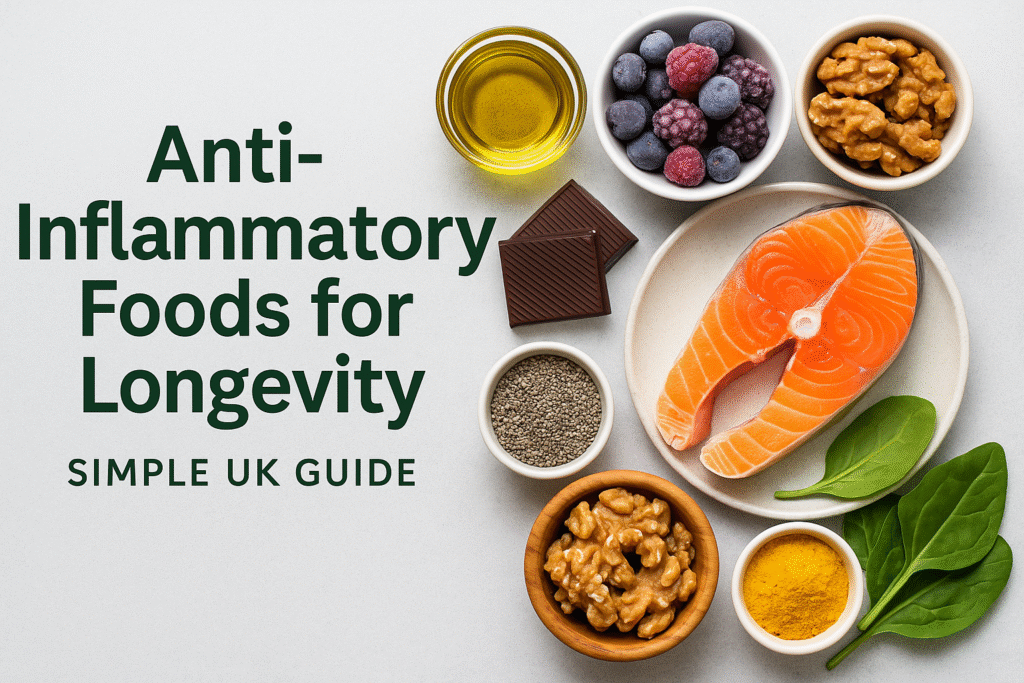
Examples: leafy greens, broccoli, peppers, tomatoes, berries, courgettes.
25% protein (animal or plant)
Protein supports muscle, satiety, immune function, and blood sugar control.
Examples: salmon, sardines, chicken, eggs, tofu, beans, Greek yoghurt.
20% slow carbohydrates
Gently digested carbs that avoid large glucose spikes.
Examples: oats, quinoa, lentils, beans, sweet potatoes, whole grains.
5% healthy fats
Essential for hormone health, nutrient absorption, and inflammation control.
Examples: olive oil, avocado, nuts, seeds, oily fish.
This structure lowers inflammation naturally — without calorie counting or restriction.
4) How to use it day to day
- Fill half your plate with vegetables at lunch and dinner.
- Add berries or fruit to breakfast for antioxidant support.
- Cook primarily with extra-virgin olive oil.
- Choose slow carbs most days instead of refined options.
- Include oily fish two to three times per week.
- Take a 5–10 minute walk after meals to improve glucose handling.
This pairs especially well with the 80/20 Longevity Eating Rule and walking after meals.
5) Quick wins
- Keep frozen vegetables and berries stocked — affordable and nutrient-dense.
- Use anti-inflammatory spices like turmeric, ginger, and garlic.
- Prep a large mixed salad once per week.
- Add beans or lentils to soups and stews for fibre and slow carbs.
- Snack on nuts or yoghurt instead of ultra-processed options.
6) Common mistakes to avoid
- Relying on ultra-processed “health” foods.
- Skipping protein — it helps regulate appetite and blood sugar.
- Fearing all carbohydrates instead of choosing better ones.
- Chasing extreme anti-inflammatory diets that aren’t sustainable.
7) My personal approach
I use the Anti-Inflammatory Plate for most lunches and dinners. It keeps decisions simple and energy stable.
- large portions of mixed vegetables or greens
- a solid protein source (salmon, eggs, tofu, chicken)
- a slow carb like quinoa or potatoes
- olive oil or nuts for healthy fats
This structure has been one of the easiest ways I’ve found to keep inflammation low without feeling restricted.
8) FAQs
Do I need to avoid gluten?
Not unless you’re sensitive. Whole grains can be anti-inflammatory.
Are carbohydrates inflammatory?
Refined carbs can be. Whole-food, slow carbs generally are not.
Do I need supplements?
Not for most people — food quality does most of the work.
Is dairy inflammatory?
For most people, no. Fermented dairy may even reduce inflammation.
Want a simple anti-inflammatory eating structure?
Use this plate daily and combine it with gentle movement for maximum benefit.
Related articles
- The 80/20 Longevity Eating Rule
- Blood Sugar and Longevity
- Why Walking After Meals Extends Lifespan
- The Optimal Longevity Diet
If you take one thing from this…
Build at least one Anti-Inflammatory Plate each day. Over time, that single habit can meaningfully reduce inflammation and support healthier ageing.
— Simon, Longevity Simplified
Disclaimer: This article is for educational purposes only and does not constitute medical advice.
References
- Harvard T.H. Chan School of Public Health — Healthy Eating Plate
- Research literature on inflamm-ageing and dietary patterns

Simon is the creator of Longevity Simplified, where he breaks down complex science into simple, practical habits anyone can follow. He focuses on evidence-based approaches to movement, sleep, stress and nutrition to help people improve their healthspan.