Telomeres Explained: What They Are, What They Aren’t, and Why They Matter for Ageing
Telomeres protect your DNA like the plastic tips on shoelaces. When they shorten too far, cells lose their ability to divide and repair.
← Back to: Biology of Ageing Explained
Disclaimer: This article is for educational purposes only and does not provide medical advice. It is not intended to diagnose, treat or prevent disease. Always consult a qualified professional for medical concerns.
Telomeres often get described as a biological “clock” that determines how fast you age. That idea is partly true — and partly misleading.
Telomeres do play a role in cellular ageing, tissue renewal and disease risk. However, they are not a magic switch you can simply lengthen to stop ageing.
Understanding what telomeres actually do — and what influences their shortening — helps you make smarter decisions about long-term health without falling for oversimplified longevity claims.
This guide explains telomeres in plain language, how they interact with DNA repair and cellular stress, and what genuinely supports healthy telomere maintenance over time.
Personal observation: Telomeres taught me a useful lesson about longevity in general — biology rarely has single levers. They reflect cumulative stress, repair capacity and lifestyle rather than one isolated mechanism.
1) The simple explanation
Imagine your DNA as a long piece of string with important information written along it. The ends of that string are fragile and prone to fraying.
Telomeres act like protective caps on those ends — similar to the plastic tips on shoelaces. They prevent the DNA from unraveling or sticking to other DNA strands.
Each time a cell divides, telomeres shorten slightly. When they become too short, the cell can no longer divide safely and enters a protective shutdown state.
Over decades, this gradual shortening contributes to reduced tissue repair and ageing.
2) What telomeres actually are
Telomeres are repetitive DNA sequences located at the ends of chromosomes. They don’t carry genes — their job is structural protection.
Without telomeres:
- DNA ends would degrade
- chromosomes could fuse together
- genetic information would be lost during replication
An enzyme called telomerase can partially rebuild telomeres in certain cells (such as stem cells and immune cells), but most adult body cells have limited telomerase activity.
3) Why telomeres shorten over time
Cell division
Each round of replication trims a small portion of the telomere.
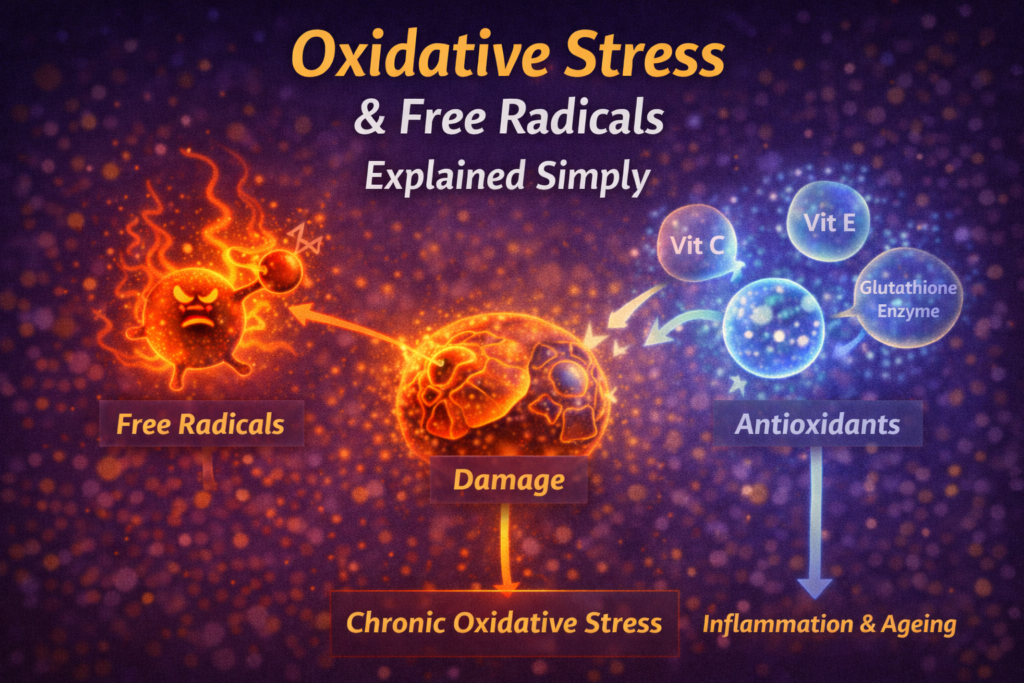
Oxidative stress
Reactive molecules damage telomeric DNA directly.
See: Oxidative Stress Explained Simply.
Inflammation
Chronic immune activation accelerates turnover and telomere erosion.
Related: Stress and Inflammation.
Metabolic instability
Blood sugar swings and insulin resistance increase oxidative burden.
See: Insulin Resistance.
Poor sleep and chronic stress
Dysregulated cortisol rhythms impair repair systems.
Related: Sleep for Longevity and Stress and Longevity.
4) Why telomeres matter for ageing
Shortened telomeres signal cells to stop dividing or enter senescence.
This leads to:
- slower tissue regeneration
- reduced immune renewal
- higher inflammatory signalling
- increased disease vulnerability
Telomere dysfunction is closely linked with:
- cardiovascular disease
- immune ageing
- fibrotic diseases
- neurodegenerative risk
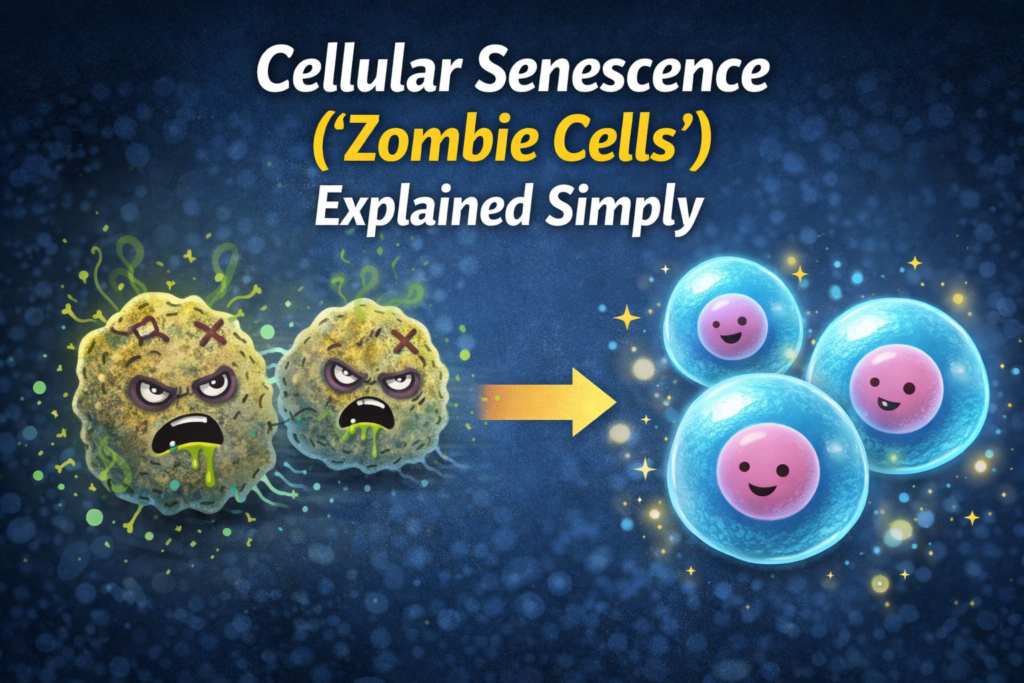
It also interacts with cellular shutdown mechanisms: Cellular Senescence Explained Simply.
5) Common myths about telomeres
Myth: Longer telomeres always mean longer life
Telomere length is one signal among many. Cancer risk increases if damaged cells avoid shutdown.
Myth: You can safely “boost telomerase” with supplements
Uncontrolled telomerase activation carries theoretical cancer risks.
Myth: Telomeres alone control ageing
Ageing emerges from multiple interacting systems: DNA Damage & Repair, Proteostasis, Mitochondria, Glycation.
6) How telomeres connect to other ageing pathways
- DNA repair: shortened telomeres increase genome instability
- Senescence: critically short telomeres trigger growth arrest
- Inflammation: senescent cells raise inflammatory load
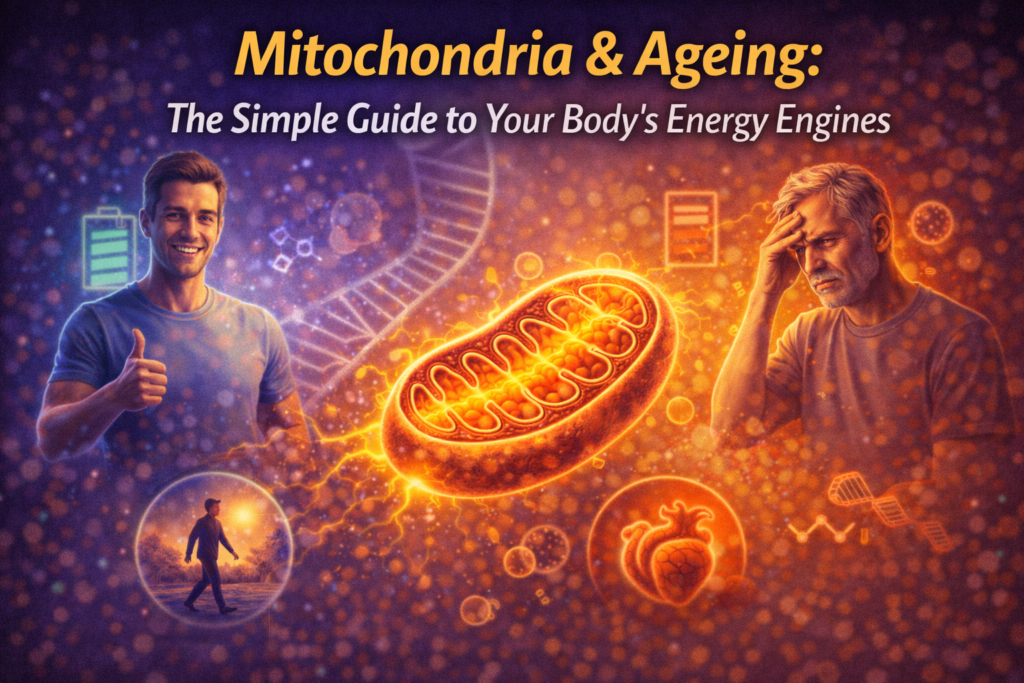
- Mitochondria: energy deficits impair maintenance
- Metabolic health: insulin resistance accelerates shortening
Explore: Mitochondria & Ageing and Stress and Blood Sugar Instability.
7) How to support telomere health in real life
Maintain consistent physical activity
Moderate exercise supports telomere maintenance and metabolic stability.
Protect sleep and circadian rhythm
Repair processes rely on stable sleep timing.
Stabilise blood sugar
Reducing glucose volatility reduces oxidative exposure.
Manage chronic psychological stress
Stress accelerates immune turnover and inflammation.
Eat nutrient-dense whole foods
Micronutrients support DNA maintenance enzymes.
FAQ
Can telomeres be lengthened?
Some tissues can partially rebuild telomeres, but large-scale lengthening is not proven safe or practical.
Do telomere tests predict lifespan?
Not reliably. They provide limited snapshot information.
Does stress really shorten telomeres?
Chronic stress correlates with accelerated shortening in population studies.
Is telomere shortening bad in all cases?
It acts as a protective mechanism to prevent damaged cells from dividing.
Final takeaway
Telomeres protect your genetic material — but they’re not a magic longevity switch.
Long-term telomere health reflects cumulative lifestyle signals: sleep, movement, metabolic stability and stress regulation. Focus on supporting the whole system rather than chasing shortcuts.
— Simon
References
- Blackburn EH et al. (2015). Telomeres and telomerase: the path from maize to human cancer and aging. Nature Medicine.
- Shammas MA. (2011). Telomeres, lifestyle, cancer, and aging. Current Opinion in Clinical Nutrition & Metabolic Care.

Simon is the creator of Longevity Simplified, where he breaks down complex science into simple, practical habits anyone can follow. He focuses on evidence-based approaches to movement, sleep, stress and nutrition to help people improve their healthspan.