Stress Appetite: Why You Crave Sugar When You’re Tired and Wired (and What to Do Instead)
Stress cravings aren’t a discipline problem. They’re often your body trying to stabilise energy, mood and nervous system load.
Disclaimer: This article is for educational purposes only and does not provide medical advice. If you have diabetes, an eating disorder history, unexplained weight change, or persistent fatigue/anxiety, speak with a qualified clinician or registered dietitian.
Ever notice that your “best intentions” disappear when you’re stressed? You can eat well all day, then suddenly you’re craving sugar at 9pm — not because you’re weak, but because you’re tired and wired.
This pattern is incredibly common, and it usually has less to do with willpower than people think. Stress changes how the brain and body manage energy, threat perception, sleep pressure and blood sugar stability. Sugar cravings can become the body’s fastest way to feel better — even if it backfires later.
In this guide, we’ll break down what’s actually happening and give you simple, realistic ways to reduce stress appetite without turning food into another battlefield.
Personal observation: The most reliable predictor of my sugar cravings isn’t “bad habits” — it’s sleep debt plus mental load. If I’m under-recovered, my brain will try to buy calm with quick carbs. Once I started treating cravings as a signal (not a moral failure), they became much easier to manage.
1) What “stress appetite” actually is
Stress appetite is when cravings increase during periods of psychological pressure, sleep loss, or nervous system overload — even if you’re not physically hungry.
The craving is often for:
- sweet foods
- starchy comfort foods
- salty snacks (often paired with carbs)
- hyper-palatable “reward” foods
These foods reliably change how you feel in the short term. They boost energy availability and provide a quick dopamine-and-relief effect — which your brain learns fast.
The goal isn’t to “never crave sugar”. The goal is to reduce the situations that reliably trigger the cycle.
2) Why stress makes you crave sugar
Reason 1: Your brain wants fast energy
Stress increases energy demand — mentally and physiologically. Sugar is the fastest available fuel. If your cortisol rhythm is off or you’ve under-fuelled earlier, cravings are more likely.
Related: How to Tell if Your Cortisol Rhythm Is Off.
Reason 2: Sugar is a quick mood regulator
Sugar and highly palatable foods can temporarily reduce perceived stress and provide comfort. Unfortunately, the rebound (sleep disruption, glucose swings, guilt loops) often worsens overall stress load.
Reason 3: Sleep loss increases appetite signals
Poor sleep alters hunger and satiety hormones and tends to increase appetite and preference for energy-dense foods. Even one short night can shift food choices the next day.
For foundations: Sleep for Longevity.
Reason 4: Blood sugar instability creates urgent cravings
Big swings in glucose can create a “need” for quick carbs to feel stable again — especially in the afternoon and evening.
More context: Blood Sugar & Longevity.
3) Why “tired and wired” is the danger zone
The tired-and-wired state is where most stress eating happens:
- you’re exhausted (low energy reserves)
- you’re still stimulated (high nervous system arousal)
- your body wants relief now
This is also why evening anxiety and late cravings often appear together. If your evenings are the hardest part of the day, read: Evening Anxiety: Why It Spikes at Night.
4) Common stress-craving patterns
Pattern A: “Reward at the end of the day”
- long day → treat behaviour
- often paired with screens
- sleep quality declines
Pattern B: “Afternoon crash rescue”
- 3–5pm dip → coffee + sugar
- temporary lift → later slump
- evening anxiety more likely
Pattern C: “Under-eating earlier”
- skipped meals → over-hungry at night
- more impulsive choices
- cravings feel urgent
Pattern D: “Overtraining + under-recovery”
Hard training with poor recovery can increase cravings — the body is trying to restore energy. See: High vs Low Cortisol Training Days.
5) What helps (simple, practical strategies)
1) Eat a “stability meal” earlier
The most underrated strategy is preventing the evening crash by eating a stabilising meal mid-afternoon or early evening:
- protein
- fibre
- healthy fats
This reduces the “urgent” feeling of cravings later.
2) Use a 2-minute nervous system downshift before eating
Stress cravings often come from arousal, not hunger. Do this first: The 2-Minute Downshift.
Then ask: “Am I hungry — or am I seeking relief?”
3) Replace the “reward loop” with a recovery loop
Keep the idea of reward, but change the content:
- hot shower + dim lights
- 10-minute walk
- herbal tea + low-stimulation music
- light stretching
This reduces evening anxiety and improves sleep, which reduces next-day cravings.
4) Put friction in front of sugar (without banning it)
You don’t need strict rules. You need a small speed bump:
- keep sugary foods out of immediate reach
- pre-portion treats
- avoid eating them with screens
5) Make sleep the priority lever
If you fix one thing, fix sleep consistency. Poor sleep increases cravings and reduces impulse control — it’s not moral weakness, it’s physiology.
Start here: Sleep for Longevity.
6) How wearables can reveal your trigger
Wearables can help you notice patterns that predict stress appetite:
- low HRV trend + high resting HR → cravings more likely
- short sleep duration → cravings next day
- late bedtime → late-night snacking
Use data as a guide, not a judge: How to Use Wearables Without Obsession, Tracking Trends, Not Daily Noise, and Wearables & Recovery Tracking.
FAQ
Is craving sugar a sign of high cortisol?
Not directly. It’s more often a sign of stress load, sleep debt, blood sugar instability, or under-fuelling.
Should I cut sugar completely?
Usually no. Strict restriction often rebounds. Better to reduce triggers and add stability.
What’s the fastest thing that helps in the moment?
A short reset plus a stabilising snack: a brief downshift (breathing) and protein/fibre can reduce urgency. Try: The 2-Minute Downshift.
Does this matter for longevity?
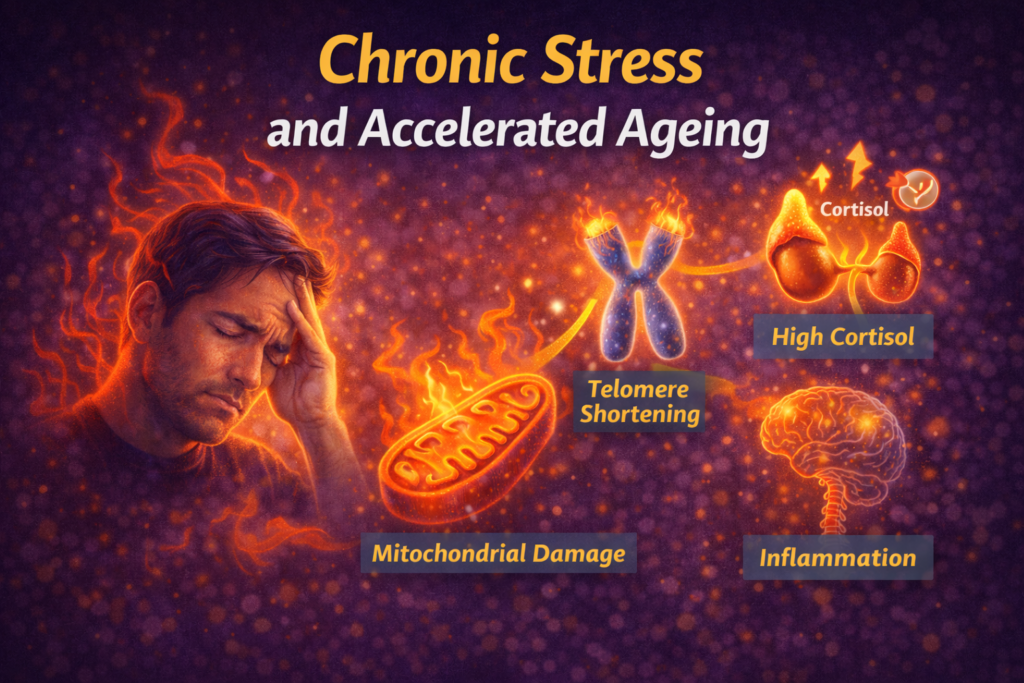
Chronic stress eating can worsen sleep, glucose stability and inflammation over time — all relevant to biological ageing. See: Anxiety, Cortisol & Ageing and Chronic Stress and Accelerated Ageing.
Final takeaway
Stress cravings are often your body asking for stability, not indulgence.
Fix the upstream drivers — sleep, recovery, blood sugar stability, and nervous system load — and the cravings usually soften without a fight.
— Simon
References
- Harvard Health Publishing — Sleep and appetite regulation (overview of how sleep loss affects hunger and food choices). Reference
- NHS — Stress (overview and practical coping guidance). Reference
- Your internal guide: Blood Sugar & Longevity.

Simon is the creator of Longevity Simplified, where he breaks down complex science into simple, practical habits anyone can follow. He focuses on evidence-based approaches to movement, sleep, stress and nutrition to help people improve their healthspan.