Sleep vs Training: What to Prioritise When Life Gets Busy
Why protecting sleep often matters more than squeezing in another workout.
← Back to: Recovery & Restoration Blueprint
When life gets busy, something usually has to give.
For many people trying to stay healthy, the trade-off becomes a familiar one: sacrifice sleep to fit in training — or skip training to protect sleep.
This decision matters far more than most people realise. From a longevity perspective, sleep is the foundation that determines whether training builds you up or slowly breaks you down.
This guide will help you decide:
- when sleep should take priority
- when training is still worth doing
- how to adjust intelligently without guilt
- how to protect long-term health when life isn’t ideal
Why Sleep and Training Often Compete
Modern life compresses recovery.
Work stress, family commitments, screens, and late nights reduce sleep opportunity — yet many people still try to maintain the same training load.
This creates a mismatch: high stress with low recovery.
Over time, this imbalance shows up as fatigue, poor sleep quality, stalled progress, or injury — patterns explored in overtraining signs.
Why Sleep Usually Comes First
Sleep is where adaptation happens.
During sleep:
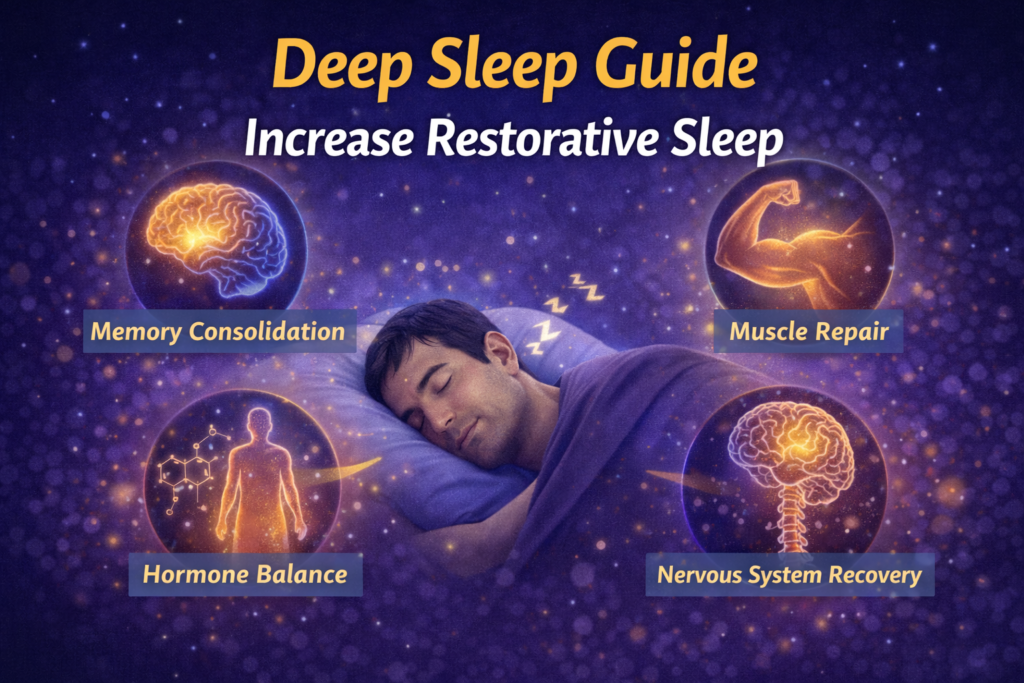
- muscle repair and growth occur
- hormones regulating appetite and stress rebalance
- the nervous system downshifts into recovery
When sleep is short or fragmented, training stress accumulates instead of resolving.
This often shows up as reduced sleep efficiency, more night-time wake ups, and rising fatigue.
From a longevity standpoint, consistently sacrificing sleep to train is a losing trade.
When Training Still Makes Sense
Training doesn’t need to stop every time sleep is imperfect.
Training can still be beneficial when:
- sleep loss is short-term (1–2 nights)
- intensity is adjusted downward
- movement improves mood and stress
This is where approaches like active recovery shine — maintaining the habit without overloading recovery capacity.
How to Adjust Without Losing Progress
The key is flexibility, not all-or-nothing thinking.
Smart adjustments include:
- shorter sessions instead of skipped weeks
- lower intensity on poor-sleep days
- prioritising technique and mobility
- using planned deload weeks during stressful periods
These adjustments preserve consistency while protecting sleep and recovery.
Warning Signs You’re Pushing Too Hard
If you repeatedly choose training over sleep, watch for:
- persistent morning fatigue
- loss of motivation
- increasing reliance on caffeine
- poor sleep quality despite exhaustion
These are early signals that recovery capacity is being exceeded.
Addressing them early prevents the need for longer forced breaks later.
Frequently Asked Questions
Is it ever okay to skip sleep for training?
Occasionally, yes. Habitually, no.
What’s the minimum effective sleep for training?
Most people need at least 7 hours for consistent recovery.
Should beginners prioritise sleep even more?
Yes. Adaptation is slower when recovery is poor.
The Longevity Takeaway
When life gets busy, sleep should usually come first.
Training is powerful — but only when recovery supports it. Protecting sleep allows you to stay active, consistent, and injury-free over the long term.
This balance — not perfection — is at the heart of the Recovery & Restoration Blueprint and is essential for healthy ageing.
References
- Simpson NS et al. “Sleep and athletic performance.” Sports Medicine. 2017.
- Fullagar HHK et al. “Sleep and recovery in team sport.” Sports Medicine. 2015.
Disclaimer: This article is for educational purposes only and does not replace medical advice.

Simon is the creator of Longevity Simplified, where he breaks down complex science into simple, practical habits anyone can follow. He focuses on evidence-based approaches to movement, sleep, stress and nutrition to help people improve their healthspan.