Probiotics & Gut Longevity: Do They Work, and Which Types Matter?
Probiotics are everywhere. Here’s what actually helps gut health (and what’s mostly marketing).
Disclaimer: This article is for educational purposes only and does not replace medical advice. If you’re immunocompromised, have a serious illness, have a central line, are pregnant, or take medication that affects immunity, speak with your GP before using probiotics. Seek medical help urgently if you have severe abdominal pain, blood in stool, unexplained weight loss, or persistent diarrhoea.
Your gut is home to trillions of microbes. Together, they influence digestion, immunity, inflammation, and even brain function. Because of that, a healthier microbiome is often linked with better metabolic health and more resilient ageing.
Probiotics are marketed as the shortcut to a better gut. However, not all probiotics are equal — and they’re not a magic fix for a poor lifestyle.
In this guide, you’ll learn:
- what probiotics actually are (in plain English)
- how they may support gut health and longevity
- the difference between fermented foods and supplements
- which probiotic “types” matter most, and when a trial may be worth it
1. The Simple Explanation
Probiotics are live microorganisms that can benefit the host when consumed in adequate amounts. In plain terms, they’re helpful bacteria (or yeasts) you eat or drink.
You’ll find them in:
- fermented foods (live yoghurt, kefir, sauerkraut, kimchi)
- probiotic drinks
- capsules or powders
Here’s the key detail: most probiotics don’t permanently “move in”. Instead, they usually pass through while interacting with your gut ecosystem. Along the way, they may help by:
- competing with less helpful microbes
- supporting the gut lining
- producing useful compounds
Most importantly, the biggest gut-longevity gains still come from daily basics: food quality, fibre, movement, sleep, and stress management. Probiotics can be a helpful layer on top of that foundation.
2. How Probiotics May Support Longevity
A) Gut barrier and immune function
A more resilient microbiome can support the gut lining and immune signalling. Over time, that may reduce low-grade inflammation in some people.
B) Inflammation and “helpful metabolites”
Certain microbes support the production of short-chain fatty acids (like butyrate). These compounds help colon cells and may support metabolic health.
C) Metabolic and blood sugar effects
Some probiotic combinations show small improvements in insulin sensitivity or blood sugar control in some studies. Even so, results are usually better when diet improves too.
D) Brain and mood support
Because the gut communicates with the brain, some people notice changes in stress response or mood. That said, effects vary a lot by person and strain.
E) Ageing and microbiome diversity
In general, older adults with more diverse, stable microbiomes tend to have better outcomes. Therefore, supporting diversity through fibre, fermented foods, and (sometimes) targeted probiotics may help keep the ecosystem more resilient.
If you want a clear, consumer-friendly overview of probiotic evidence and safety, the U.S. National Center for Complementary and Integrative Health (NCCIH) has a good summary: Probiotics: What You Need To Know.
Related: Gut Health and the Microbiome and The Gut Microbiome of Centenarians: 4 Standout Bacteria.
3. The Gut Longevity Framework
For longevity, probiotics work best inside a simple three-layer system:
- Base: a fibre-rich eating pattern that feeds your existing microbes
- Plus: fermented foods for gentle, broad exposure
- Targeted: supplements when there’s a clear reason to try them
In other words, probiotics should amplify a gut-friendly lifestyle — not patch over an ultra-processed diet and chronic stress.
4. Start With Prebiotics and Fermented Foods
A) Feed your microbiome first (prebiotics)
Prebiotics are fibres and compounds that feed beneficial gut bacteria. Over the long run, this is often more powerful than any single capsule.
- onions, leeks, garlic
- asparagus, artichokes
- bananas (especially slightly underripe)
- oats and barley
- beans, lentils, chickpeas
- nuts and seeds
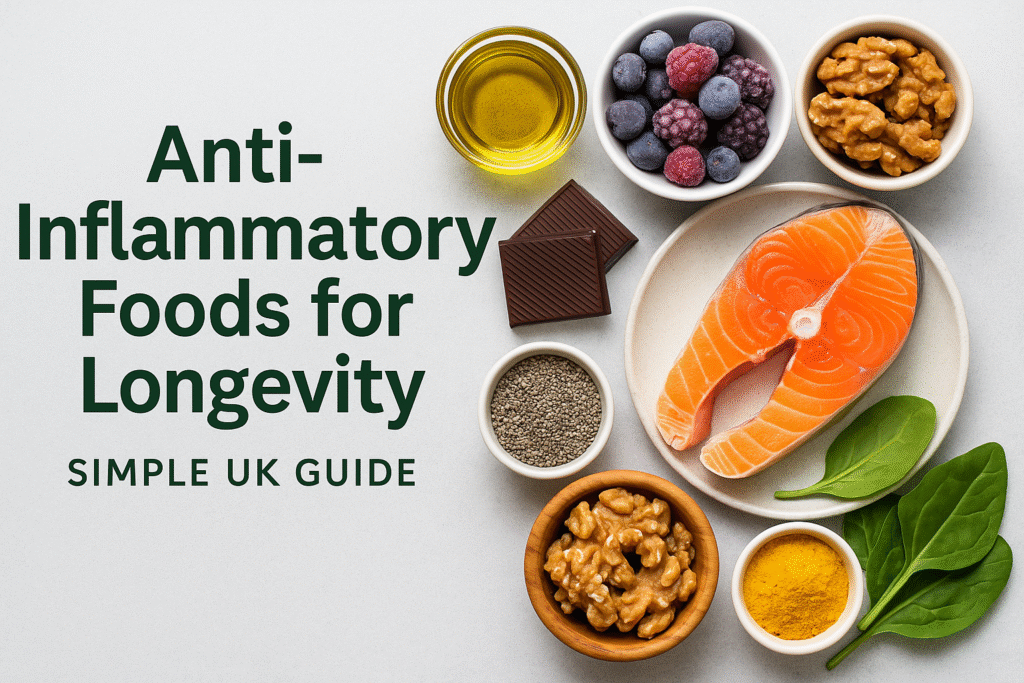
Helpful next read: Anti-Inflammatory Foods.
B) Add fermented foods (the easiest “probiotic” habit)
Fermented foods give a wide mix of microbes. Plus, they come with extra nutrients that supplements don’t.
Simple UK-friendly options:
- live yoghurt or kefir
- unpasteurised sauerkraut or kimchi
- fermented pickles in brine (not vinegar-only)
- some traditional cheeses with live cultures
Start small. For example, add a few spoonfuls of sauerkraut a few times per week, or switch to live yoghurt at breakfast.
5. Probiotic Supplements: When Might They Help?
Supplements can be useful in specific situations. For instance:
- after antibiotics (in some cases)
- for some IBS-type symptoms (depending on the person and strain)
- when you can’t tolerate much fibre at first
- as a short, structured trial for bloating or bowel habits
Results are mixed and very individual. Some people feel a clear difference, while others feel nothing.
What to look for on the label
- Named strains (not just “proprietary blend”)
- CFU count (dose indicator — higher isn’t always better)
- Storage guidance (some need refrigeration)
- Specific evidence for that strain and purpose
If you have a complex gut condition, it’s worth discussing probiotics with a clinician or dietitian so you’re not guessing.
6. Which Types Matter Most (And Why “Strain” Is the Real Keyword)
Marketing often focuses on species names. However, outcomes usually depend on the strain (the specific sub-type).
Here are the most common categories you’ll see — and what they’re often used for:
A) Lactobacillus strains
Often used for general gut comfort, stool regularity, and after antibiotics. They can also support fermentation of certain foods.
B) Bifidobacterium strains
Often used for bloating, regularity, and gut barrier support. Many people find these “gentler” as a starting point.
C) Saccharomyces boulardii (a beneficial yeast)
Sometimes used around antibiotic-related diarrhoea and travel-related gut issues. Since it’s a yeast, it behaves differently from bacterial probiotics.
D) Spore-based probiotics
These are designed to survive the stomach more easily. That said, they can be strong for some people, so a cautious trial is sensible.
Simple rule: choose a product based on your goal (e.g., “post-antibiotics” or “bloating”), then check that the specific strains have evidence for that goal.
7. What Probiotics Can and Cannot Do
They can:
- support gut comfort in some people
- help restore balance after disruption (sometimes)
- work well alongside fibre and fermented foods
They cannot:
- overwrite a low-fibre, ultra-processed diet
- guarantee long-term colonisation
- replace sleep, movement, and stress reduction
- act as a cure for complex gut disease on their own
8. Quick Wins for Gut Longevity
- add one new plant food per week until you regularly hit 20–30 different plants weekly
- include live yoghurt or kefir a few times per week
- swap one ultra-processed snack for nuts, fruit, or hummus and veg
- add an after-meal walk to support both blood sugar and gut motility
- if you try a probiotic, trial it consistently for 4–8 weeks before judging
9. My Personal Approach
When I’ve experimented with probiotics, the biggest difference wasn’t the capsule — it was the foundation. Once I increased fibre, added one fermented food I actually liked, and walked more consistently, everything became calmer. After that, a targeted probiotic trial felt like a “small boost,” not a rescue plan.
That’s the lens I recommend: build the base first, then test carefully.
10. FAQs
Are probiotics necessary for longevity?
No. They can help some people, but foundations (food quality, fibre, movement, sleep, stress) usually matter more.
Can probiotics make symptoms worse at first?
Yes, some people notice temporary bloating or changes in bowel habits. If symptoms are severe or persistent, stop and speak with a professional.
Should I rotate probiotic brands?
Not necessarily. Instead, focus on consistency and using strains that match your goal.
Is kombucha a good probiotic?
Sometimes, but sugar content varies. Treat it as an occasional drink rather than a primary strategy.
Are probiotics safe for everyone?
Most healthy people tolerate them well. However, higher-risk groups (immunocompromised, very unwell) should speak to a clinician first.
11. UK-Specific Notes
- live yoghurt, kefir, and sauerkraut are widely available in UK supermarkets now
- supplement quality can vary, so check strain details and storage guidance
- if you have IBS symptoms, it may be worth discussing options with a GP or dietitian rather than guessing
If You Take One Thing From This…
Probiotics work best as a small amplifier. Feed your microbiome with plants and fibre first, add fermented foods next, then use targeted probiotics thoughtfully if you have a clear reason.
Want a gut-friendly longevity routine?
Start with food, fibre, movement, and simple daily habits — then build from there.
Related Articles
- Gut Health and the Microbiome
- The Gut Microbiome of Centenarians
- Anti-Inflammatory Foods
- Optimal Longevity Diet
- Why Walking After Meals Extends Lifespan
References
- Hill C, Guarner F, Reid G, et al. The ISAPP consensus statement on the definition and scope of probiotics. Nat Rev Gastroenterol Hepatol.
- NCCIH. Probiotics: What You Need To Know. (External reference)
- Valdes AM, Walter J, Segal E, Spector TD. Role of the gut microbiota in nutrition and health. BMJ.
— Longevity Simplified

Simon is the creator of Longevity Simplified, where he breaks down complex science into simple, practical habits anyone can follow. He focuses on evidence-based approaches to movement, sleep, stress and nutrition to help people improve their healthspan.