Polyphenols & Redox Balance: How Plant Compounds Support Healthy Ageing
Polyphenols don’t just neutralise oxidative stress — they activate your body’s own repair, antioxidant and resilience systems. This is why whole plants outperform isolated supplements.
← Back to: Biology of Ageing Explained
Disclaimer: This article is for educational purposes only and does not provide medical advice. It is not intended to diagnose, treat or prevent disease. Always consult a qualified professional before making dietary or supplement changes.
When people hear the word antioxidant, they often imagine vitamins neutralising free radicals like chemical sponges. That mental model misses the real power of many plant compounds.
Polyphenols — the colourful compounds found in plants — rarely act as simple scavengers. Instead, they act as biological signals that activate your own internal repair, antioxidant and detox systems.
This is one reason why diets rich in vegetables, berries, herbs, olive oil and tea consistently associate with better metabolic health and slower biological ageing — even when isolated supplements fail to replicate the effect.
This guide explains how polyphenols work, why they support redox balance rather than suppress it, and how to use them practically without chasing superfoods or supplements.
Personal observation: The more I learned about polyphenols, the clearer it became why simple food variety beats optimisation. You’re feeding signalling networks — not trying to micromanage chemistry.
1) The simple explanation
Polyphenols are plant compounds that activate your body’s internal defence systems.
Rather than directly neutralising every reactive molecule, they help your cells:
- upregulate antioxidant enzymes
- improve mitochondrial efficiency
- strengthen detox pathways
- support immune balance
Think of polyphenols as training signals for your biology — not chemical shields.
Related: Antioxidants Explained and Oxidative Stress Explained.
2) What polyphenols actually are
Polyphenols are a large family of compounds plants use for protection against UV light, pests and stress.
Common categories include:
- Flavonoids (berries, citrus, tea)
- Phenolic acids (coffee, whole grains)
- Stilbenes (grapes, peanuts)
- Lignans (seeds, legumes)
Humans consume thousands of polyphenols across a diverse diet — not one magic compound.
3) Why signalling matters more than scavenging
Many polyphenols have low direct antioxidant capacity in human tissues. However, they strongly activate signalling pathways that regulate endogenous defences.
These pathways influence:
- glutathione production
- mitochondrial biogenesis
- autophagy and mitophagy
- inflammatory regulation
This fits within the hormesis framework: Hormesis Explained Simply.
4) Polyphenols and redox balance
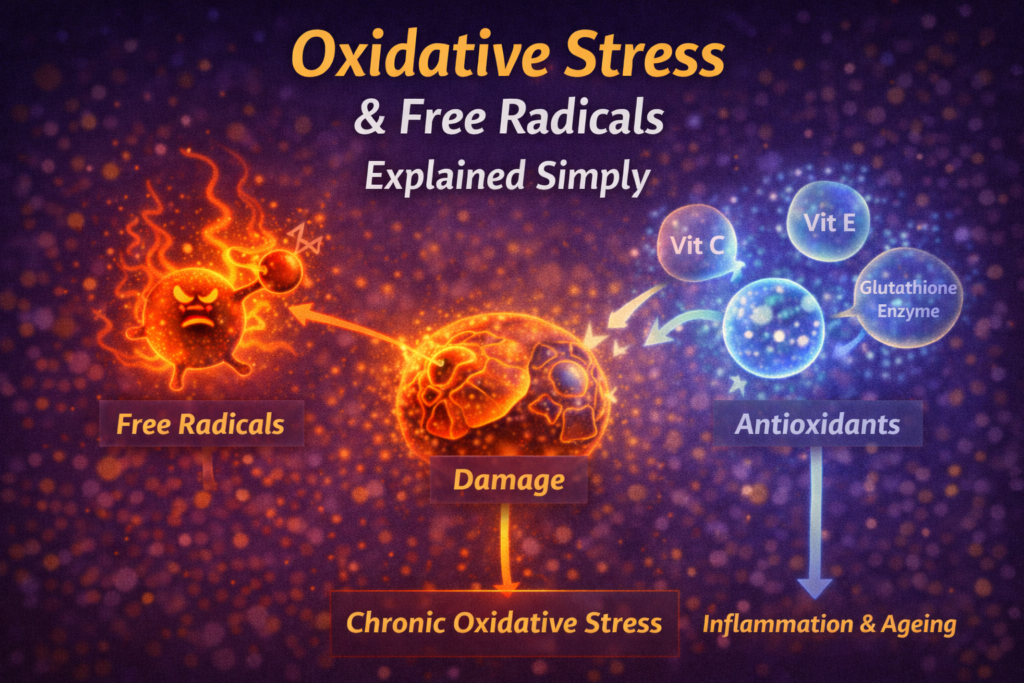
Redox balance refers to the balance between reactive signalling and antioxidant protection.
Polyphenols help stabilise this system by strengthening your internal regulatory capacity rather than suppressing signals.
See: Inflammation vs Oxidative Stress.
5) Mitochondria, energy and oxidative control
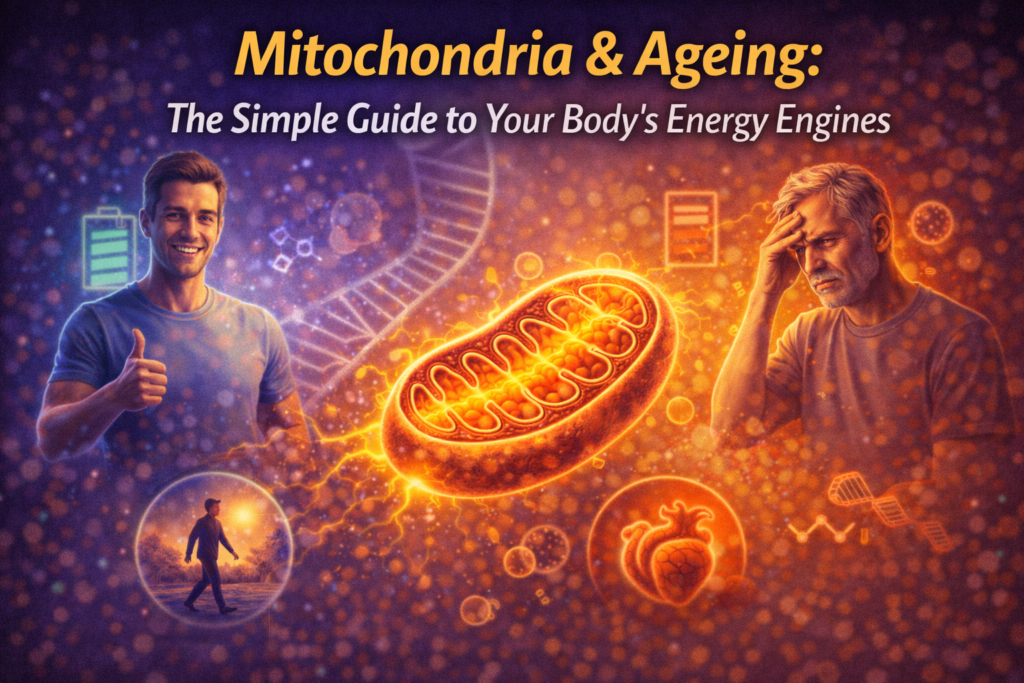
Healthy mitochondria produce fewer harmful reactive by-products and respond better to adaptive stress.
Polyphenols indirectly support mitochondrial function by improving signalling efficiency and cellular cleanup.
Related: Mitochondria & Ageing, Mitochondrial Biogenesis and Mitophagy Explained.
6) The gut–polyphenol connection
Many polyphenols are transformed by gut bacteria into bioactive metabolites.
This means:
- diet diversity matters more than single compounds
- fibre supports polyphenol metabolism
- microbiome health shapes individual response
Explore: Anti-Inflammatory Foods.
7) Best food sources (without extremes)
- berries and colourful fruits
- leafy greens and cruciferous vegetables
- extra virgin olive oil
- herbs and spices
- tea and coffee (moderate)
- legumes and whole grains
Variety matters more than perfection.
8) A sensible view on supplements
Isolated polyphenol supplements often fail to replicate food benefits and may blunt adaptive signalling at high doses.
Supplements should be viewed as targeted tools — not dietary replacements.
FAQ
Are polyphenols antioxidants?
Some have direct antioxidant activity, but signalling effects dominate in humans.
Do I need superfoods?
No. Diversity matters more than concentration.
Is red wine necessary for polyphenols?
No. Alcohol introduces separate risks.
Can I overdo polyphenols?
Extreme supplementation may interfere with adaptive signalling.
Final takeaway
Polyphenols strengthen your body’s internal resilience systems rather than acting as chemical shields.
A diverse plant-rich diet remains the safest and most effective way to support redox balance for longevity.
— Simon
References
- Scalbert A et al. (2005). Dietary polyphenols and the prevention of diseases. Critical Reviews in Food Science.
- Manach C et al. (2004). Polyphenols: food sources and bioavailability. American Journal of Clinical Nutrition.

Simon is the creator of Longevity Simplified, where he breaks down complex science into simple, practical habits anyone can follow. He focuses on evidence-based approaches to movement, sleep, stress and nutrition to help people improve their healthspan.