Overtraining Signs: How to Spot Burnout Early
The early warning signals your body gives before fatigue turns into injury or burnout.
← Back to: Recovery & Restoration Blueprint
Most people don’t overtrain because they’re reckless. They overtrain because they ignore small warning signs while chasing consistency.
By the time pain, injury, or exhaustion forces a stop, burnout has often been building for weeks or months.
Learning to spot early overtraining signs is one of the most important longevity skills you can develop. It allows you to adjust course before recovery debt becomes a problem.
This guide explains:
- what overtraining actually is
- the earliest physical and mental warning signs
- how sleep and stress fit into burnout
- what to do the moment red flags appear
What Is Overtraining?
Overtraining occurs when training and life stress exceed your ability to recover.
It’s not just about doing “too much exercise.” It’s the combined load of:
- training volume and intensity
- poor sleep or disrupted recovery
- psychological stress
- inadequate nutrition
From a longevity perspective, overtraining isn’t a badge of discipline — it’s a breakdown in recovery management.
Early Overtraining Signs
Overtraining rarely starts with injury. It starts quietly.
1. Persistent Fatigue
Feeling tired despite adequate sleep is often the first red flag.
2. Declining Performance
Workouts feel harder, weights feel heavier, or pace drops despite consistent effort.
3. Poor Sleep Quality
Difficulty staying asleep, frequent wake ups, or unrefreshing sleep — even when time in bed hasn’t changed.
This often shows up as reduced sleep efficiency and more night-time awakenings.
4. Elevated Resting Heart Rate
A higher-than-normal morning heart rate can signal nervous system stress.
5. Irritability or Low Motivation
Training starts to feel like a chore rather than a release.
Sleep, Stress, and Recovery Debt
Overtraining is often misdiagnosed as a training problem when it’s actually a recovery problem.
Common contributors include:
- short or fragmented sleep
- late caffeine use
- high work or emotional stress
- inconsistent recovery days
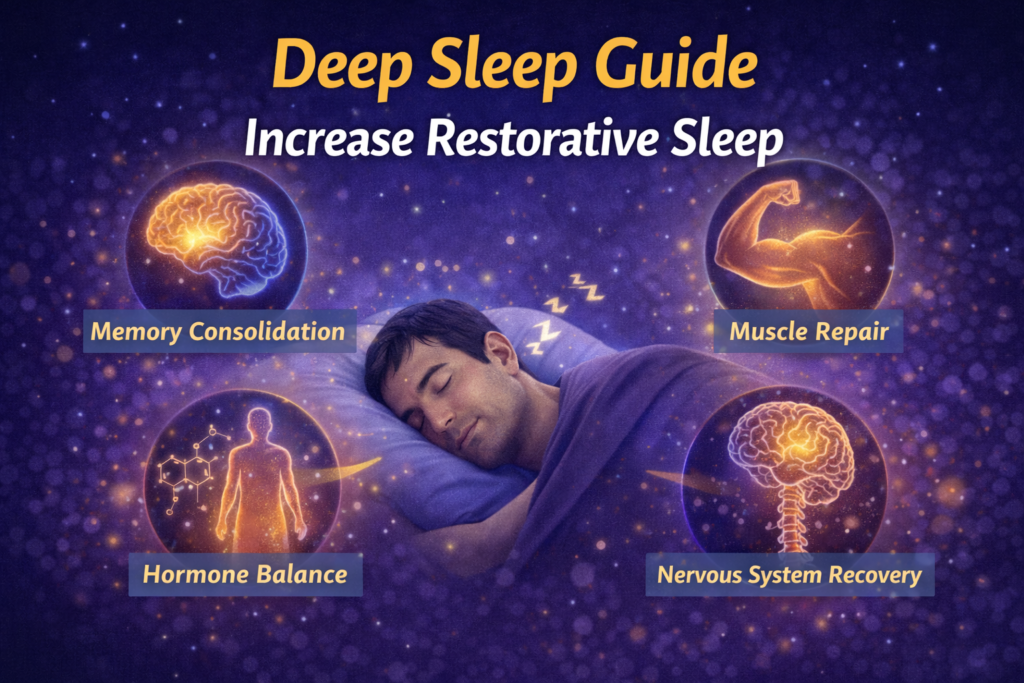
This is why sleep and recovery habits — covered in the Sleep for Longevity pillar — are inseparable from training success.
Ignoring sleep while pushing training is one of the fastest paths to burnout.
Why Overtraining Signs Get Ignored
Early signs are easy to dismiss because they’re subtle and familiar.
People often tell themselves:
- “I just need to push through”
- “Everyone feels tired”
- “I’ll rest later”
Unfortunately, this mindset turns manageable fatigue into chronic recovery debt.
This is exactly why tools like active recovery vs rest and planned deload weeks are so effective for longevity-focused training.
What to Do When You Spot the Signs
The goal is not to stop moving — it’s to stop digging the hole deeper.
Immediate actions:
- reduce training volume and intensity
- prioritise sleep consistency
- increase recovery days
- manage caffeine and alcohol carefully
Short-term scaling back often restores energy faster than pushing harder.
If signs persist, a structured deload is usually the smartest move.
Frequently Asked Questions
Is overtraining the same as overreaching?
No. Short-term overreaching can be part of training. Overtraining is prolonged and harmful.
Can beginners overtrain?
Yes — especially when recovery and sleep are poor.
Does overtraining affect longevity?
Yes. Chronic stress without recovery increases injury risk and undermines long-term health.
The Longevity Takeaway
Overtraining doesn’t start with injury — it starts with ignored signals.
Learning to recognise early warning signs allows you to adjust training, protect sleep, and maintain consistency over decades rather than months.
This awareness is central to the Recovery & Restoration Blueprint and is essential for healthy ageing.
References
- Meeusen R et al. “Prevention, diagnosis, and treatment of overtraining syndrome.” European Journal of Sport Science. 2013.
- Peake JM et al. “Recovery after exercise.” International Journal of Sports Physiology and Performance. 2017.
Disclaimer: This article is for educational purposes only and does not replace medical advice.

Simon is the creator of Longevity Simplified, where he breaks down complex science into simple, practical habits anyone can follow. He focuses on evidence-based approaches to movement, sleep, stress and nutrition to help people improve their healthspan.