Omega-6 vs Omega-3: The Balance That Matters
Why inflammation isn’t about “good” or “bad” fats — but about modern imbalance.
← Back to: The Longevity Nutrition Blueprint
Omega-6 and omega-3 fats have become one of the most polarising topics in nutrition.
Some narratives frame omega-6 as inflammatory and dangerous. Others dismiss the issue entirely.
The reality is more nuanced — and more useful.
Both omega-6 and omega-3 fats are essential. The problem isn’t their existence, but the modern imbalance between them.
This guide explains:
- what omega-6 and omega-3 fats actually do
- why balance matters for inflammation
- how modern diets shifted that balance
- what this means for long-term health and longevity
What Are Omega-6 and Omega-3 Fats?
Omega-6 and omega-3 fats are polyunsaturated fatty acids that the body cannot produce on its own.
That means they must come from food.
Omega-6 fats are commonly found in:
- nuts and seeds
- vegetable oils
- many processed foods
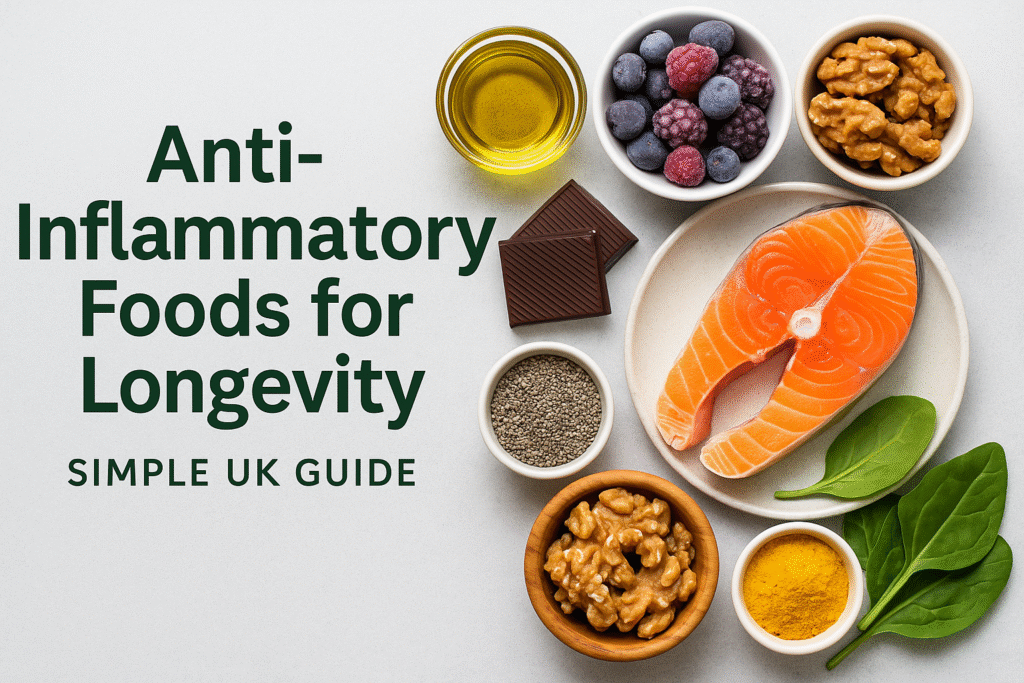
Omega-3 fats are found in:
- fatty fish (EPA and DHA)
- flax and chia (ALA)
- walnuts
Both types are essential to human health.
The Roles They Play in the Body
Omega fats are incorporated into cell membranes and influence how cells communicate.
Broadly speaking:
- Omega-6 fats tend to support growth, immune activation, and repair
- Omega-3 fats tend to support resolution of inflammation and cellular resilience
Neither is inherently “good” or “bad.”
Inflammation itself is not harmful — it’s a necessary biological process. Problems arise when inflammatory signalling becomes chronic and poorly regulated.
This distinction aligns with the principles outlined in anti-inflammatory foods.
Why Modern Diets Create Imbalance
Historically, human diets contained a much closer ratio of omega-6 to omega-3 fats.
Modern diets, however, often deliver:
- very high omega-6 intake
- very low omega-3 intake
This shift is driven by:
- increased use of industrial seed oils
- high consumption of ultra-processed foods
- reduced intake of oily fish
The result is not that omega-6 is toxic — but that omega-3 is often insufficient to counterbalance inflammatory signalling.
This context is critical before diving into more specific topics like seed oils explained or ultra-processed foods & ageing.
Omega Balance and Inflammation
Omega-6 and omega-3 fats compete for the same metabolic pathways.
When omega-6 intake is very high and omega-3 intake is low:
- inflammatory signalling can dominate
- resolution of inflammation becomes less efficient
- low-grade chronic inflammation may increase
This pattern — sometimes called “inflammaging” — is strongly associated with ageing-related diseases.
Importantly, research shows that increasing omega-3 intake is often more effective than aggressively trying to eliminate omega-6.
This is why prioritising omega-3 sources is a recurring theme in omega-3 for longevity.
What to Do in Practice
A longevity-focused approach avoids extremes.
Practical priorities include:
- regular intake of fatty fish
- reducing reliance on ultra-processed foods
- using stable cooking oils appropriately
- focusing on overall food quality
Trying to micromanage omega ratios meal by meal is unnecessary.
Long-term patterns matter far more than perfect balance.
Frequently Asked Questions
Are omega-6 fats inflammatory?
No. They’re essential — but excessive intake without omega-3 balance can promote inflammation.
Should I eliminate omega-6 completely?
No. Elimination is neither realistic nor beneficial.
Is balance more important than total intake?
Yes — balance and food quality matter more than absolute numbers.
The Longevity Takeaway
Omega-6 and omega-3 fats are not enemies.
The problem is modern imbalance — not the presence of omega-6 itself.
By prioritising omega-3 intake and improving overall food quality, you support healthier inflammatory signalling and long-term resilience.
This balanced, evidence-based view underpins the Longevity Nutrition Blueprint and sets the foundation for the rest of the Inflammation & Food Quality cluster.
References
- Simopoulos AP. “The importance of the omega-6/omega-3 fatty acid ratio.” Biomedicine & Pharmacotherapy. 2002.
- Calder PC. “Omega-3 fatty acids and inflammatory processes.” Nutrition Reviews. 2010.
Disclaimer: This article is for educational purposes only and does not replace medical advice.

Simon is the creator of Longevity Simplified, where he breaks down complex science into simple, practical habits anyone can follow. He focuses on evidence-based approaches to movement, sleep, stress and nutrition to help people improve their healthspan.