Stress • Nervous System • Recovery
Nervous System Reset Techniques: How to Calm Your Body in Minutes
You can’t out-supplement a frazzled nervous system. Simple, repeatable resets are one of the most powerful longevity tools you have.
Modern life keeps many people in a near-constant “on” state — alerts, deadlines, noise, caffeine, poor sleep, and little time to downshift.
Over time, that chronic load can push the body into a kind of survival mode. As a result, you may notice:
- shallow breathing
- racing thoughts
- tense muscles (jaw, shoulders, chest)
- poor sleep and restless evenings
- higher baseline blood pressure and inflammation
For longevity, it’s not only how often you’re stressed that matters — it’s how quickly you can come back down.
In this guide you’ll learn simple, science-backed nervous system reset techniques you can do in minutes, almost anywhere.
1) The simple explanation
Your nervous system has two main “gears”:
- Sympathetic (“fight or flight”) — alert, wired, ready for action
- Parasympathetic (“rest and digest”) — calm, repair, digestion, recovery
Longevity isn’t about avoiding stress completely. It’s about getting better at returning to calm after stress has done its job.
Nervous system resets are short practices that send a clear signal: “You’re safe now.” Over time, these micro-downshifts reduce your total stress load — which matters for sleep, inflammation, metabolic health, and how you age.
If you want the bigger model behind this, start here: The Nervous System Ladder. Resets are your practical “move down the ladder” tools.
2) How nervous system resets work (simplified)
Breathing patterns influence heart rate, blood pressure, and vagal activity — which changes how “revved up” your body feels.
Slow exhales tend to bias the system toward calm. In practice, a longer exhale often reduces the wired feeling within a minute or two.
Muscle release sends feedback to the brain that the threat is over. This helps your body shift from bracing → recovering.
Grounding the senses pulls attention out of worry loops and back into the present moment, which reduces the mental fuel that keeps stress alive.
Importantly, these small shifts compound. Over weeks, resets can improve sleep quality, stress tolerance, and day-to-day resilience.
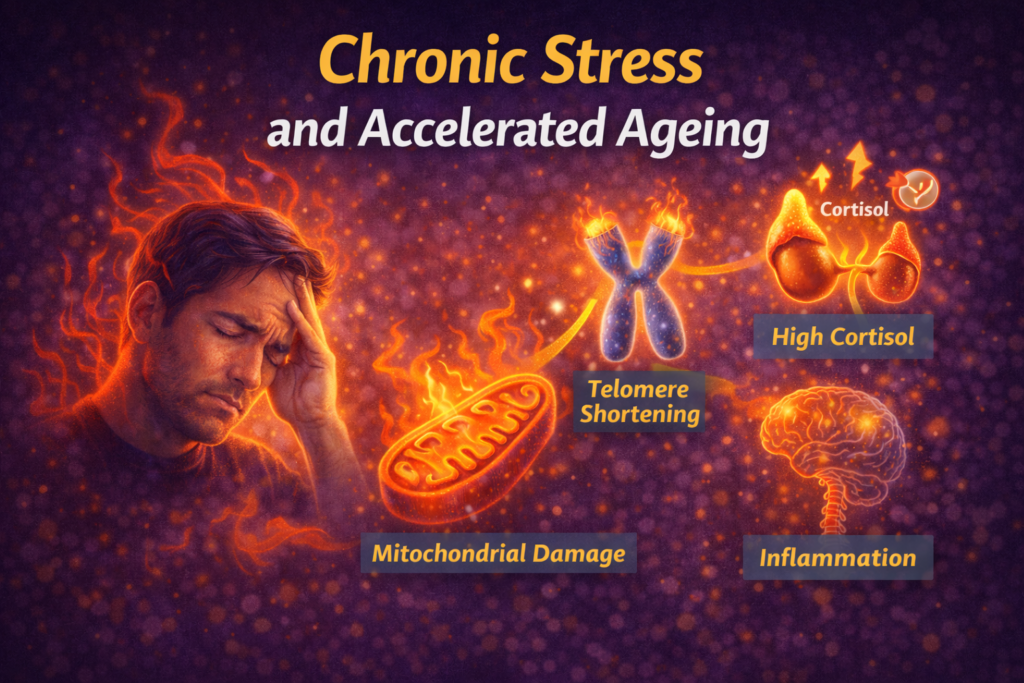
For the full “why this matters for ageing” picture, see: Chronic Stress & Accelerated Ageing.
3) The nervous system reset framework
Most resets work by pulling one (or more) of three levers:
- Breath — change your breathing pattern
- Body — change muscle tension and posture
- Attention — change what you focus on
The best “in the moment” resets usually combine two levers (for example: breath + attention). The best long-term results come from frequency rather than duration — short, repeatable downshifts throughout the day.
4) Breath-based resets (1–3 minutes)
A) Extended exhale breathing
Best for: general stress, afternoon tension, pre-sleep downshift.
- inhale gently through the nose for 4
- exhale slowly through the nose or mouth for 6–8
- repeat for 60–180 seconds
Keep it comfortable. The goal is smoothness, not big breaths.
B) 4–4–6 breathing
Best for: anxiety spikes, pre-meeting calm, post-email reset.
- inhale for 4
- hold for 4 (optional)
- exhale for 6
- repeat for 6–10 cycles
If the hold feels stressful, shorten it or skip it.
C) Physiological sigh (double inhale, long exhale)
Best for: sudden overwhelm, adrenaline spikes, “wired but tired”.
- inhale through the nose until almost full
- take a second, small “sip” inhale
- slow, complete exhale through the mouth
- repeat 3–5 times
For the full protocol + one-minute routine, see: Breathwork That Lowers Cortisol Fast.
5) Body-based resets (2–5 minutes)
A) Progressive muscle release (seated)
- sit upright, feet on the floor
- gently tense feet/lower legs for 5 seconds
- release fully and notice the drop
- move up: thighs → hands → shoulders → face
This trains you to spot tension earlier — and release it faster.
B) Shake & reset
Best for: after stressful calls, arguments, intense focus.
- stand and lightly shake arms/legs/shoulders for 30–60 seconds
- let the jaw soften and the face relax
- finish with 3 slow exhales
C) Posture reset (the “safety posture”)
- uncross legs, feet flat
- lengthen the spine, open the chest gently
- roll shoulders back and down
- relax the tongue off the roof of the mouth
Posture is constant feedback. Small changes can reduce bracing and improve breathing automatically.
6) Attention & grounding resets (1–3 minutes)
A) 5–4–3–2–1 grounding
Best for: racing thoughts, panic spirals, overthinking.
- 5 things you can see
- 4 things you can feel
- 3 things you can hear
- 2 things you can smell
- 1 thing you can taste
Do it slowly. You’re teaching your system “right now is safe.”
B) Single-point focus
- pick one object (cup, plant, frame)
- set a timer for 60–120 seconds
- notice details (edges, texture, colour)
- when thoughts drift, return gently
C) Micro nature break (soft gaze)
Best for: screen fatigue, mid-day stress build-up.
- look out of a window or step outside
- soften your gaze to take in the whole scene
- combine with 4–6 slow exhales
7) How to build resets into your day
Morning
- 60–90 seconds extended exhale breathing
- quick posture reset before screens
During the day
- one “between tasks” reset (breath or grounding)
- shake & reset after stressful calls
- use physiological sigh for acute spikes
Evening
- 3–5 minutes of breathing + light muscle release
- reduce input (noise, news, endless scrolling) so the reset can actually stick
If anxiety is a big driver for you, build your plan around: Anxiety, Cortisol & Ageing.
8) Quick wins
- attach a 60-second reset to an existing habit (kettle boiling, kettle refill, waiting for a page to load)
- do one slow exhale before checking your phone
- replace “stress scrolling” with 60 seconds of exhale breathing
- create a simple “reset corner” at home (chair + soft light)
9) What not to do
- don’t force deep breathing to the point of dizziness — comfort over intensity
- don’t treat resets as a one-off fix; use small frequent practices instead
- don’t ignore the inputs (caffeine, screens, constant urgency) that keep the system activated
- don’t use breath-holds or extreme techniques unless trained
10) A simple “3×3” nervous system reset plan
Start with:
- 3 resets per day (morning, midday, evening)
- 3 minutes each (or less)
Example 3×3 plan:
- morning: extended exhale breathing (2 minutes)
- midday: shake & reset (60 seconds) + 5–4–3–2–1 grounding (60 seconds)
- evening: progressive muscle release (3 minutes)
On high-stress days, reduce intensity elsewhere. This is the logic behind: High vs Low Cortisol Training Days.
11) FAQs
How quickly should I feel different?
Often within 1–3 minutes — especially with breath + body techniques.
Are resets a replacement for therapy or medication?
No. They’re supportive tools, not replacements. Always follow clinical guidance.
How often can I do these?
As often as you like. They’re designed to be gentle and repeatable.
Do I have to sit still?
No. Movement + slow exhales is one of the best “mobile resets”.
Final takeaway
Longevity isn’t only built in the gym or kitchen. Training your nervous system to return to calm — in minutes, not hours — is one of the highest-leverage habits you can build.
— Simon, Longevity Simplified
Start here if you want the “full system”
If you’re building a calm baseline (not just fixing spikes), start with the main pillar.
Related articles
- Breathwork That Lowers Cortisol Fast
- The Nervous System Ladder
- Movement for Stress & Recovery
- Chronic Stress & Accelerated Ageing
- Anxiety, Cortisol & Ageing
References
- Cell Reports Medicine — brief structured respiration practices and stress reduction
- NHS — How to manage stress
- Brown RP, Gerbarg PL. Yogic breathing practices and stress/anxiety outcomes. J Altern Complement Med.
Disclaimer: This content is for educational purposes only and does not constitute medical advice.

Simon is the creator of Longevity Simplified, where he breaks down complex science into simple, practical habits anyone can follow. He focuses on evidence-based approaches to movement, sleep, stress and nutrition to help people improve their healthspan.