NAD+ Explained: What It Does and Why It Declines With Age
NAD+ is a core molecule that powers energy production, cellular repair and metabolic signalling. Levels naturally fall with age — changing how well cells adapt and recover.
← Back to: Biology of Ageing Explained
Disclaimer: This article is for educational purposes only and does not provide medical advice. It is not intended to diagnose, treat or prevent disease. Always consult a qualified professional before making health or supplement decisions.
If you’ve spent any time in longevity circles, you’ve probably heard about NAD+. It’s often described as an “anti-ageing molecule” — which is both partly true and partly oversimplified.
NAD+ (nicotinamide adenine dinucleotide) is involved in nearly every aspect of cellular energy production, repair signalling and metabolic adaptation. Without enough NAD+, cells struggle to generate energy efficiently, repair damage, and respond to stress.
Unfortunately, NAD+ levels gradually decline with age — contributing to fatigue, reduced resilience and slower recovery.
This guide explains what NAD+ actually does, why it falls over time, and how lifestyle supports healthy NAD+ levels without hype.
Personal observation: What shifted my thinking about NAD+ was realising it’s not a magic longevity switch — it’s a signal amplifier. When lifestyle inputs are good, NAD+ supports adaptation. When basics are poor, supplementation can’t compensate.
1) The simple explanation
Think of NAD+ as a cellular battery charger and signal messenger combined.
It helps:
- convert food into usable energy
- power mitochondrial function
- activate repair enzymes
- regulate metabolic adaptation
When NAD+ levels are high, cells respond well to stress and recovery. When NAD+ levels fall, energy production and repair capacity gradually weaken.
2) What NAD+ actually does in the body
NAD+ is a coenzyme present in every living cell. It cycles between two forms (NAD+ and NADH) to transfer electrons during metabolic reactions.
In simple terms, NAD+ allows cells to extract energy from carbohydrates, fats and proteins.
Beyond energy production, NAD+ also activates signalling proteins such as:
- Sirtuins (cellular stress resistance and repair)
- PARPs (DNA repair enzymes)
- AMPK (energy sensing pathways)
These pathways regulate longevity-related processes across tissues.
Related: mTOR & AMPK Explained.
3) NAD+ and cellular energy production
NAD+ is essential for mitochondrial energy generation. It carries electrons into the electron transport chain where ATP is produced.
When NAD+ availability drops:
- mitochondrial output declines
- fatigue increases
- exercise tolerance falls
- metabolic flexibility weakens
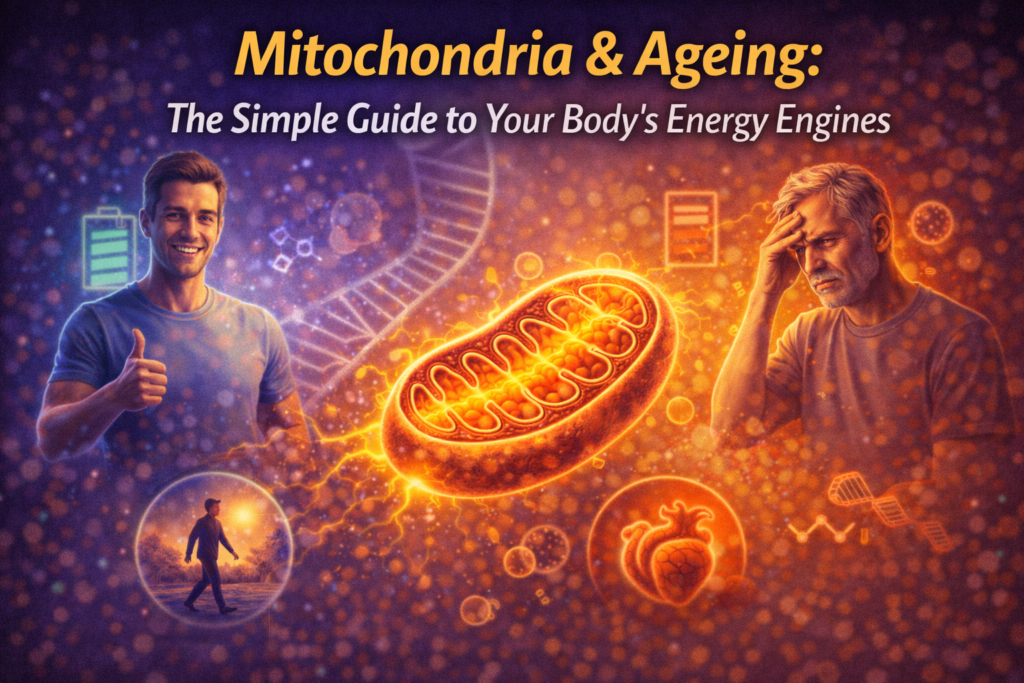
This links directly to: Mitochondria & Ageing and Mitochondrial Biogenesis.
4) NAD+ and cellular repair systems
NAD+ activates enzymes responsible for:
- DNA repair
- protein quality control
- stress resistance signalling
- mitochondrial maintenance
As NAD+ declines, repair efficiency gradually falls.
See: DNA Damage & Repair and Proteostasis Explained.
5) Why NAD+ declines with age
Increased DNA repair demand
DNA damage increases with age, consuming more NAD+ through repair enzymes.
Chronic inflammation
Immune activation accelerates NAD+ depletion.
Related: Stress and Inflammation.
Reduced precursor availability
Dietary and metabolic production pathways become less efficient.
Mitochondrial dysfunction
Impaired energy metabolism disrupts NAD+ recycling.
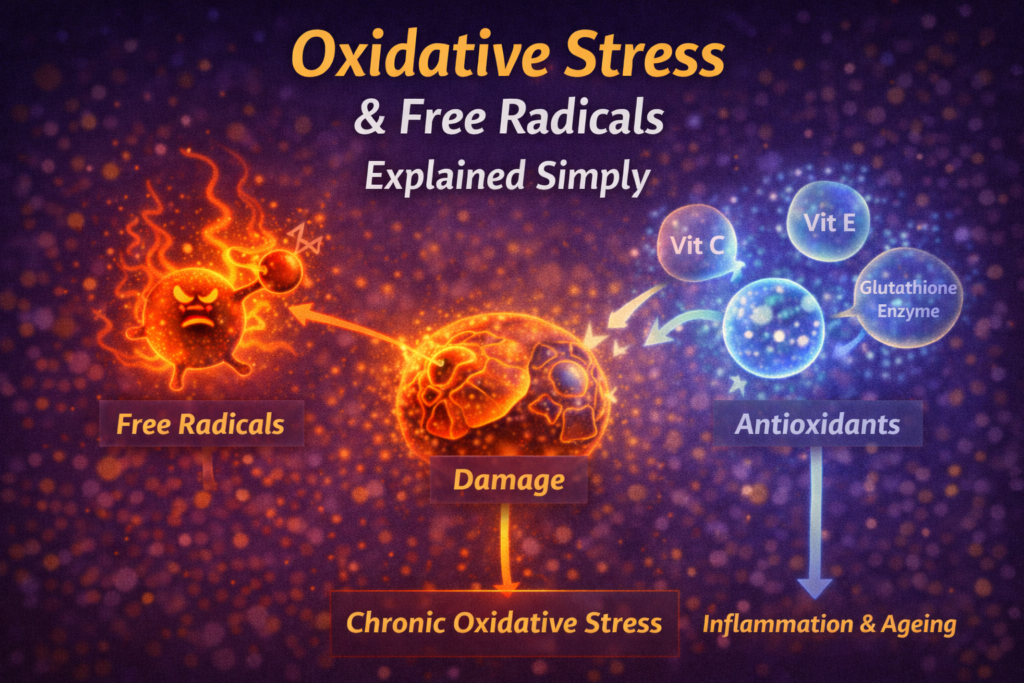
See: Oxidative Stress Explained.
6) How NAD+ connects to other ageing pathways
- Mitochondria: energy production capacity
- DNA repair: genomic stability
- Proteostasis: protein maintenance
- Inflammation: immune regulation
- Metabolic signalling: insulin sensitivity
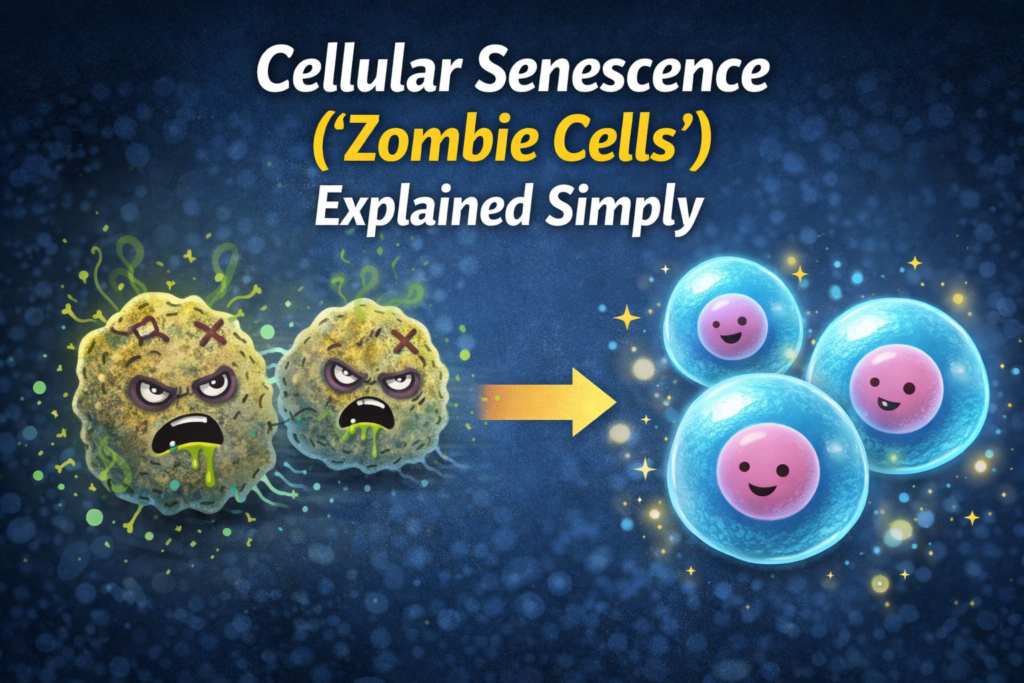
Explore: Glycation & AGEs, Cellular Senescence and Insulin Resistance.
7) How to support NAD+ naturally
Regular physical activity
Exercise stimulates NAD+ recycling and mitochondrial adaptation.
Protect sleep and circadian rhythm
Repair signalling depends on stable sleep timing.
See: Sleep for Longevity.
Maintain metabolic stability
Stable blood sugar preserves NAD+ balance.
Moderate caloric excess
Chronic overfeeding accelerates NAD+ depletion.
Manage chronic stress
Stress signalling increases repair demand and NAD+ consumption.
Related: Stress and Longevity.
8) A note on NAD+ supplements
NAD+ precursors such as NR and NMN can increase blood NAD+ levels. However, long-term outcome data remains limited.
Supplements should be viewed as experimental and secondary to lifestyle foundations.
FAQ
Does NAD+ supplementation slow ageing?
Human evidence remains limited. Benefits appear context-dependent.
Can NAD+ levels be measured?
Blood testing exists but does not reflect tissue levels reliably.
Does fasting increase NAD+?
Fasting may transiently increase NAD+ signalling pathways.
Is more NAD+ always better?
Balance matters. Excess stimulation may have unintended effects.
Final takeaway
NAD+ supports energy production, repair and metabolic flexibility.
Protecting sleep, movement, metabolic health and stress regulation preserves NAD+ far more reliably than chasing supplements.
— Simon
References
- Verdin E. (2015). NAD+ in aging, metabolism, and neurodegeneration. Science.
- Rajman L et al. (2018). Therapeutic potential of NAD+ boosting molecules. Cell Metabolism.

Simon is the creator of Longevity Simplified, where he breaks down complex science into simple, practical habits anyone can follow. He focuses on evidence-based approaches to movement, sleep, stress and nutrition to help people improve their healthspan.