Morning Light Guide: How Early-Day Sunlight Sets Your Sleep, Hormones, and Longevity
Morning light is one of the most powerful — and overlooked — longevity levers. It sets your internal clock for the entire day.
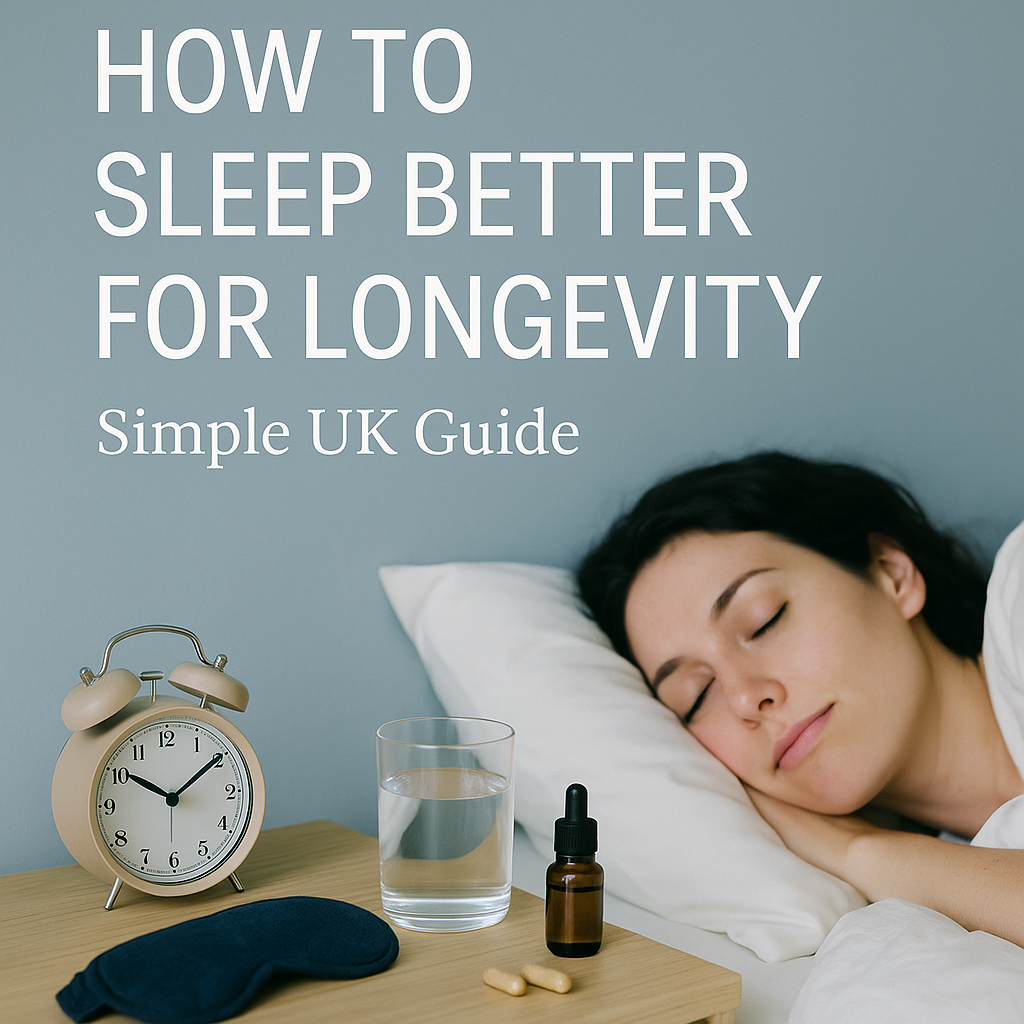
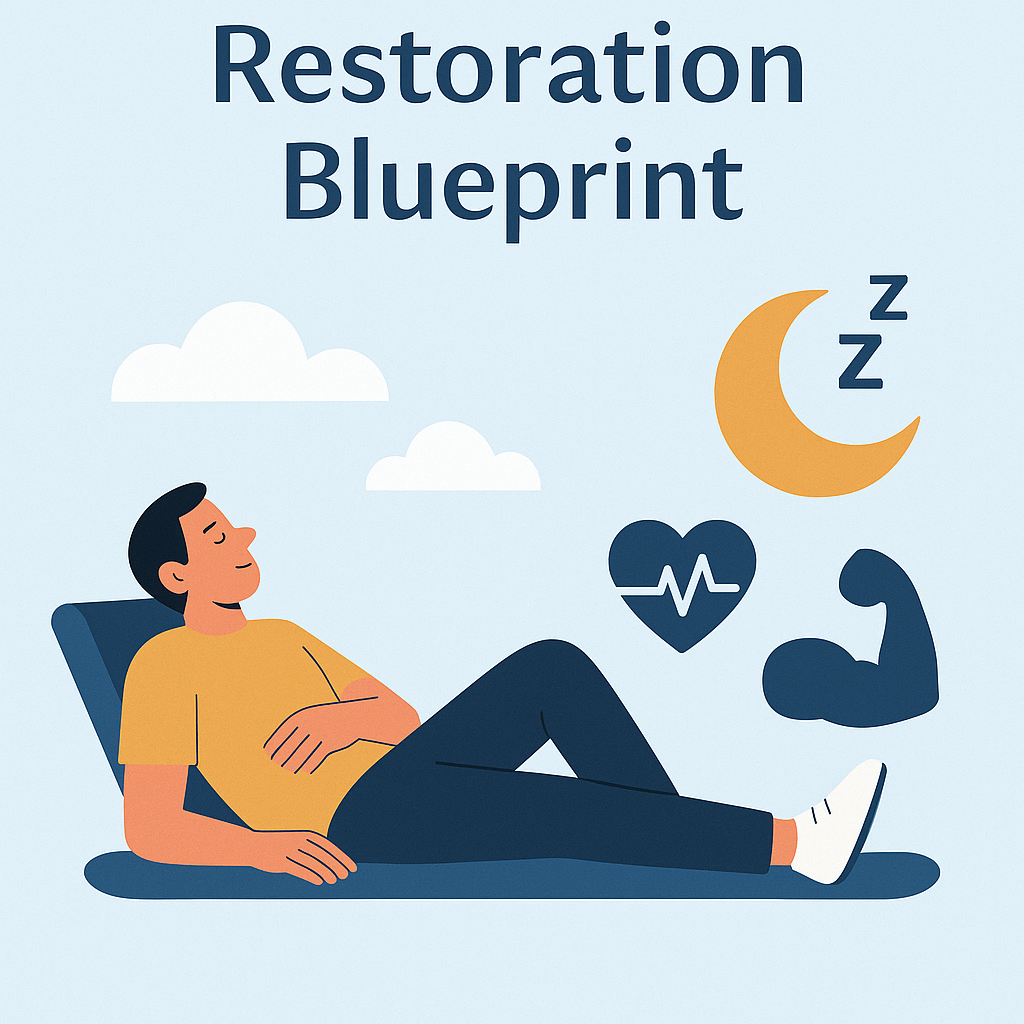
Part of: Sleep & Recovery Hub | Core guide: How to Improve Sleep for Longevity | Recovery lens: Recovery & Restoration Blueprint
Most people think sleep starts at night.
However, sleep quality is largely determined by what happens in the first hours after you wake.
Morning light is the primary signal that sets your circadian rhythm — the internal clock that governs sleep timing, hormone release, metabolism, and energy.
From a longevity perspective, consistent circadian alignment reduces chronic stress on nearly every system in the body.
This guide explains:
- what morning light actually does biologically
- why it matters more with age
- how to use light to improve sleep and recovery
- simple, realistic morning light habits
1. What the Circadian Rhythm Is
Your circadian rhythm is a roughly 24-hour cycle that coordinates:
- sleep and wake timing
- melatonin and cortisol release
- body temperature
- metabolism and insulin sensitivity
Light — not willpower — is the primary driver of this system.
Morning light tells your brain: “The day has started.”
Evening darkness tells it: “The day is ending.”
When these signals are mismatched, circadian drift occurs — a subtle but chronic stressor linked to poor sleep, metabolic dysfunction, and accelerated ageing.
Coming soon in the Circadian Rhythm & Light cluster: best bedtime window, social jetlag explained, and shift work damage control.
2. How Morning Light Affects the Body
Morning light enters the eyes and stimulates specialised retinal cells that communicate directly with the brain’s master clock.
This signal:
- suppresses melatonin
- raises cortisol in a healthy, time-appropriate way
- sets the timing of melatonin release later that night
Importantly, the earlier this signal occurs (within reason), the earlier your body becomes ready for sleep in the evening.
Public health guidance, including from the :contentReference[oaicite:0]{index=0}, increasingly recognises light exposure as a core driver of sleep and circadian health.
3. Why Morning Light Improves Sleep
Morning light doesn’t just wake you up — it sets a biological countdown.
Roughly 12–16 hours after strong morning light exposure, melatonin begins rising naturally.
As a result, consistent morning light:
- makes it easier to fall asleep
- deepens sleep quality
- reduces nighttime awakenings
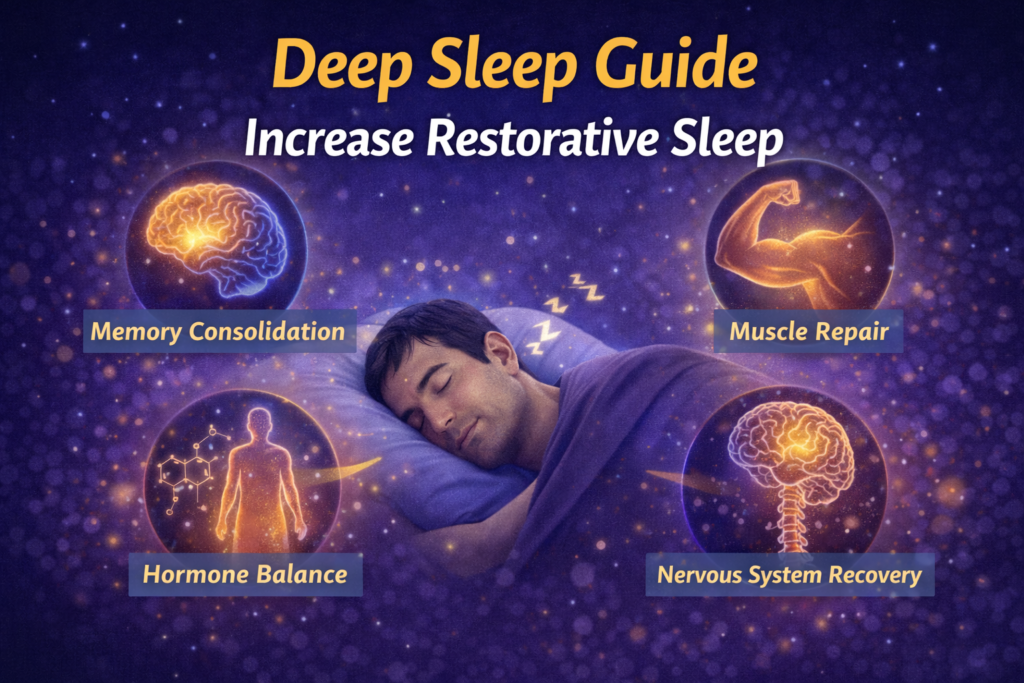
This directly improves recovery, memory consolidation, and hormonal balance.
Read next: How to Improve Sleep for Longevity and Deep Sleep Guide.
4. Why Light Timing Matters More With Age
With age, circadian signals weaken.
This includes:
- reduced melatonin production
- greater sensitivity to evening light
- earlier awakenings and more fragmented sleep
Morning light strengthens the signal, helping anchor the rhythm and reduce circadian drift.
This becomes especially important for:
- midlife adults with early waking
- people with insomnia or low sleep drive
- anyone under chronic stress or high cognitive load
5. How to Get Morning Light Correctly
The goal is not perfection — it’s consistency.
Best practices
- get outdoor light within 30–60 minutes of waking
- aim for 5–20 minutes depending on brightness
- no sunglasses if safe to do so
- face the general direction of the sky (no staring at the sun)
Even on cloudy days, outdoor light far exceeds indoor lighting.
If outdoor light isn’t possible
- sit near a bright window
- use a daylight-rated light box if needed
Related in this hub: Caffeine Cut-Off Times | Restorative Rest Days
6. Common Mistakes
- scrolling on a phone instead of getting light
- thinking indoor lighting is sufficient
- getting morning light but blasting bright light late at night
- treating light as optional rather than foundational
Instead, pair morning light with evening dimness.
Coming soon: Evening light & screens — how to reduce circadian disruption without going extreme.
FAQ
Does artificial light work?
It can help, but natural outdoor light is far more effective for anchoring circadian rhythm.
What if I wake very early?
Get light when it’s available. Consistency matters more than exact timing.
Does morning light help mood?
Yes. It supports healthy cortisol rhythms and neurotransmitter balance.
Final Takeaway
Morning light is a biological signal, not a wellness trend.
When used consistently, it improves sleep, recovery, metabolic health, and stress resilience.
Step outside early. Anchor your clock. Let biology do the work.
Longevity starts with light.
References
- NHS – Sleep, light, and circadian health
- Sleep Medicine Reviews – Light and circadian rhythms
- Journal of Biological Rhythms – Morning light and sleep timing
Disclaimer: This content is for educational purposes only and does not constitute medical advice.

Simon is the creator of Longevity Simplified, where he breaks down complex science into simple, practical habits anyone can follow. He focuses on evidence-based approaches to movement, sleep, stress and nutrition to help people improve their healthspan.