Mitochondrial Biogenesis Explained: How Your Cells Build More Energy Engines
Your cells can create new mitochondria in response to movement, metabolic demand and recovery. This adaptive process supports energy, resilience and healthy ageing.
← Back to: Biology of Ageing Explained
Disclaimer: This article is for educational purposes only and does not provide medical advice. It is not intended to diagnose, treat or prevent disease. Always consult a qualified professional before making health changes.
When people think about energy decline with age, they often assume it’s inevitable. However, your cells retain a remarkable ability to adapt — including the ability to build more mitochondria when demand increases.
This process is called mitochondrial biogenesis. It allows tissues to increase their energy-producing capacity in response to movement, metabolic stress and recovery signals.
Supporting this adaptive capacity helps maintain physical stamina, cognitive clarity, metabolic health and long-term resilience.
This guide explains mitochondrial biogenesis in plain language, why it matters for ageing, and how everyday behaviours influence it safely.
Personal observation: What surprised me most is how responsive mitochondria remain even later in life. Small increases in consistent movement often produce disproportionate improvements in energy and recovery — a reminder that biology stays plastic longer than we assume.
1) The simple explanation
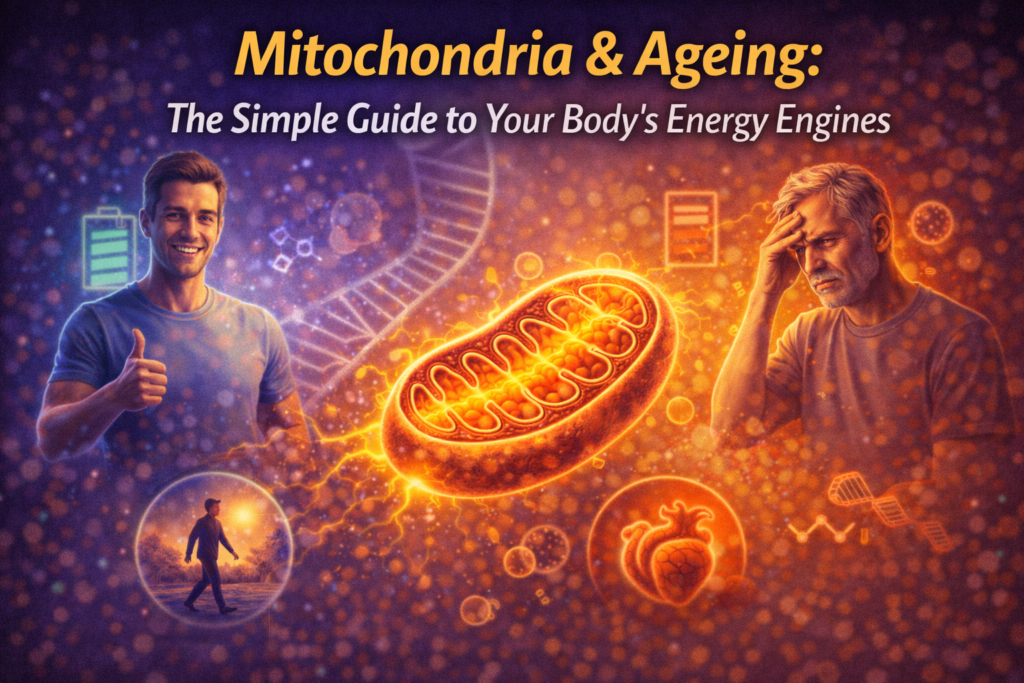
Think of mitochondria as tiny power stations inside your cells.
When your body regularly needs more energy — through movement, temperature stress, or metabolic demand — cells respond by building more power stations.
Mitochondrial biogenesis is the process of creating new mitochondria to increase energy capacity and resilience.
More healthy mitochondria means better endurance, faster recovery, improved metabolic stability and greater stress tolerance.
2) What mitochondrial biogenesis actually is
Mitochondrial biogenesis involves coordinated signalling between the cell nucleus and existing mitochondria to produce new mitochondrial components.
Key regulators include:
- PGC-1α (master regulator of mitochondrial production)
- AMPK (energy sensor)
- SIRT1 (metabolic signalling)
- mTOR (growth signalling balance)
These pathways integrate energy demand, nutrient availability and recovery signals.
Explore: mTOR & AMPK Explained and Mitochondria & Ageing.
3) What triggers mitochondrial biogenesis
Endurance and aerobic exercise
Sustained aerobic activity strongly stimulates biogenesis.
Related: Zone 2 Cardio.
High-intensity efforts (in moderation)
Short bursts increase signalling but require adequate recovery.
Energy availability shifts
Periods of lower glycogen availability increase AMPK activation.
Temperature stress
Cold and heat exposure activate adaptive stress pathways.
See: Hormesis Explained Simply.
4) How biogenesis changes with age
Reduced signalling sensitivity
Ageing reduces responsiveness to exercise and metabolic stress.
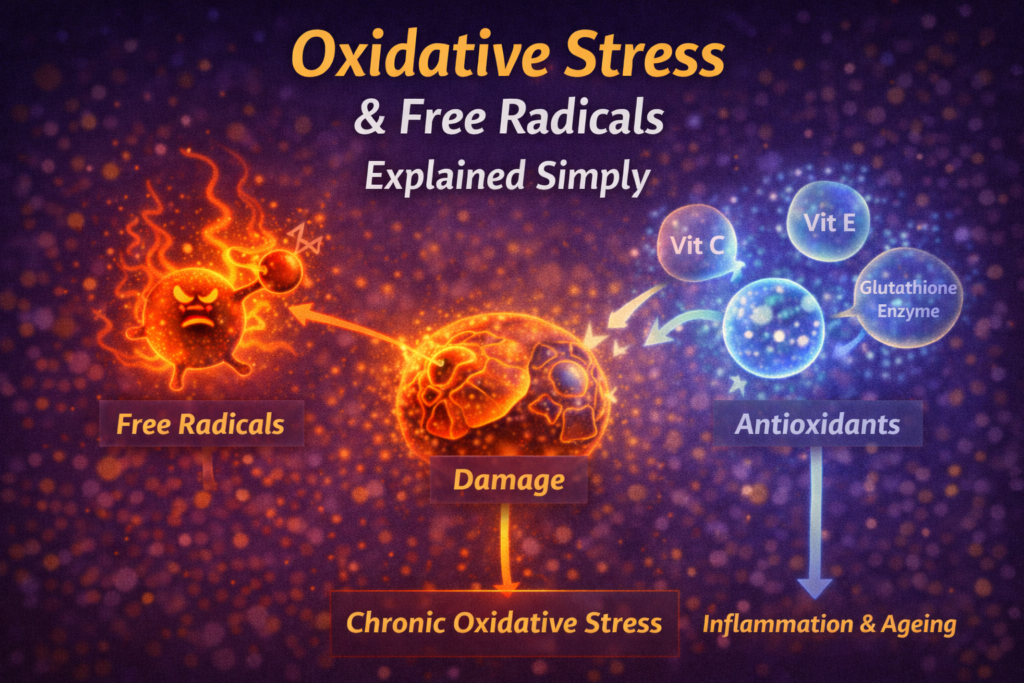
Higher oxidative burden
Damaged mitochondria impair signalling quality.
Related: Oxidative Stress Explained Simply.
Slower protein turnover
Proteostasis decline limits mitochondrial renewal capacity.
See: Proteostasis Explained Simply.
Inflammatory interference
Chronic inflammation suppresses adaptive signalling.
Related: Stress and Inflammation.
5) How it connects to other ageing pathways
- Mitophagy: removes damaged mitochondria
- NAD+: supports metabolic signalling
- Insulin sensitivity: improves energy regulation
- Brain energy: supports cognitive resilience
- Hormesis: adaptive stress builds capacity
Explore: Mitophagy Explained, NAD+ Explained, Insulin Resistance.
6) How to support mitochondrial biogenesis safely
Accumulate regular aerobic volume
Frequent moderate movement builds mitochondrial density.
Layer occasional intensity
Use short higher-effort bouts without chronic overload.
Prioritise recovery and sleep
Biogenesis occurs during recovery.
See: Sleep for Longevity.
Maintain metabolic stability
Stable glucose supports adaptive signalling.
Avoid extreme restriction or overtraining
Excess stress suppresses adaptation.
Related: Overtraining and Ageing.
FAQ
Can you increase mitochondria at any age?
Yes — adaptive capacity remains throughout life, though responsiveness may decline modestly.
Do supplements increase mitochondrial biogenesis?
Evidence remains limited. Behavioural signals dominate.
Is more mitochondria always better?
Quality matters as much as quantity.
How fast does biogenesis occur?
Initial signalling begins within days; meaningful changes occur over weeks.
Final takeaway
Mitochondrial biogenesis allows your cells to adapt energy capacity to demand.
Consistent movement, intelligent stress and strong recovery preserve this adaptive engine as you age.
— Simon
References
- Hood DA et al. (2019). Mechanisms of exercise-induced mitochondrial biogenesis. Physiological Reviews.
- Scarpulla RC. (2011). Metabolic control of mitochondrial biogenesis. Biochimica et Biophysica Acta.

Simon is the creator of Longevity Simplified, where he breaks down complex science into simple, practical habits anyone can follow. He focuses on evidence-based approaches to movement, sleep, stress and nutrition to help people improve their healthspan.