The Longevity Smoothie Blueprint: How to Build a Smoothie That Actually Supports Healthy Ageing
A good smoothie isn’t just convenient — it can be one of the easiest ways to support gut health, blood sugar stability, and long-term longevity.
Smoothies are often marketed as “healthy” by default. However, many popular recipes are little more than blended sugar.
Over time, high-sugar smoothies can spike blood glucose, disrupt energy levels, and undermine metabolic health — the opposite of what most people want.
Importantly, when built correctly, a smoothie can become a powerful longevity tool: delivering fibre, polyphenols, protein, and healthy fats in a single, low-effort meal.
This blueprint explains:
- what makes a smoothie longevity-friendly
- the core components every smoothie should include
- how to avoid common smoothie mistakes
- how to customise smoothies for real life
1. Why Most Smoothies Miss the Mark
Many smoothies are built around fruit juice, syrups, or multiple bananas.
As a result, they deliver a rapid sugar load with little fibre, protein, or fat to slow absorption.
This can lead to:
- blood sugar spikes and crashes
- increased hunger shortly after
- reduced insulin sensitivity over time
From a longevity perspective, consistency matters more than intention.
2. The Longevity Smoothie Principles
A longevity-friendly smoothie follows a few non-negotiable rules.
- Fibre first: slows digestion and feeds the gut
- Protein included: supports muscle and satiety
- Healthy fats added: stabilise blood sugar
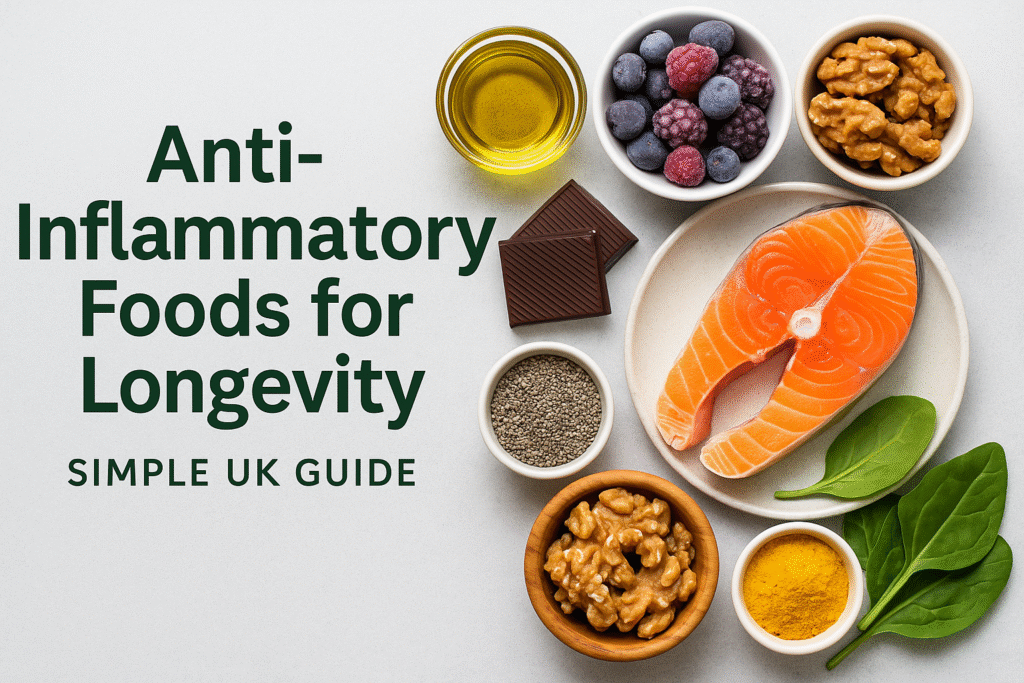
- Polyphenol-rich plants: reduce inflammation
- Low added sugar: avoid juice-heavy bases
Crucially, smoothies should complement whole meals — not replace all solid food.
→ Internal links: Fibre for Longevity | Polyphenols Explained
3. The Longevity Smoothie Blueprint
Step 1: Choose a Fibre-Rich Base
- leafy greens (spinach, kale)
- berries (fresh or frozen)
- ground flax or chia seeds
Step 2: Add Protein
- Greek yoghurt or kefir
- protein powder (whey or plant-based)
- silken tofu
Step 3: Include Healthy Fats
- nuts or nut butters
- seeds
- olive oil (small amount)
Step 4: Boost Polyphenols
- berries and cocoa powder
- green tea (cooled)
- cinnamon, turmeric, ginger
Step 5: Use a Low-Sugar Liquid
- water
- unsweetened nut milk
- cooled herbal or green tea
4. Example Longevity Smoothies
Gut & Inflammation Support
Spinach, mixed berries, kefir, ground flaxseed, cinnamon, water.
Blood Sugar Stability
Frozen berries, protein powder, almond butter, chia seeds, unsweetened almond milk.
Recovery & Muscle Support
Greek yoghurt, blueberries, cocoa powder, oats, whey protein, water.
→ Internal link: Blood Sugar and Longevity
5. Timing and Frequency
Smoothies work best when used intentionally.
- as breakfast when protein and fibre are included
- post-exercise for recovery
- as a nutrient-dense snack
However, relying on smoothies for every meal can reduce chewing, satiety, and dietary variety.
6. Common Mistakes
- using fruit juice as the base
- skipping protein and fat
- adding multiple sweeteners
- treating smoothies as “free calories”
Instead, think of smoothies as meals — not drinks.
FAQ
Are smoothies better than whole fruit?
Whole fruit is excellent. Smoothies are useful when fibre and protein are preserved.
Can smoothies help with gut health?
Yes. When fibre-rich and diverse, they support microbial diversity.
Are green powders necessary?
No. Real foods provide broader benefits.
Final Takeaway
A smoothie can either support longevity — or quietly undermine it.
However, when built around fibre, protein, healthy fats, and plant diversity, it becomes one of the easiest ways to nourish your body consistently.
Build with intention. Keep sugar low. Feed your gut.
Longevity isn’t about drinking calories — it’s about delivering the right signals.
References
- British Journal of Nutrition – Fibre, Glycaemia, and Satiety
- American Journal of Clinical Nutrition – Protein and Metabolic Health
Disclaimer: This content is for educational purposes only and does not constitute medical advice. Always consult a qualified healthcare professional before making significant dietary changes.

Simon is the creator of Longevity Simplified, where he breaks down complex science into simple, practical habits anyone can follow. He focuses on evidence-based approaches to movement, sleep, stress and nutrition to help people improve their healthspan.