Inflammation vs Oxidative Stress: What’s the Difference (and Why It Matters for Ageing)
Inflammation and oxidative stress often rise together — but they are not the same process. Understanding the difference helps you target the right lever for long-term health and longevity.
← Back to: Biology of Ageing Explained
Disclaimer: This article is for educational purposes only and does not provide medical advice. It is not intended to diagnose, treat or prevent disease. Always consult a qualified professional before making health or supplement changes.
In health conversations, inflammation and oxidative stress are often used interchangeably — as if they are the same problem. They are not.
They interact closely, amplify each other, and frequently rise together during ageing — but they represent different biological processes with different triggers and solutions.
Confusing them leads to poor interventions: suppressing signals that should adapt, missing root causes, or chasing supplements that don’t solve the underlying issue.
This guide explains what each process really is, how they interact, and how to manage both intelligently for long-term resilience.
Personal observation: Once I separated inflammation from oxidative stress conceptually, many conflicting health recommendations suddenly made sense. Different problems require different levers — and blanket suppression often backfires.
1) The simple explanation
Oxidative stress is primarily a chemical imbalance — too many reactive molecules relative to protective capacity.
Inflammation is primarily an immune response — signalling that tissue repair, defence or cleanup is needed.
Both are necessary for survival. Problems arise when they become chronic, excessive or poorly regulated.
Think of oxidative stress as spark generation and inflammation as firefighters responding. Too many sparks can trigger more fire response — and excessive fire response can generate more sparks.
2) What oxidative stress actually is
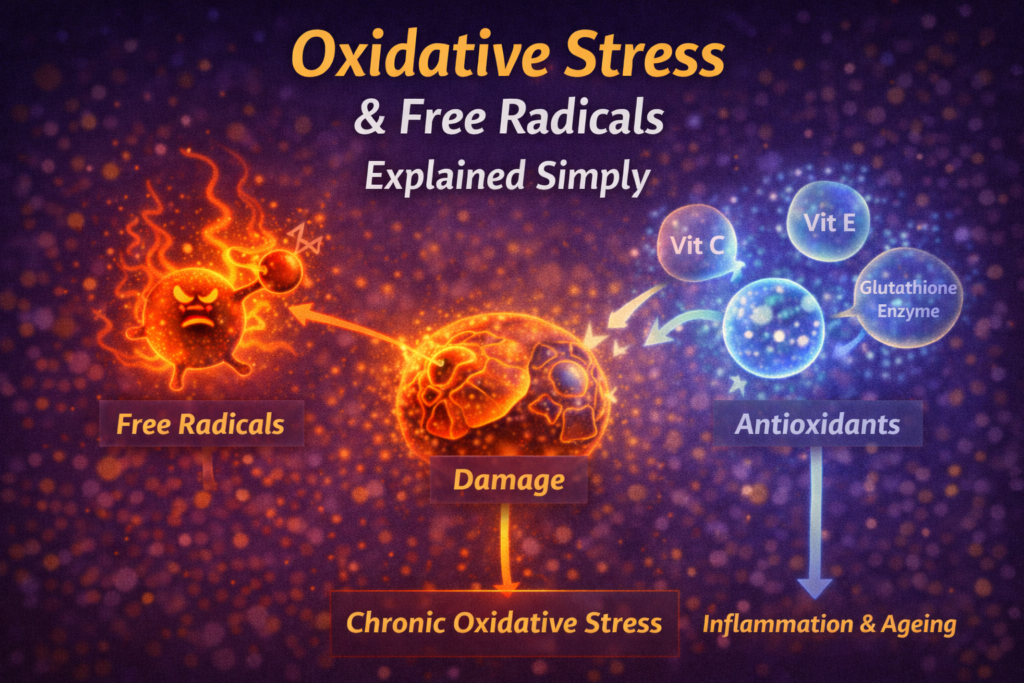
Oxidative stress occurs when reactive oxygen species (ROS) overwhelm antioxidant capacity.
ROS are generated primarily by mitochondria during normal energy production. At controlled levels, they act as important signalling molecules that trigger adaptation and repair.
Excessive ROS can damage:
- DNA
- proteins
- cell membranes
- mitochondrial enzymes
Learn more: Oxidative Stress & Free Radicals Explained Simply and Antioxidants Explained.
3) What inflammation actually is
Inflammation is an immune signalling process designed to:
- remove damaged tissue
- fight infection
- initiate repair
- restore homeostasis
Acute inflammation is essential for healing.
Problems arise when inflammation becomes chronic — even at low levels — creating persistent tissue stress and metabolic disruption.
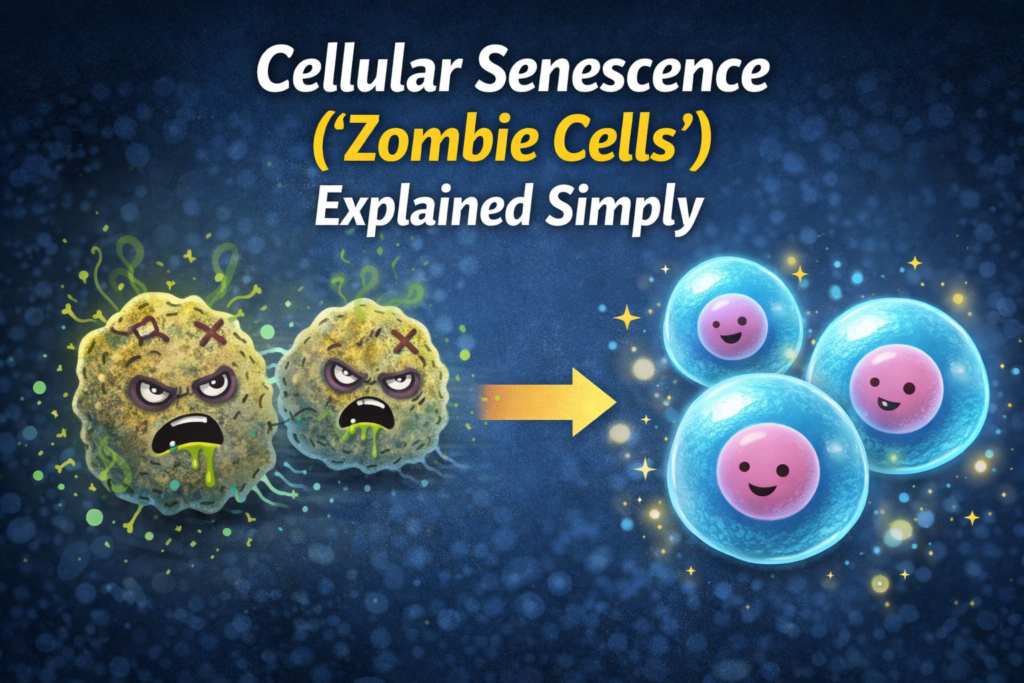
Related: Stress and Inflammation and Inflammaging Explained.
4) How oxidative stress and inflammation interact
These systems form a feedback loop:
- excess ROS activates inflammatory signalling pathways
- immune activation generates additional ROS
- mitochondrial damage increases oxidative leakage
- chronic inflammation impairs antioxidant recycling
Over time, this loop can become self-reinforcing.
This contributes to many ageing-related conditions.
5) Why both increase with age
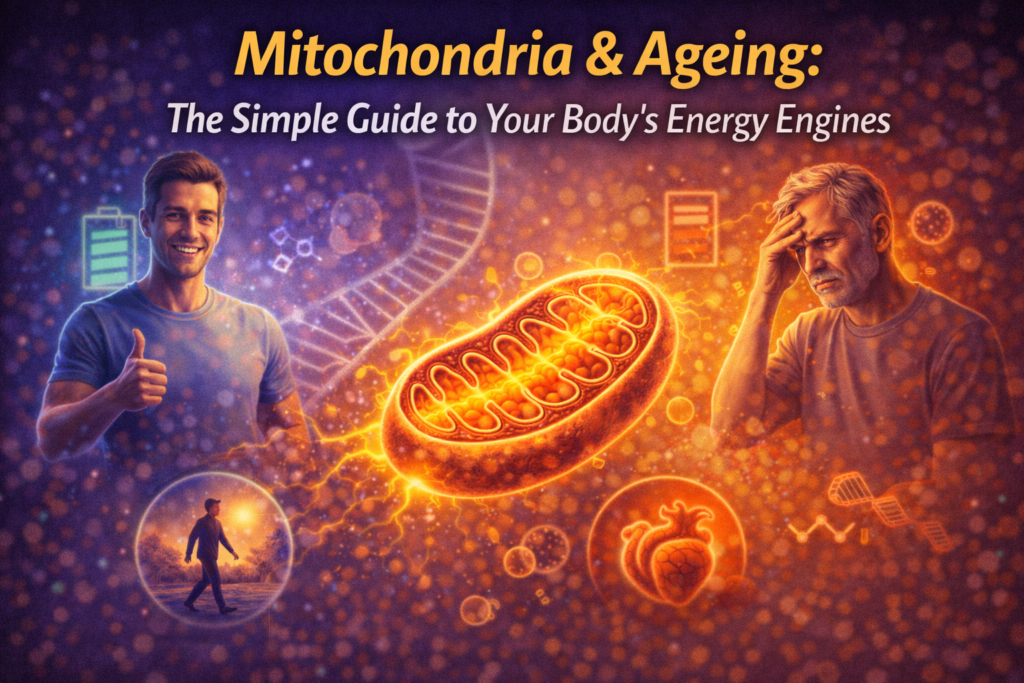
Mitochondrial decline
Damaged mitochondria leak more ROS.
Related: Mitochondria & Ageing.
Reduced mitophagy and repair
Cellular cleanup slows with age.
See: Mitophagy Explained.
Accumulated metabolic stress
Blood sugar instability and insulin resistance increase inflammatory signalling.
Explore: Insulin Resistance and Blood Sugar & Longevity.
Immune ageing
Immune regulation becomes less precise over time.
6) Common mistakes when addressing them
- overusing high-dose antioxidant supplements
- suppressing inflammation without fixing root causes
- ignoring sleep and recovery
- chronic overtraining
- neglecting metabolic stability
Suppression without adaptation often backfires.
7) Which levers target which system
Primarily oxidative stress levers
- mitochondrial quality
- endogenous antioxidant systems
- air quality exposure reduction
- nutrient sufficiency
Primarily inflammatory levers
- sleep quality
- stress regulation
- gut health
- movement balance
Both systems overlap heavily in practice.
8) How to reduce both safely
Move consistently
Exercise strengthens antioxidant capacity and immune regulation.
Protect sleep
Repair systems require adequate recovery.
Stabilise blood sugar
Metabolic swings amplify both systems.
Eat diverse whole foods
Polyphenols support internal defence signalling.
Manage nervous system load
Chronic stress elevates inflammation.
See: Nervous System Ladder.
FAQ
Is inflammation always bad?
No. Acute inflammation is essential for repair and immune defence.
Is oxidative stress always harmful?
No. Low-level ROS signalling drives adaptation.
Should I take antioxidants daily?
Whole foods are preferable. High-dose supplements require caution.
Which one matters more for ageing?
Both matter — and interact strongly.
Final takeaway
Oxidative stress and inflammation are distinct systems that interact continuously.
Longevity comes from restoring balance and resilience — not suppressing signals blindly.
— Simon
References
- Furman D et al. (2019). Chronic inflammation in the etiology of disease across the life span. Nature Medicine.
- Jones DP. (2006). Redefining oxidative stress. Antioxidants & Redox Signaling.

Simon is the creator of Longevity Simplified, where he breaks down complex science into simple, practical habits anyone can follow. He focuses on evidence-based approaches to movement, sleep, stress and nutrition to help people improve their healthspan.