Immune Ageing Explained: What Immunosenescence Means (and How to Support Your Immune System)
As you age, immunity becomes less precise: weaker responses to new threats, slower recovery, and more background inflammation. Immunosenescence explains why — and what actually helps without “immune boosting” hype.
← Back to: Biology of Ageing Explained
Disclaimer: This article is for educational purposes only and does not provide medical advice. It is not intended to diagnose, treat or prevent disease. If you have frequent infections, chronic inflammatory conditions, or immune-related illness, consult a qualified clinician.
People often assume the immune system simply “gets weaker” with age. That’s partly true — but it’s also misleading.
The more accurate story is that the immune system becomes less adaptable and less precise. Responses to new threats can be slower and weaker, while baseline inflammatory signalling quietly rises.
This combination is called immunosenescence — immune ageing. It overlaps heavily with inflammaging, but they are not identical: immunosenescence describes the immune system’s changing function, while inflammaging describes the chronic inflammatory environment that often results.
This guide explains what immunosenescence means in plain language, why it happens, and how to support immune resilience with practical lifestyle levers (not “immune boosting” hype).
Personal observation: The biggest shift for me was realising immune resilience isn’t built through one supplement — it’s built through recovery capacity. When sleep, stress and metabolic stability are strong, colds hit less often and recoveries feel smoother.
1) The simple explanation
Immunosenescence means your immune system becomes less flexible with age.
In practice, that often looks like:
- weaker responses to new infections
- slower recovery and longer “inflammation hangovers”
- reduced vaccine responsiveness in older age
- more background inflammatory signalling
- higher risk of chronic inflammatory conditions
The goal isn’t “boosting” immunity. The goal is improving immune regulation and recovery capacity.
2) What immunosenescence actually is
Your immune system has two major arms:
- innate immunity (fast, general defence)
- adaptive immunity (slower, specific, memory-based defence)
With age, both arms change. Importantly, the immune system doesn’t simply “switch off” — it often becomes chronically activated in some ways while becoming less precise in others.
3) What changes in the immune system with age
Reduced naive T-cells (less flexibility)
Naive T-cells are the “new recruits” that respond to unfamiliar threats. With age, naive T-cell production declines, reducing adaptability to new infections.
More memory T-cells (less room for novelty)
Over time, immune “memory” expands — which is useful — but it can crowd the system, leaving fewer resources for new responses.
Higher baseline inflammation
Immune signalling can become chronically elevated, contributing to inflammaging.
Slower resolution
Inflammation may linger longer after stressors, infections or injury.
Reduced immune precision
Regulation becomes less accurate — increasing the risk of chronic inflammatory states.
4) How immunosenescence links to inflammaging
Immunosenescence and inflammaging reinforce each other.
- age-related immune changes increase baseline inflammatory signalling
- chronic inflammation further impairs immune responsiveness
If you haven’t read it yet: Inflammaging Explained.
5) The thymus, T-cells and “immune memory crowding”
The thymus is an organ that helps produce and mature T-cells, especially early in life. It gradually shrinks with age (a process called thymic involution).
As thymic output declines, the pool of naive T-cells shrinks. Meanwhile, memory T-cells accumulate from lifelong exposures.
This isn’t “bad” — it’s a tradeoff. However, it helps explain why older adults can struggle more with new threats.
6) Mitochondria and immune energy demand
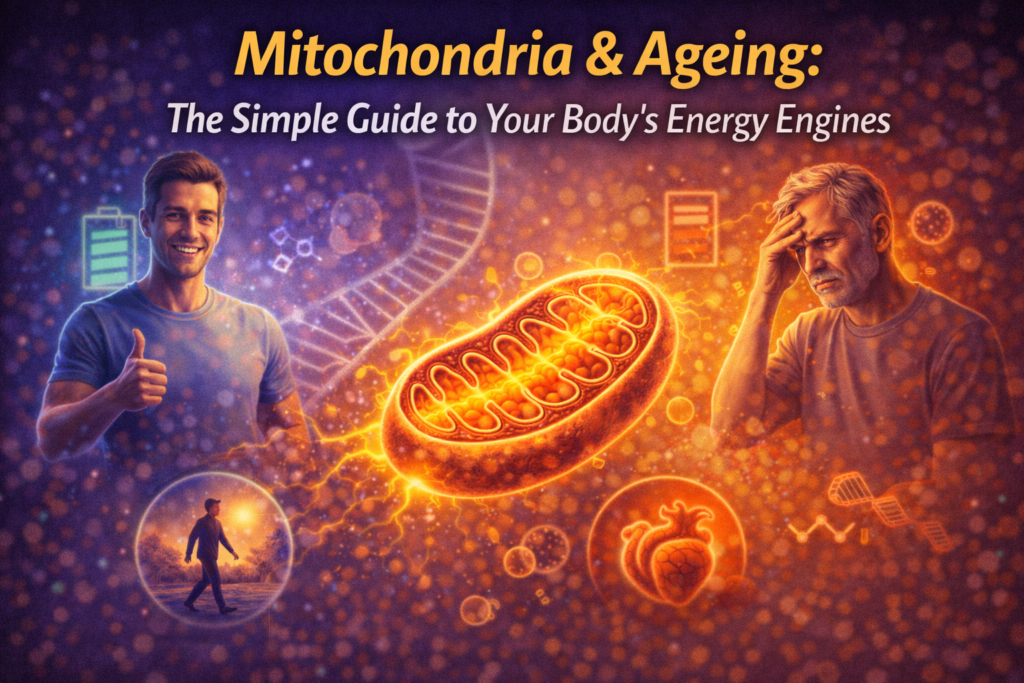
Immune responses are energetically expensive. When your immune system activates, immune cells rapidly shift metabolism and require reliable mitochondrial function.
Mitochondrial decline can impair immune performance and increase inflammatory signalling.
Related: Mitochondria & Ageing and Oxidative Stress Explained.
7) Blood sugar, insulin resistance and immune function
Metabolic health influences immune regulation. Chronic blood sugar instability and insulin resistance increase inflammatory tone and can impair immune function.
Explore: Blood Sugar & Longevity and Insulin Resistance.
8) Stress, sleep and immune regulation
Sleep and stress regulation are two of the most reliable immune levers.
Poor sleep increases inflammatory signalling and reduces adaptive immune precision. Chronic stress can disrupt immune regulation through neuroendocrine pathways.
Related: Sleep for Longevity, Stress and Longevity and The Nervous System Ladder.
9) What actually helps (practical levers)
Consistent movement (not extremes)
Regular exercise improves immune surveillance and reduces chronic inflammatory tone over time. Overtraining, however, can suppress immune function.
Sleep quality
Sleep supports immune memory formation and inflammation resolution.
Protein and micronutrient sufficiency
Immune cells require adequate protein and micronutrients to respond effectively.
Metabolic stability
Reducing blood sugar swings lowers inflammatory signalling and supports immune regulation.
Stress load management
A calmer nervous system supports healthier immune regulation.
If you want a clean food-first approach, start here: Anti-Inflammatory Foods.
FAQ
Does immunosenescence mean I will get sick constantly?
No. It means risk rises and recovery may slow, but lifestyle strongly influences resilience.
Can you reverse immune ageing?
Some aspects improve with lifestyle and reduced inflammatory load. “Reverse” is too strong; “improve regulation” is realistic.
Is “immune boosting” a real concept?
Usually it’s marketing. The immune system needs regulation, not permanent activation.
What matters most?
Sleep, movement, metabolic health and stress regulation are the biggest long-term levers.
Final takeaway
Immunosenescence describes a shift toward less flexible, less precise immune function with age — often alongside higher background inflammation.
The best strategy isn’t “boosting” immunity. It’s building resilience: sleep well, move consistently, stabilise blood sugar, and reduce chronic stress load.
— Simon
References
- Nikolich-Žugich J. (2018). The twilight of immunity: emerging concepts in aging of the immune system. Nature Immunology.
- Pawelec G. (2018). Age and immunity: what is “immunosenescence”? Experimental Gerontology.

Simon is the creator of Longevity Simplified, where he breaks down complex science into simple, practical habits anyone can follow. He focuses on evidence-based approaches to movement, sleep, stress and nutrition to help people improve their healthspan.