How to Tell if Your Cortisol Rhythm Is Off (Simple Signs Most People Miss)
Cortisol isn’t the problem — timing is. When your daily rhythm drifts, energy, sleep and stress regulation quietly unravel.
Disclaimer: This article is for educational purposes only and does not provide medical advice. Symptoms discussed here are non-diagnostic. If you have persistent fatigue, sleep disruption, unexplained weight changes, blood pressure issues, or suspected endocrine disorders, speak with a qualified clinician.
Cortisol is often blamed for everything from belly fat to burnout. In reality, cortisol is essential. You need it to wake up, mobilise energy, regulate blood pressure, and respond to challenges.
The real problem isn’t cortisol itself — it’s when the daily rhythm becomes distorted. Instead of rising strongly in the morning and falling gradually through the evening, cortisol can flatten, spike late, or stay elevated all day.
When that happens, people often feel “off” long before anything shows up on a blood test. This guide helps you recognise the early behavioural and physiological signs — and what to do about them.
Personal observation: The earliest sign for me wasn’t exhaustion — it was losing the natural feeling of morning momentum and evening wind-down. Once that rhythm softened, everything else (sleep quality, patience, food cravings, recovery) started slipping quietly.
1) What a healthy cortisol rhythm looks like
Cortisol follows a circadian rhythm:
- High in the morning: helps you wake up and mobilise energy.
- Gradual decline through the day: supports stable focus and stress tolerance.
- Low in the evening: allows melatonin to rise and sleep to initiate.
This rhythm is tightly linked to light exposure, sleep timing, meals, movement, and psychological stress. When the rhythm stays aligned, energy feels predictable and recovery happens naturally.
When the rhythm drifts, symptoms often appear before any formal diagnosis.
2) Simple signs your cortisol rhythm may be off
🚩 Morning feels slow or foggy
- difficulty waking up despite adequate sleep
- needing excessive caffeine to feel functional
- brain fog lasting into late morning
🚩 Energy crashes mid-afternoon
- strong post-lunch fatigue
- snacking to stay alert
- productivity drop regardless of workload
🚩 Wired but tired in the evening
- difficulty switching off at night
- racing thoughts despite physical tiredness
- restless sleep onset
🚩 Increased anxiety or irritability
- lower stress tolerance than usual
- overreaction to small problems
- persistent background tension
🚩 Sugar or stimulant cravings
- strong desire for quick energy
- using caffeine to compensate for fatigue
None of these prove cortisol dysfunction — but together they often signal rhythm disruption.
3) Common rhythm patterns (and what they feel like)
Flattened rhythm
Cortisol stays relatively low all day.
- persistent fatigue
- low motivation
- poor stress resilience
Elevated all day
Cortisol remains chronically high.
- constant tension
- poor recovery
- sleep fragmentation
Delayed evening drop
Cortisol remains high late into the evening.
- evening anxiety
- difficulty falling asleep
- feeling “wired” at night
You’ll explore evening spikes more deeply in: Anxiety, Cortisol & Ageing.
4) What disrupts cortisol rhythm most
- Irregular sleep schedules
- Late-night light exposure and screens
- High psychological stress without recovery
- Overtraining or under-recovering
- Blood sugar instability
- Excess caffeine late in the day
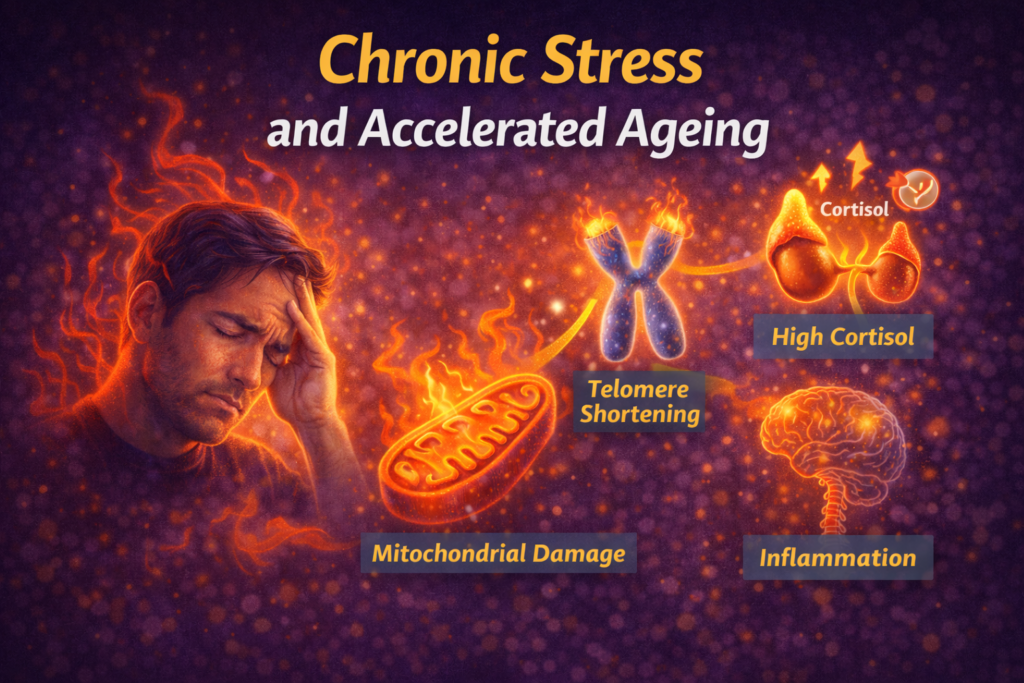
Chronic stress biology compounds across sleep, inflammation and glucose regulation. See: Chronic Stress and Accelerated Ageing and Blood Sugar & Longevity.
5) How to gently reset your rhythm
Anchor your mornings
- consistent wake time
- morning light exposure
- early movement
Protect your evenings
- dim lights after sunset
- reduce stimulating content late
- consistent wind-down window
Stabilise blood sugar
- adequate protein at meals
- avoid large late-night sugar spikes
Use nervous system downshifts daily
Short calming inputs compound: The 2-Minute Downshift and Breathwork That Lowers Cortisol Fast.
6) How wearables can help spot patterns
You can’t measure cortisol directly at home — but you can observe downstream signals:
- resting heart rate trends
- heart rate variability trends
- sleep timing and fragmentation
- recovery consistency
Look for multi-day trends rather than single readings. See: Wearables & Recovery Tracking, HRV Explained Simply, and Tracking Trends, Not Daily Noise.
FAQ
Do I need cortisol testing?
Testing can help in medical contexts, but most rhythm issues improve with behavioural alignment first.
Can supplements fix cortisol rhythm?
Supplements rarely override poor sleep, light exposure and stress patterns.
How long does rhythm recovery take?
Many people feel improvement within 2–6 weeks of consistent habit changes.
Is cortisol always bad for longevity?
No — healthy cortisol rhythm supports resilience. Chronic dysregulation accelerates ageing.
Final takeaway
Cortisol problems are often timing problems, not hormone problems.
When your daily rhythm drifts, small symptoms quietly accumulate. When you realign light, sleep, movement and recovery, the system often stabilises naturally.
— Simon
References
- Cleveland Clinic — Cortisol and circadian rhythm. Reference
- National Institutes of Health — Circadian regulation of cortisol secretion.
- Walker M. Why We Sleep — circadian disruption and hormonal regulation.

Simon is the creator of Longevity Simplified, where he breaks down complex science into simple, practical habits anyone can follow. He focuses on evidence-based approaches to movement, sleep, stress and nutrition to help people improve their healthspan.