Heat Shock Proteins Explained: Why Small Stress Makes Your Cells More Resilient
Heat shock proteins are cellular repair molecules that stabilise damaged proteins, protect mitochondria, and improve stress tolerance. They’re one of the key mechanisms behind hormesis and long-term resilience.
← Back to: Biology of Ageing Explained
Disclaimer: This article is for educational purposes only and does not provide medical advice. Heat exposure, cold exposure and intense exercise may not be suitable for everyone. Consult a qualified professional before making major changes.
One of the most powerful ideas in longevity science is that small, controlled stress can make the body stronger. This concept is known as hormesis.
A major biological reason hormesis works is the activation of heat shock proteins (HSPs). These molecules act as cellular repair crews — stabilising damaged proteins, preventing misfolding, supporting mitochondrial function and improving stress tolerance.
Heat shock proteins are activated by exercise, heat exposure, fasting signals, and other mild stressors. Over time, this builds cellular resilience and repair capacity — one of the foundations of healthy ageing.
This guide explains what heat shock proteins actually do, why they matter for ageing, and how to stimulate them safely without overdoing stress.
Personal observation: Once I understood that the benefit wasn’t the stress itself — but the recovery and repair response — my training, sauna use and recovery habits became far more measured and sustainable.
1) The simple explanation
Heat shock proteins are protective molecules your cells produce when exposed to mild stress.
They help:
- refold damaged or misfolded proteins
- prevent protein aggregation
- stabilise cellular structures
- support mitochondrial function
- improve stress tolerance
Think of them as emergency repair crews that make your cells more robust after controlled challenge.
This process is central to Hormesis Explained Simply.
2) What heat shock proteins actually are
Heat shock proteins are a family of molecular chaperones. Their job is to guide protein folding, stabilise damaged proteins and prevent cellular chaos under stress.
Common families include:
- HSP70 (protein repair and protection)
- HSP90 (protein signalling stability)
- Small HSPs (aggregation prevention)
They are present in all living organisms — highlighting how fundamental this repair system is to survival.
3) Why heat shock proteins matter for ageing
Ageing is partly driven by declining protein quality control, rising cellular damage and reduced stress tolerance.
Heat shock proteins support:
- protein quality control (Proteostasis)
- mitochondrial resilience
- reduced inflammatory signalling
- better cellular recovery capacity
Stronger HSP responses are associated with improved stress resistance and healthier ageing in multiple models.
4) Protein folding, repair and proteostasis
Proteins must fold into precise shapes to function. Stress, heat, oxidation and metabolic strain increase misfolding risk.
Heat shock proteins:
- refold partially damaged proteins
- prevent aggregation
- direct irreparable proteins toward degradation
This protects long-term cellular function and reduces toxic protein accumulation.
Related: Protein Folding & Repair.
5) Mitochondria, energy and stress tolerance
Mitochondria are especially sensitive to heat and oxidative stress.
Heat shock proteins help:
- stabilise mitochondrial proteins
- protect respiratory enzymes
- support recovery after energetic stress
This improves energy reliability and metabolic resilience.
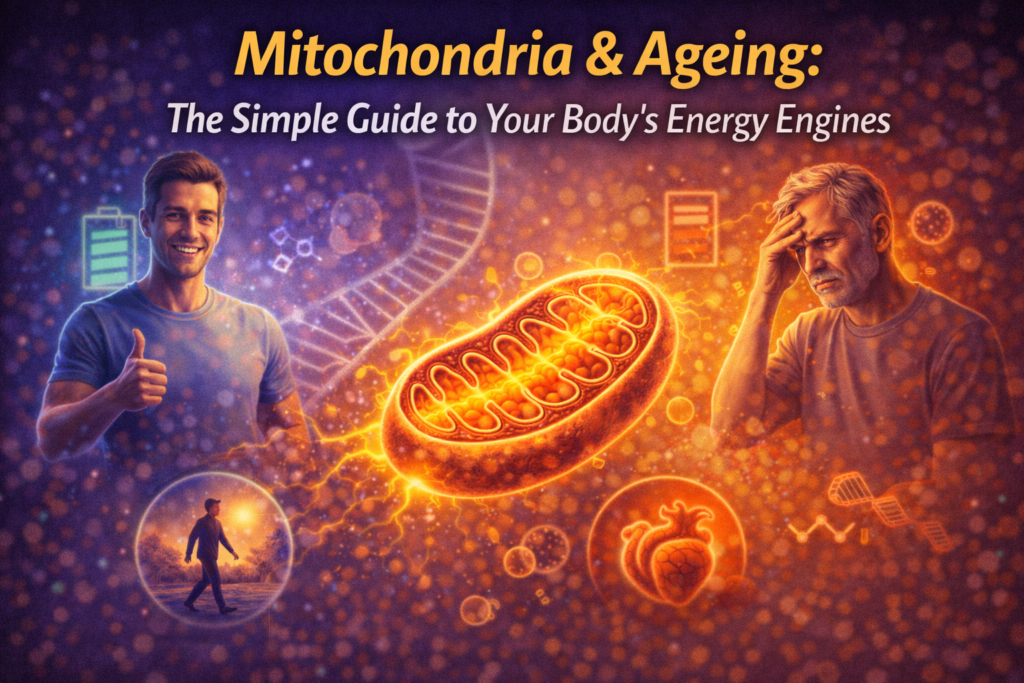
Explore: Mitochondria & Ageing.
6) Inflammation and immune regulation
Heat shock proteins can dampen excessive inflammatory signalling and improve immune tolerance under controlled exposure.
Chronic uncontrolled stress, however, has the opposite effect — increasing inflammatory load.
This balance matters for Inflammaging.
7) What stimulates heat shock proteins
Exercise
Resistance training, interval work and endurance exercise all activate HSP production.
Heat exposure
Sauna and hot environments strongly stimulate HSP pathways when used safely.
Metabolic stress signals
Fasting, caloric cycling and glycogen depletion can activate protective stress responses.
Cold exposure (to a lesser extent)
Cold stress activates overlapping adaptive pathways.
8) Hormesis: why dose matters
The benefit comes from moderate stress followed by recovery.
Too little stress produces no adaptation. Too much stress suppresses repair and increases injury risk.
This is why consistency beats extremes.
Related: Overtraining and Ageing.
9) Safety and common mistakes
- stacking too many stressors simultaneously
- insufficient recovery and sleep
- pushing sauna or cold exposure excessively
- training through chronic fatigue
- using stress as a badge of discipline
Adaptation only occurs when recovery capacity is respected.
FAQ
Do heat shock proteins only respond to heat?
No — exercise, metabolic stress and other stressors activate them.
Are more heat shock proteins always better?
No — balance matters. Chronic stress suppresses repair capacity.
Do supplements increase heat shock proteins?
Limited evidence exists. Lifestyle remains the dominant lever.
How quickly do HSPs respond?
Levels can rise within hours after stress exposure.
Final takeaway
Heat shock proteins translate small, controlled stress into long-term cellular resilience.
The goal is not maximal stress — it’s intelligent challenge paired with recovery.
— Simon
References
- Lindquist S, Craig EA. (1988). The heat-shock proteins. Annual Review of Genetics.
- Kregel KC. (2002). Heat shock proteins: modifying factors in physiological stress responses and acquired thermotolerance. Journal of Applied Physiology.

Simon is the creator of Longevity Simplified, where he breaks down complex science into simple, practical habits anyone can follow. He focuses on evidence-based approaches to movement, sleep, stress and nutrition to help people improve their healthspan.