Glutathione Explained: The Body’s “Master Antioxidant” (and How It’s Supported)
Glutathione is your body’s primary internal antioxidant and detox support system. It protects mitochondria, reduces oxidative load, and helps cells recover — but it’s best supported through lifestyle, not megadoses.
← Back to: Biology of Ageing Explained
Disclaimer: This article is for educational purposes only and does not provide medical advice. It is not intended to diagnose, treat or prevent disease. Always consult a qualified professional before making supplement decisions, especially if you have a medical condition or take prescription medication.
If you’ve ever looked into antioxidants, you’ve probably seen glutathione described as the “master antioxidant”. That label is slightly dramatic, but the underlying point is real: glutathione sits at the centre of your body’s internal defence network.
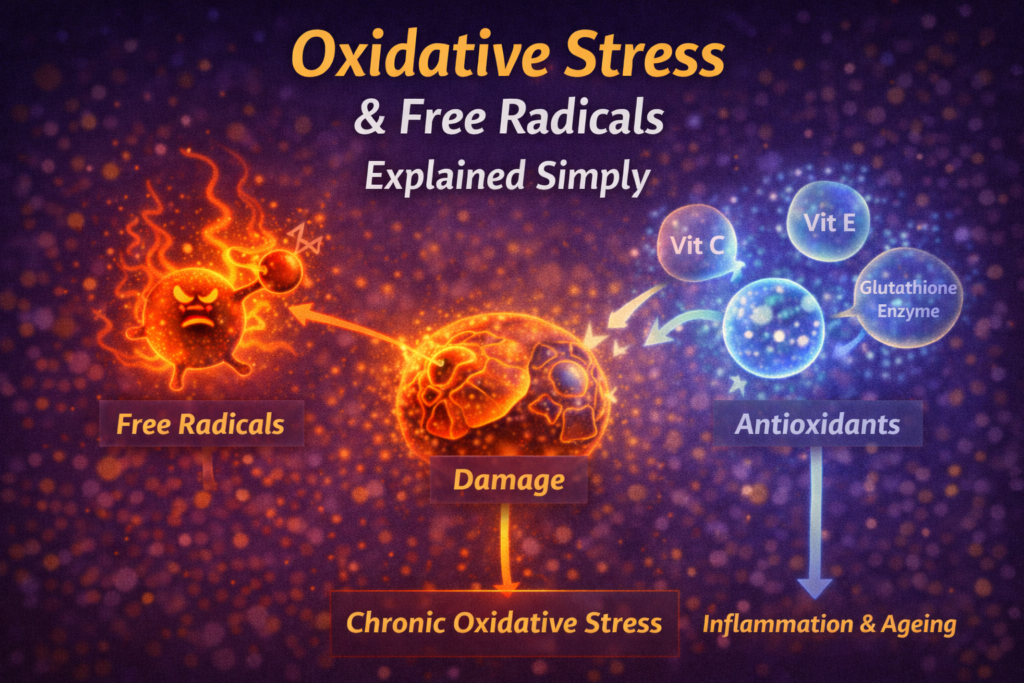
It helps neutralise oxidative stress, protects mitochondria, supports immune function, and plays a key role in detoxification pathways. Moreover, it also helps recycle other antioxidants so the whole system works efficiently.
The good news is: you don’t usually need to chase glutathione directly. Instead, you can support the systems that produce and regenerate it — which is often more effective (and more biologically sensible) than high-dose supplementation.
Personal observation: Glutathione was the point where “antioxidants” stopped feeling like a supplement topic and started feeling like a lifestyle topic. Sleep, protein intake, movement, and stress load all influence the system — which makes it practical, not just biochemical.
1) The simple explanation
Glutathione is a protective molecule inside your cells.
It helps:
- neutralise excess reactive oxygen species (ROS)
- protect DNA, proteins and cell membranes
- support immune balance
- keep mitochondria functioning efficiently
Think of glutathione as the cell’s internal “clean-up and protection” system — not a single shield, but part of an entire network.
If you haven’t yet, read: Oxidative Stress & Free Radicals Explained Simply and Antioxidants Explained: Why “More” Isn’t Always Better.
2) What glutathione is (without the jargon)
Glutathione (often shortened to GSH) is a small molecule made from three amino acids: glutamate, cysteine, and glycine.
You can picture it as a “helper molecule” that moves around inside cells, donating electrons to stabilise reactive compounds. In doing so, glutathione becomes oxidised (GSSG), and then the body regenerates it back into its active form.
This constant cycle is part of what keeps your redox balance stable over time.
3) Why glutathione matters for ageing
Ageing is partly the story of damage accumulating faster than repair. Oxidative stress is one contributor — especially when combined with inflammation, mitochondrial decline and metabolic instability.
Glutathione helps protect against this by:
- reducing oxidative load inside cells
- supporting detox pathways (especially in the liver)
- protecting mitochondria and preserving energy efficiency
- helping immune cells function without chronic overactivation
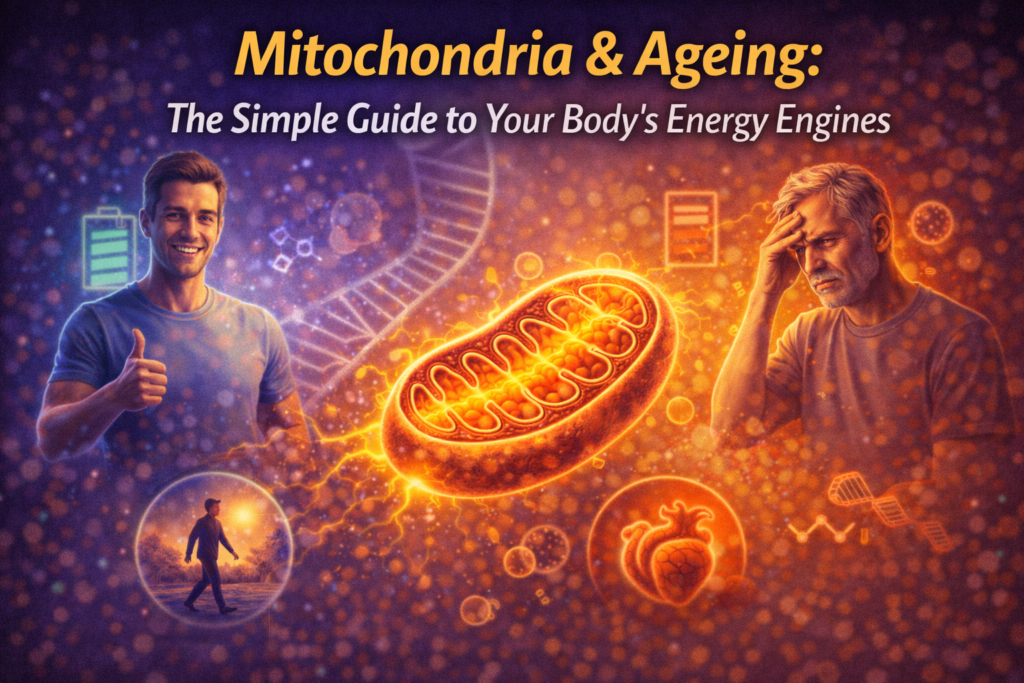
Related concepts: Mitochondria & Ageing and Stress and Inflammation.
4) Glutathione and antioxidant “recycling”
One reason glutathione is so important is that it supports the broader antioxidant network. It helps keep other antioxidants working efficiently — a bit like recharging tools so they can be reused.
This is why whole-body antioxidant protection is less about “taking more antioxidants” and more about maintaining a robust internal recycling system.
This also ties into the hormesis idea: healthy stress + recovery improves internal defences over time. See: Hormesis Explained Simply.
5) Why glutathione can decline with age
Glutathione status varies a lot between people. However, several common factors can push it down:
- higher oxidative load (pollution, smoking, chronic illness, persistent stress)
- poor sleep and reduced recovery capacity
- low protein intake or inadequate amino acid availability
- chronic inflammation that increases reactive demand
- mitochondrial dysfunction that increases ROS leakage
Environmental load matters more than many people realise: Air Quality & Longevity.
6) Glutathione, mitochondria and energy
Mitochondria are both a major source of ROS and a major target of oxidative damage. When mitochondria become damaged, energy output falls and oxidative leakage increases — which creates a nasty feedback loop.
Glutathione helps protect mitochondria so energy production stays cleaner and more stable. This matters for:
- physical stamina
- recovery and training tolerance
- metabolic health
- brain energy and mood stability
Related: Mitophagy Explained and Brain Energy & Ageing.
7) How to support glutathione naturally
Prioritise protein quality (not just quantity)
Glutathione is built from amino acids, and cysteine availability is often a limiting factor. A consistent protein baseline supports your internal antioxidant system.
Eat sulphur-rich foods regularly
Foods like garlic, onions, and cruciferous vegetables (broccoli, cabbage, kale) support related detox pathways. Moreover, they provide signalling compounds that help upregulate internal defences.
Move often
Regular exercise strengthens endogenous antioxidant capacity over time. It’s one of the most reliable ways to improve “redox fitness”.
Related: Exercise and Mitochondria.
Protect sleep
Repair systems run on recovery. If sleep is poor, oxidative load tends to rise and resilience falls.
See: Sleep for Longevity.
Lower unnecessary oxidative load
Reduce smoking exposure, improve indoor air quality, and avoid chronic “always-on” stress where possible.
Related: Stress and Longevity.
8) A sensible view on supplements
People often try to “take glutathione” directly. However, glutathione has complex absorption and distribution dynamics, and outcomes vary.
In general, lifestyle foundations usually produce more reliable results than chasing high-dose antioxidant pills. If you do experiment, treat it as adjunctive — not the main strategy.
If you’re curious about supplement foundations overall, see: Best Supplements for Longevity (UK).
FAQ
Is glutathione “the best” antioxidant?
It’s one of the most central because it’s part of a recycling network. However, it works as part of a system, not alone.
Can I measure glutathione levels?
Testing exists, but results can vary by method and don’t always reflect tissue status. Trends and context matter.
Does exercise increase glutathione?
Over time, regular training strengthens endogenous antioxidant systems. Acute workouts create oxidative signals that trigger adaptation.
Should I take high-dose antioxidants “for detox”?
Usually not. Excess suppression can blunt beneficial signalling. Whole-food and lifestyle support tends to be safer and more effective.
Final takeaway
Glutathione is a central part of your body’s internal antioxidant and repair network.
Rather than chasing megadoses, focus on supporting the systems that build and regenerate it: sleep, protein quality, regular movement, and lowering unnecessary oxidative load.
— Simon
References
- Jones DP. (2006). Redefining oxidative stress. Antioxidants & Redox Signaling.
- Wu G et al. (2004). Glutathione metabolism and its implications for health. The Journal of Nutrition.

Simon is the creator of Longevity Simplified, where he breaks down complex science into simple, practical habits anyone can follow. He focuses on evidence-based approaches to movement, sleep, stress and nutrition to help people improve their healthspan.