Evening Light & Screens: How to Reduce Circadian Disruption (Without Going Extreme)
It’s not screens themselves that wreck sleep — it’s light at the wrong time. Learn how to protect your circadian rhythm without living like a monk.
← Back to: How to Improve Sleep for Longevity
Disclaimer: This article is for educational purposes only. Sleep advice is general and may not apply to shift workers or people with diagnosed sleep disorders.
Many people eat well, exercise, limit caffeine — and still feel wired at night.
Sleep feels shallow. Falling asleep takes longer. Wake-ups creep in. And mornings feel heavier than they should.
Often, the missing piece isn’t another supplement or routine — it’s evening light exposure.
This guide explains how light and screens affect your circadian rhythm, why total avoidance isn’t necessary, and how to reduce disruption in realistic ways.
Personal observation: The biggest sleep improvements I’ve seen didn’t come from perfect routines — they came from softer evenings and clearer day–night contrast.
1) The simple explanation
Your circadian rhythm is set by light.
Bright light in the morning tells your body it’s daytime. Bright light late at night tells your body it’s not.
Screens are part of the problem — but they’re not the only source of disruptive light. Overhead lighting, TVs and modern homes often matter more.
2) Why evening light matters
Your brain uses light to time the release of melatonin — the hormone that signals night and supports sleep onset.
When light stays bright late into the evening:
- melatonin release is delayed
- sleep onset shifts later
- deep sleep becomes harder to access
- sleep timing drifts
This can happen even if total sleep time looks “fine”.
Context: Morning Light Guide.
3) Are screens really the problem?
Screens contribute in two ways:
- blue-weighted light exposure
- cognitive and emotional stimulation
But in many homes, overhead LEDs and bright room lighting expose you to more circadian-disrupting light than a phone or tablet.
Screens aren’t harmless — but they’re rarely the sole culprit.
4) Light, melatonin & sleep timing
Melatonin doesn’t “knock you out”.
It shifts your internal clock so that sleep becomes easier.
Bright evening light:
- pushes melatonin later
- makes you feel alert when you want to wind down
- reduces sleep pressure
This is why late evenings feel wired but tired at the same time.
5) Common evening light traps
- bright ceiling lights after sunset
- watching TV in a brightly lit room
- working on laptops under white LEDs
- scrolling close to bedtime with no light adjustment
These signals tell your brain “it’s still daytime”.
6) How to reduce disruption (realistically)
Dim the room, not just the screen
Lower overall light intensity after sunset. Lamps beat ceiling lights.
Warm the light
Use warmer bulbs in the evening where possible. Cooler light belongs in the morning.
Use screen adjustments
- night mode / blue-light filters
- lower brightness than you think you need
- avoid full-screen white backgrounds late at night
Create a “soft landing” hour
You don’t need a perfect routine — just a predictable wind-down window.
Related: Caffeine Cut-Off Times.
7) Do you need to go extreme?
No.
You don’t need:
- total screen bans
- orange glasses all evening
- rigid tech rules
Consistency and contrast matter more than perfection.
8) Who is most sensitive
Evening light disruption tends to hit harder if you:
- have anxiety or high stress
- struggle with sleep onset
- wake frequently at night
- consume caffeine later in the day
Hub: Stress & Nervous System.
9) Common mistakes
- blaming screens alone
- ignoring room lighting
- chasing perfection
- making evenings more stressful in the name of sleep
FAQ
Is blue light blocking enough?
It helps, but total light intensity and timing matter more.
What if I can only use screens at night?
Focus on dimmer, warmer environments and consistent wake-up times.
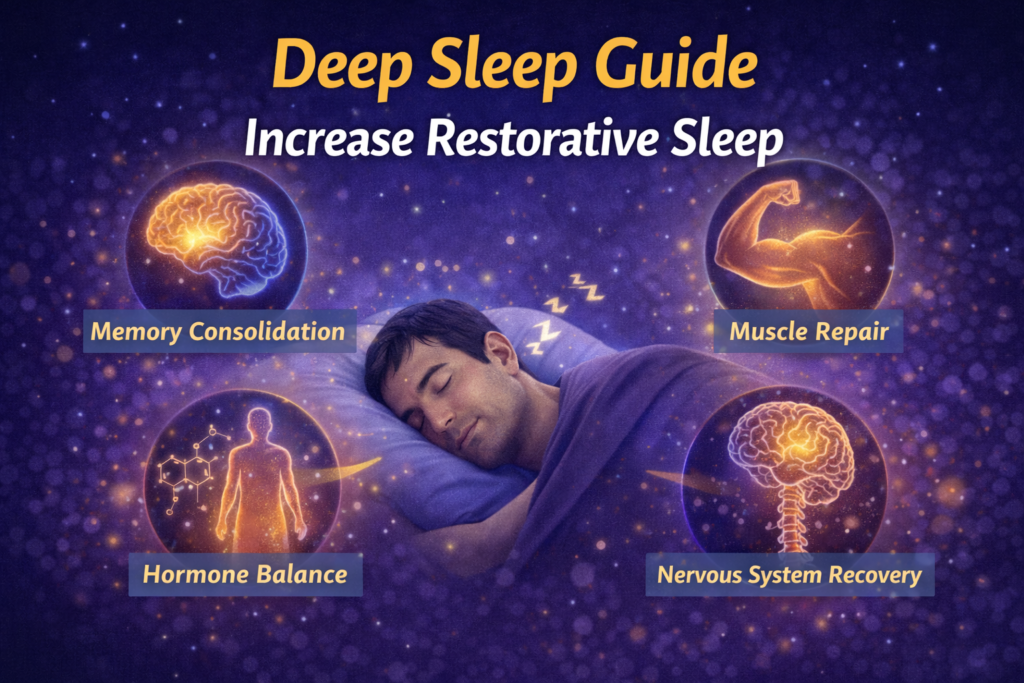
Does evening light affect deep sleep?
Yes — circadian delay can reduce deep sleep access even if total sleep time stays similar.
See: Deep Sleep Guide.
Final takeaway
Evening light doesn’t need to be eliminated — it needs to be softened.
When your days are bright and your evenings are dim, sleep becomes easier without force.
— Simon
Longevity Simplified
References
- Khalsa SBS et al. (2003). A phase response curve to light in humans.
- Chang AM et al. (2015). Evening use of light-emitting eReaders negatively affects sleep.

Simon is the creator of Longevity Simplified, where he breaks down complex science into simple, practical habits anyone can follow. He focuses on evidence-based approaches to movement, sleep, stress and nutrition to help people improve their healthspan.