Evening Anxiety: Why It Spikes at Night (and What Actually Helps)
If your body feels calm all day but wired at night, your nervous system timing — not your mindset — may be driving it.
Disclaimer: This article is for educational purposes only and does not provide medical advice. Persistent anxiety, panic symptoms, insomnia, or mood disturbance should be assessed by a qualified clinician or mental health professional.
Many people notice a frustrating pattern: the day feels manageable, but as evening approaches, anxiety ramps up. Thoughts race. The body feels restless. Sleep becomes harder — even though exhaustion is present.
This isn’t weakness or poor willpower. In most cases, it reflects how your nervous system and stress hormones are timed — especially cortisol and sympathetic arousal.
Understanding why evening anxiety happens gives you leverage to calm it without forcing relaxation or overthinking your way out of it.
Personal observation: When evening anxiety shows up for me, it’s usually a sign I’ve stayed mentally stimulated too late or under-recovered during the day. Fixing inputs earlier works far better than trying to calm myself once the spike has already arrived.
1) What evening anxiety actually is
Evening anxiety is not a separate disorder. It’s a timing mismatch between your nervous system activation and your recovery window.
Instead of winding down naturally as the day ends, your system remains alert — or even ramps up — right when sleep pressure should be rising.
This often shows up as:
- racing thoughts when you finally stop moving
- restlessness or body tension in the evening
- difficulty falling asleep despite fatigue
- anticipatory worry about the next day
The nervous system is still operating in “day mode” while the clock says night.
2) Why anxiety often spikes at night
Delayed cortisol drop
Cortisol should fall steadily through the evening. When it stays elevated, the brain remains alert and vigilant. This is explored in more detail here: How to Tell if Your Cortisol Rhythm Is Off.
Accumulated nervous system load
Stress compounds during the day — meetings, screens, decisions, traffic, caffeine — often without enough recovery inputs. When external stimulation stops, internal tension becomes noticeable.
Reduced distraction exposes internal signals
During the day, attention is externally occupied. At night, internal sensations and thoughts become more prominent.
Light exposure suppressing melatonin
Bright screens and artificial lighting delay sleep hormones and extend alertness.
3) Common evening anxiety patterns
“Wired but tired”
- exhausted physically
- mentally overstimulated
- difficulty initiating sleep
Ruminative anxiety
- replaying conversations
- future-oriented worry
- difficulty disengaging mentally
Somatic anxiety
- tight chest or shallow breathing
- restless legs or muscle tension
- heightened bodily awareness
Different patterns respond to slightly different interventions — but all benefit from earlier regulation.
4) What actually helps calm evening anxiety
Lower stimulation earlier
- reduce late caffeine
- dim lights after sunset
- avoid emotionally charged content late
Gentle nervous system downshifts
Short calming inputs work better than forcing relaxation: The 2-Minute Downshift and Box Breathing vs Physiological Sigh.
Light movement
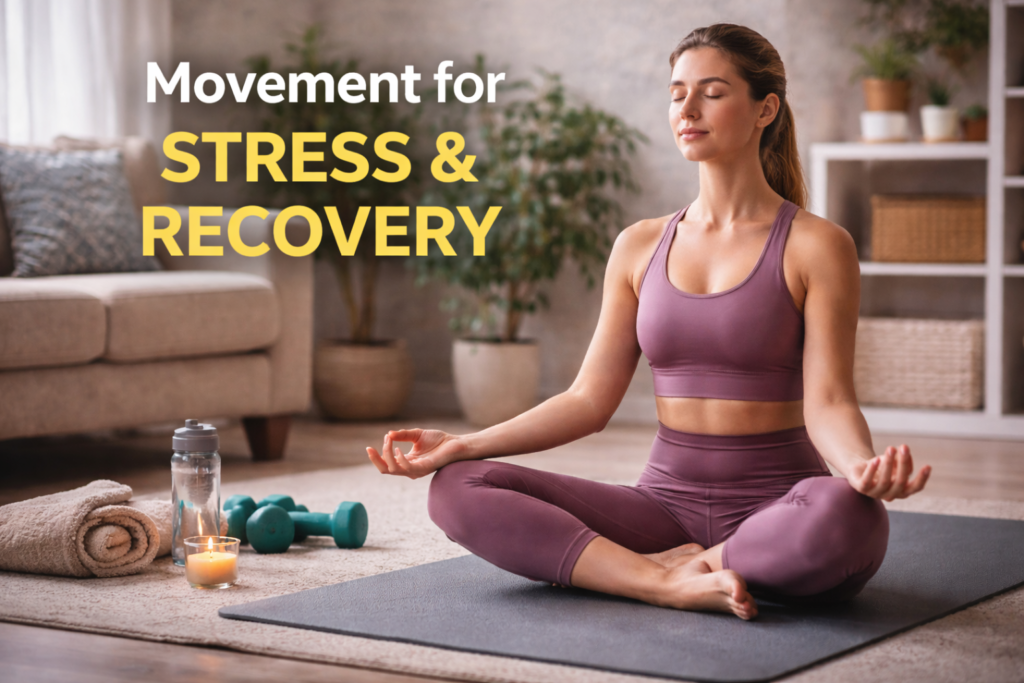
Easy walking or mobility helps discharge residual stress. See: Movement for Stress & Recovery.
Consistent sleep timing
Stability beats perfection. Regular sleep windows strengthen circadian signalling.
5) How to prevent the spike earlier in the day
- morning light exposure
- regular meals and hydration
- movement breaks during work
- scheduled mental downtime
- protecting recovery after training
This upstream regulation prevents late-day nervous system overflow.
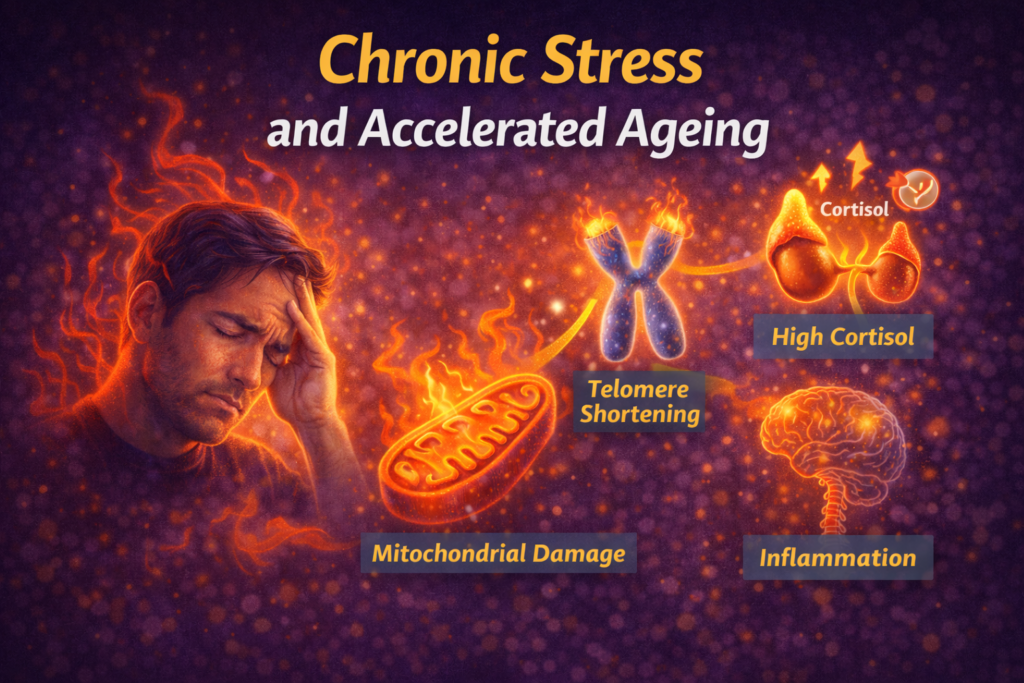
For broader context: Stress & Longevity and Chronic Stress and Accelerated Ageing.
6) How wearables can reveal your pattern
Wearables can reveal whether evening anxiety correlates with:
- elevated nighttime heart rate
- suppressed HRV trends
- late sleep onset
- fragmented sleep cycles
Focus on trends rather than nightly fluctuations: Wearables & Recovery Tracking, Tracking Trends, Not Daily Noise.
FAQ
Is evening anxiety a panic disorder?
Not necessarily. Many people experience situational nervous system timing issues without clinical anxiety disorders.
Should I take supplements for evening anxiety?
Supplements may support sleep in some cases, but behavioural timing remains the foundation.
How long does it take to improve evening anxiety?
Many people notice improvement within 2–4 weeks once rhythms stabilise.
Does this affect ageing?
Chronic evening stress impairs sleep, recovery and metabolic regulation — all relevant to biological ageing trajectories.
Final takeaway
Evening anxiety is usually a signal — not a flaw.
When nervous system timing realigns earlier in the day, the evening often calms naturally without force.
— Simon
References
- Cleveland Clinic — Circadian rhythm and cortisol. Reference
- National Sleep Foundation — Light exposure and sleep regulation.
- Walker M. Why We Sleep.

Simon is the creator of Longevity Simplified, where he breaks down complex science into simple, practical habits anyone can follow. He focuses on evidence-based approaches to movement, sleep, stress and nutrition to help people improve their healthspan.