Energy Supplements That Actually Work (and Which Don’t)
“Low energy” isn’t one problem — it’s a signal. The best supplements work by fixing a bottleneck (sleep, iron, electrolytes, caffeine timing, creatine, CoQ10) rather than forcing stimulation.
← Back to: Best Supplements for Longevity (UK Guide)
Disclaimer: This article is for educational purposes only and does not provide medical advice. Persistent fatigue can be caused by medical issues (iron deficiency, thyroid disease, sleep apnoea, depression, infections and more). If your fatigue is unexplained, severe, or new, speak to a qualified clinician.
Most “energy supplements” are either mild stimulants or expensive placebos. However, a handful actually help — when they match the real reason your energy is low.
The mistake is treating fatigue like a single problem. In reality, low energy usually falls into one of three buckets:
- Low sleep / low recovery (you’re under-rested, overstressed, or your rhythm is off)
- Low fuel / low stability (blood sugar swings, inconsistent meals, dehydration)
- Low cellular output (mitochondrial or performance buffering — often improved by training + targeted support)
This guide gives you a practical way to choose supplements that actually work — and avoid the ones that mostly don’t.
Personal observation: The biggest “energy upgrade” I’ve seen is boring: earlier sleep, fewer blood sugar crashes, and caffeine timing. Supplements help most when they support that baseline rather than replace it.
1) The simple explanation
The best “energy supplements” fix a bottleneck: sleep debt, dehydration, iron/B12 deficiency, blood sugar instability, or low performance buffering.
If you don’t identify the bottleneck first, supplements tend to disappoint.
2) Before supplements: the 60-second energy check
Step 1: Is your sleep the issue?
If you’re getting <7 hours, waking unrefreshed, or relying on caffeine to feel normal, treat sleep as the “root supplement”. Start here: Sleep for Longevity.
Step 2: Are you crashing after meals?
If energy dips mid-morning or mid-afternoon, blood sugar swings are common. Start here: Blood Sugar & Longevity.
Step 3: Are you dehydrated or salt-depleted?
Headaches, fatigue, low motivation and “flatness” can come from low fluids + electrolytes — especially if you sweat, train, or drink lots of coffee.
Step 4: Any deficiency red flags?
Heavy periods, low red meat intake, restrictive diets, gut issues, or long-term fatigue can point toward iron/B12/vitamin D issues. If this fits, testing is smart before stacking supplements.
3) Energy supplements that actually work
Caffeine (used correctly)
Caffeine works — but timing matters more than dose. For many people, the best “upgrade” is less caffeine, later in the morning, and none late afternoon.
If anxiety or sleep are issues, pair this with: Stress and Longevity.
Creatine (for performance + brain energy)
Creatine improves short-burst output, training consistency and (in some contexts) cognitive performance under fatigue.
- Women-specific guide: Creatine for Women
- Brain angle: Creatine for Cognitive Longevity
CoQ10 / Ubiquinol (when mitochondria are the bottleneck)
CoQ10 supports mitochondrial electron transport and is most relevant for older adults, statin users, and people with low “cellular output”. It’s not a stimulant — it’s a support compound.
If you want the cellular context first: Mitochondria & Ageing.
Electrolytes (especially if you train, sweat, or run low-carb)
When fatigue is partly dehydration or low sodium/potassium, electrolytes can feel like a switch flipping back on. This is one of the simplest, highest-ROI “energy supports” when appropriate.
4) Supplements that work only in specific cases
Iron (only if you’re low)
Iron can be transformational if deficiency is present — and unhelpful (or risky) if not. Consider blood tests first if you suspect it.
Vitamin B12 (especially for low animal intake)
B12 matters for red blood cells and neurological function. If you’re vegan/vegetarian or have absorption issues, it’s worth checking and correcting.
Vitamin D (common in the UK)
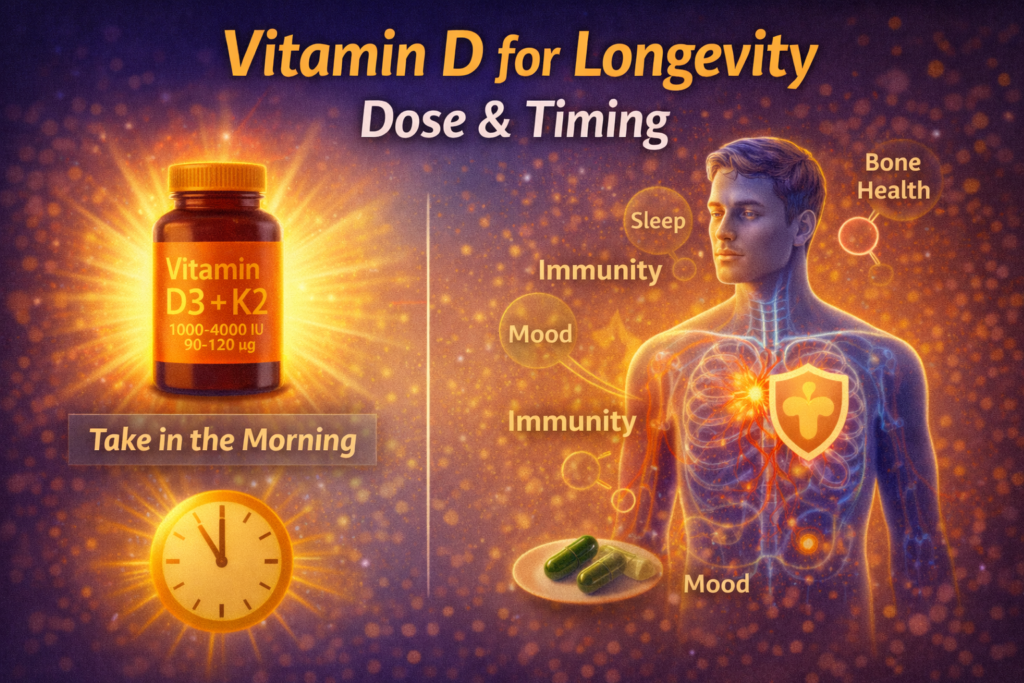
Vitamin D won’t feel like a stimulant, but low levels are associated with fatigue and low mood in some people. Practical guide: Vitamin D for Longevity.
Magnesium (sleep quality + stress load)
Magnesium can improve sleep depth and relaxation in some people, indirectly improving daytime energy. Guide: Magnesium Types: Which Ones Do What.
Protein support (if you under-eat protein)
Chronic low protein intake often shows up as low satiety, cravings, and unstable energy. If this is you, fix protein at meals before hunting supplements.
5) Supplements that usually don’t work (or aren’t worth it)
“Proprietary energy blends”
These often hide underdosed ingredients behind a blend label, then rely on caffeine to “prove” they work.
Random herb stacks for “adrenal fatigue”
If sleep, stress and blood sugar are broken, herbs rarely solve the root cause. Start with nervous system fundamentals first.
Megadose antioxidants for energy
High-dose antioxidant stacking doesn’t reliably increase energy and can blunt beneficial adaptation signals. If you haven’t read this yet: Antioxidants: When More Is Not Better.
6) A simple “energy stack” that stays sane
If you want a clean, low-risk approach, use this order:
- Sleep first (consistent bedtime, morning light, fewer late stimulants)
- Hydration + electrolytes (especially if you train/sweat)
- Blood sugar stability (protein at meals, fewer crashes)
- Creatine 3–5g/day (performance + brain buffering)
- Only then consider CoQ10, vitamin D, magnesium, iron/B12 if indicated
7) Common mistakes
- using supplements to compensate for chronic sleep debt
- stacking 6+ “energy” products at once (you won’t know what helps)
- treating caffeine as a substitute for recovery
- taking iron without knowing ferritin/iron status
- ignoring meal timing and blood sugar crashes
FAQ
What is the best supplement for fatigue?
It depends on the cause. If sleep is poor, fix that first. If you’re low in iron/B12/vitamin D, correcting deficiency helps most. Otherwise creatine and electrolytes are common high-ROI options.
Do “energy drinks” help long-term?
They can mask fatigue short-term, but frequent use can worsen sleep and increase stress load. If you rely on them daily, treat that as a signal that recovery is the real bottleneck.
Can CoQ10 make you feel more energetic?
Some people notice improved stamina and reduced fatigue, especially if mitochondrial output is the bottleneck. Others feel nothing — it’s not a stimulant.
Is creatine safe for daily use?
Creatine monohydrate is well-studied and generally safe for healthy adults at 3–5g/day. If you have kidney disease or are pregnant, get medical advice first.
Final takeaway
The energy supplements that work best are the ones that match your real bottleneck. Fix sleep, hydration and blood sugar first — then use targeted support like creatine, electrolytes or CoQ10 when it fits.
— Simon
Longevity Simplified
References
- NHS — Vitamins and minerals (overview and deficiency context): NHS: Vitamins and minerals
- Rae C et al. (2003). Oral creatine monohydrate supplementation improves brain performance: a double-blind, placebo-controlled, cross-over trial.
- Candow DG et al. (2019). Creatine supplementation and resistance training in older adults (review evidence base).
Yoast SEO
SEO title options
- Best Supplements for Energy: What Helps vs Hype
- Low Energy? The Only Supplements Worth Trying First

Simon is the creator of Longevity Simplified, where he breaks down complex science into simple, practical habits anyone can follow. He focuses on evidence-based approaches to movement, sleep, stress and nutrition to help people improve their healthspan.