Do You Need Supplements If You Eat Well?
A good diet does most of the work — but modern food systems, individual needs and ageing biology mean “eating well” doesn’t always equal optimal coverage.
← Back to: Best Supplements for Longevity (UK Guide)
Disclaimer: This article is for educational purposes only and does not provide medical advice. Supplements are not a substitute for a balanced diet. Individual needs vary — consult a qualified clinician before supplementing.
This is one of the most common — and most reasonable — questions people ask: “If I eat well, do I actually need supplements?”
The honest answer is not a simple yes or no.
A good diet does the majority of the work. But modern food systems, lifestyle factors, absorption differences, and age-related changes mean that even people who eat well can still fall short in specific areas.
This guide helps you decide whether supplements add value in your case — without turning nutrition into a pill-based strategy.
Personal perspective: I’ve found that supplements work best as small corrections to an already solid foundation — not as replacements for it. When diet, sleep and movement are off, supplements rarely fix the problem.
1) The simple explanation
If you eat well, you probably don’t need many supplements.
But even a good diet doesn’t guarantee optimal intake or absorption of every nutrient — especially as you age, live indoors more, train regularly, or experience stress.
Supplements work best when they:
- fill a specific gap
- support a known bottleneck
- correct a deficiency or vulnerability
They work poorly when used “just in case”.
2) What “eating well” really means
Many people believe they eat well — but definitions vary.
A genuinely solid diet usually includes:
- adequate protein at most meals
- fibre-rich vegetables and fruit
- whole-food carbohydrate sources
- healthy fats
- regular meal timing
Even then, nutrient intake can vary significantly based on food quality, preparation, and individual absorption.
3) Why gaps still happen
Nutrient gaps occur even in well-planned diets due to:
- soil depletion and food storage
- limited sun exposure (especially in the UK)
- lower calorie intake with age
- digestive efficiency changes
- higher needs from training or stress
This is why “diet alone” sometimes falls short despite best efforts.
4) Nutrients that are hard to get from food alone
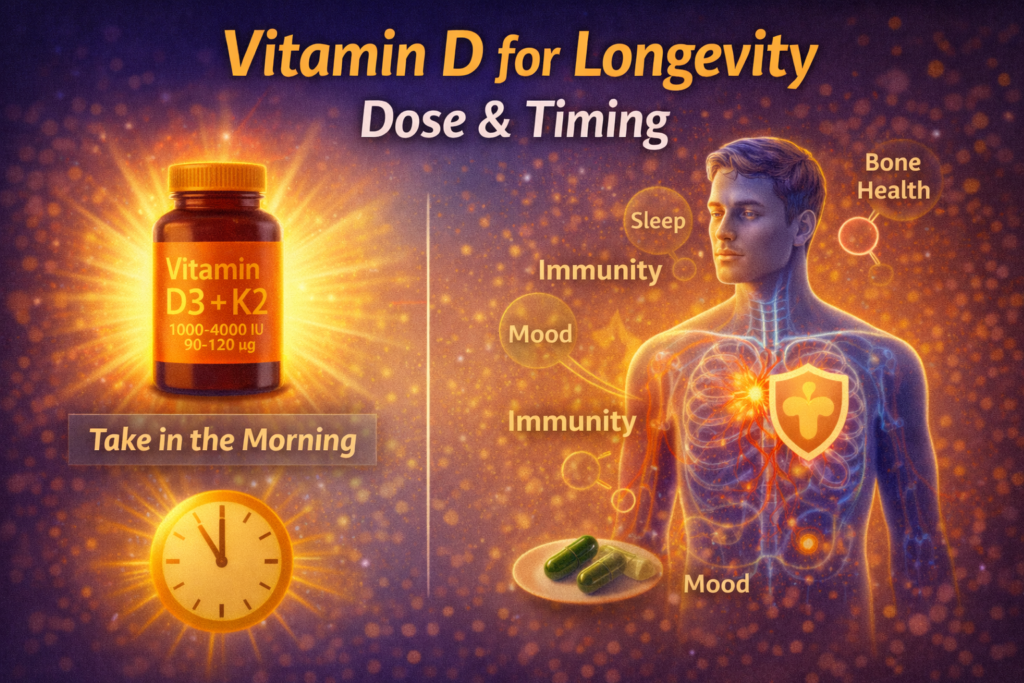
Vitamin D
In the UK, sunlight exposure is insufficient for much of the year. Diet alone rarely provides enough.
Guide: Vitamin D for Longevity.
Magnesium
Modern diets are often low in magnesium, especially when intake is calorie-restricted.
Guide: Magnesium Types: Which Ones Do What.
Omega-3 (EPA/DHA)
Unless you eat oily fish several times per week, intake is often low.
Creatine
Found mainly in red meat and fish. Intake is often low in women and low-meat diets.
Guide: Creatine for Women.
5) Individual factors that change needs
Supplement needs vary based on:
- age and muscle mass
- menstrual blood loss
- gut health and absorption
- training volume
- stress and sleep quality
This is why blanket supplement advice often fails.
6) When supplements genuinely help
- correcting a known deficiency
- supporting higher-than-average demands
- buffering age-related decline
- bridging seasonal or lifestyle gaps
Used this way, supplements are supportive — not central.
Related: Energy Supplements That Actually Work.
7) When supplements are unlikely to help
- poor sleep and chronic stress
- unstable blood sugar
- low protein intake
- minimal movement or resistance training
In these cases, supplements often disappoint.
8) A minimal, evidence-based approach
If you eat well and want a low-risk approach, start with:
- Vitamin D (especially autumn–spring)
- Magnesium (sleep and stress support)
- Creatine (muscle and brain buffering)
- Omega-3 if oily fish intake is low
Then reassess before adding more.
9) Common mistakes
- supplementing without fixing basics
- copying influencer “stacks”
- using supplements to justify poor habits
- chasing optimisation instead of consistency
FAQ
If I eat well, should I take a multivitamin?
Often unnecessary. Multivitamins may act as insurance in some cases, but targeted supplementation is usually more effective.
Are supplements a waste of money?
They can be — if used without purpose. Used strategically, some provide excellent return.
Should I get blood tests?
If fatigue, low mood or health issues persist, testing can clarify whether supplementation is warranted.
Final takeaway
Eating well gets you most of the way.
Supplements are best used as small, targeted corrections — not nutritional shortcuts.
— Simon
Longevity Simplified
References
- NHS — Vitamins and minerals: NHS overview
- Wallace TC. (2018). Combining nutrients from foods and supplements.

Simon is the creator of Longevity Simplified, where he breaks down complex science into simple, practical habits anyone can follow. He focuses on evidence-based approaches to movement, sleep, stress and nutrition to help people improve their healthspan.