Sleep • Recovery
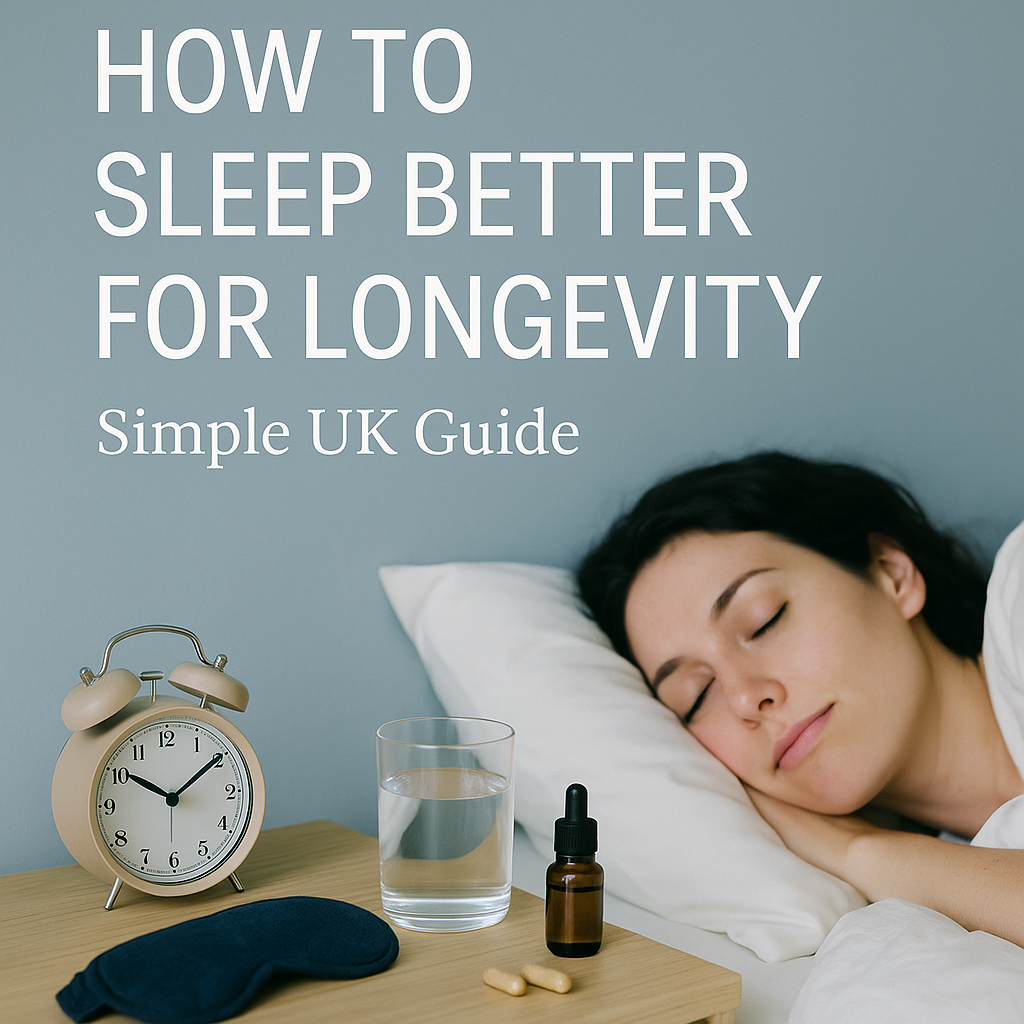
Deep Sleep Guide: How to Increase Restorative Sleep
Simple, science-backed strategies to protect the most important stage of sleep for longevity.
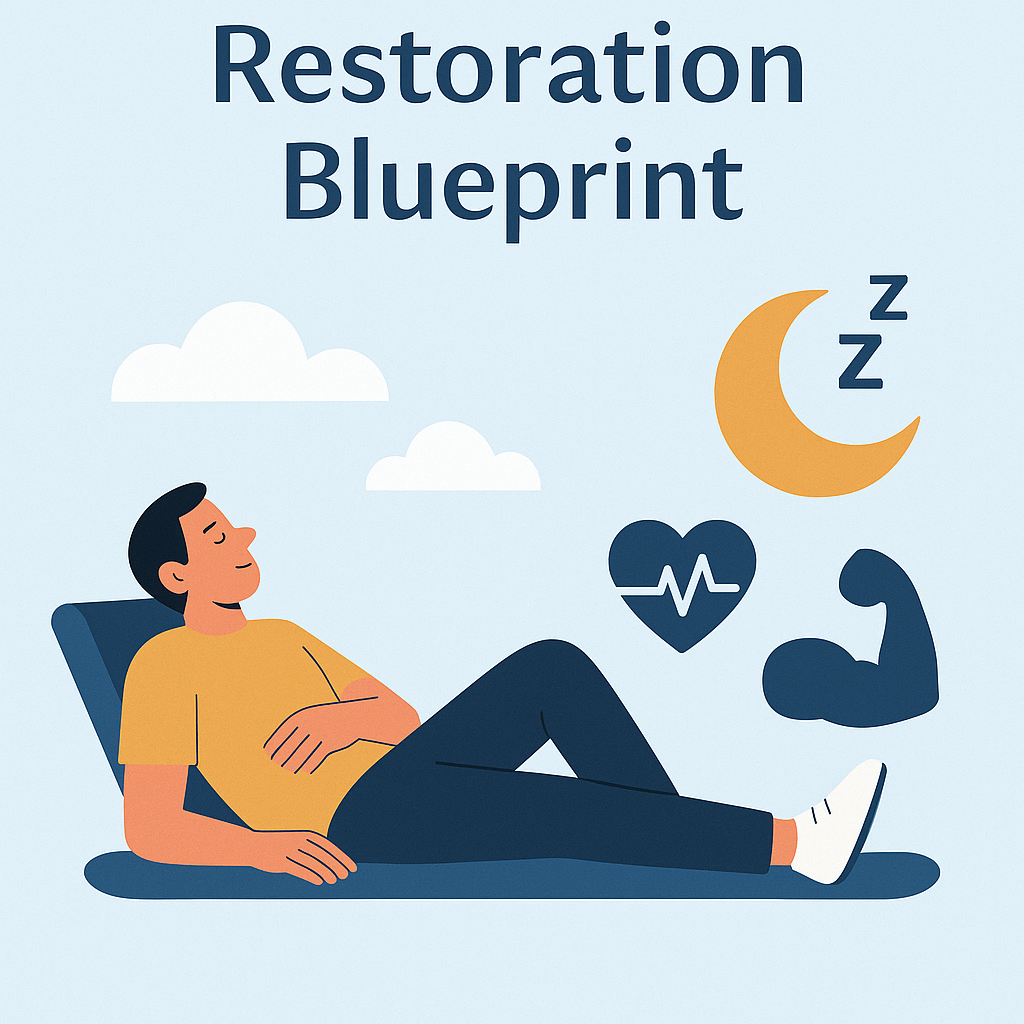
Part of: Sleep & Recovery Hub | Core guide: How to Improve Sleep for Longevity | Recovery lens: Recovery & Restoration Blueprint
Deep sleep is where ageing slows — or accelerates.
It’s the phase of sleep where your brain clears metabolic waste, your muscles repair, growth hormone is released, and your nervous system finally shifts into full recovery mode. Unfortunately, it’s also the stage of sleep that declines the most with age.
The reassuring news is this: deep sleep is highly responsive to lifestyle. While we can’t stop time, we can meaningfully influence how much restorative sleep we get by working with our biology instead of against it.
In this long-form guide, you’ll learn:
- what deep sleep really is (and why it matters so much)
- how ageing, stress, and modern life reduce slow-wave sleep
- the Four Pillars of Deep Sleep
- practical, evidence-aligned habits that reliably increase restorative sleep
Quick links in this hub: Morning Light Guide | Caffeine Cut-Off Times | Restorative Rest Days
1) What deep sleep actually is
Deep sleep — also called slow-wave sleep (SWS) — is the stage where brain waves slow dramatically and the body enters its most restorative state.
During deep sleep:
- growth hormone is released (supporting muscle, bone, and tissue repair)
- the brain’s glymphatic system clears metabolic waste
- immune function is strengthened
- blood pressure and heart rate drop
- stress hormones fall to their lowest levels
If REM sleep is about emotional processing and learning, deep sleep is about physical restoration and longevity.
2) Why deep sleep matters for longevity
Deep sleep sits at the crossroads of nearly every ageing pathway.
Brain health: Reduced deep sleep is associated with impaired waste clearance, which is increasingly linked to cognitive decline and neurodegeneration.
Metabolic health: Poor slow-wave sleep can worsen insulin sensitivity and appetite regulation.
Muscle and bone: Growth hormone release during deep sleep supports muscle maintenance — a critical factor in healthy ageing.
Nervous system balance: Deep sleep is when the parasympathetic (“rest and digest”) system dominates. Without it, stress accumulates.
A useful overview of sleep stages and health outcomes is provided by the Sleep Foundation’s guide to sleep stages.
If your overall sleep foundation needs work first: How to Improve Sleep for Longevity.
3) How ageing affects deep sleep
From roughly our 30s onward, most people experience a gradual reduction in slow-wave sleep. However, this decline is not fixed.
Research suggests that much of the loss attributed to “ageing” is often driven by:
- chronic stress and elevated cortisol
- reduced physical activity
- irregular sleep schedules
- evening light exposure
- poor metabolic health
This is good news — because all of these are modifiable.
Coming soon in the Deep Sleep & Sleep Quality cluster: sleep efficiency explained, wake-ups at night (causes + fixes), temperature & sleep (the fastest bedroom upgrade), and alcohol & sleep.
4) The four pillars of deep sleep
Four variables consistently stand out as the biggest levers for slow-wave sleep.
1) Rhythm
Your brain loves predictability. Consistent bed and wake times strengthen circadian timing, making it easier to enter deep sleep.
2) Light
Morning light anchors your sleep clock. Evening light — especially blue light — delays melatonin and can suppress deep sleep.
Related: Morning Light Guide
3) Temperature
Deep sleep requires a drop in core body temperature. Cool environments support this transition.
4) Calm
A calm nervous system is essential. Stress, rumination, and cortisol spikes are some of the strongest blockers of slow-wave sleep.
Related: Recovery & Restoration Blueprint
5) Daily habits that increase deep sleep
Morning
- get 10–20 minutes of outdoor light within an hour of waking
- avoid immediately checking your phone in bed
Daytime
- include daily movement (walking counts)
- add 2–3 sessions per week of Zone 2 cardio or strength training
- set a caffeine cut-off and stick to it most days
Related: Caffeine Cut-Off Times
Evening
- dim lights 60–90 minutes before bed
- finish heavy meals 2–3 hours before sleep
- use warm showers or baths 1–2 hours before bed to trigger cooling afterward
Bedroom setup
- aim for a room temperature of ~16–19°C
- keep the room dark and quiet
- remove phones and notifications if possible
6) Quick wins
- wear an eye mask to block stray light
- switch overhead lights for lamps after 8pm
- use nasal breathing for 2 minutes before bed
- write tomorrow’s to-do list earlier in the evening
- keep the same wake-up time even after poor sleep
7) Common mistakes to avoid
- scrolling in bed (light + cognitive stimulation)
- late alcohol — it fragments deep sleep
- intense exercise right before bedtime
- chasing supplements without fixing basics
8) A simple nightly routine
30-minute wind-down template
- lights dimmed
- 5 minutes gentle mobility or stretching
- 10 minutes reading (paper or e-ink)
- 2–3 minutes slow nasal breathing
- cool, dark bedroom
This routine isn’t magical — it’s predictable. And predictability is what your brain needs to access deep sleep consistently.
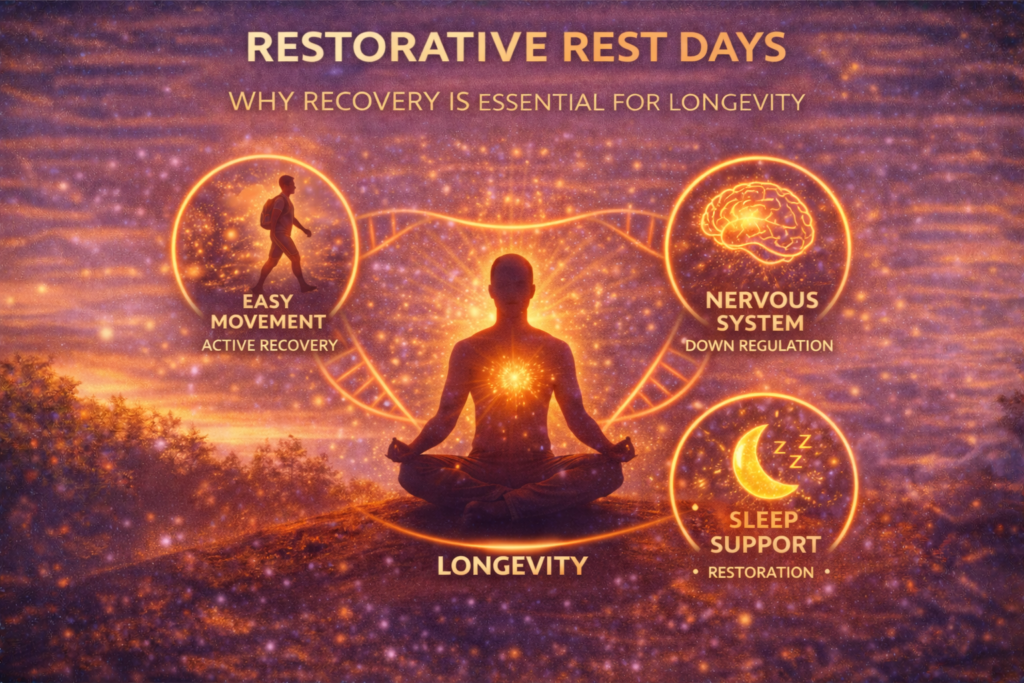
Related: Restorative Rest Days (recovery as a skill, not time off)
9) FAQs
How much deep sleep do adults need?
Typically 1–2 hours per night, though this varies. Trends over time matter more than single nights.
Do magnesium supplements help?
Forms like glycinate or threonate may support relaxation, but they work best after habits are addressed.
Are wearables accurate?
Not clinically perfect, but useful for tracking direction and consistency.
Is deep sleep loss inevitable with age?
No — lifestyle can meaningfully slow or reverse much of the decline.
Want a full sleep-for-longevity framework?
Build a routine that protects deep sleep, circadian rhythm, and nervous system recovery.
Related articles
- Sleep & Recovery Hub
- Morning Light Guide
- Caffeine Cut-Off Times
- Recovery & Restoration Blueprint
- Stress & Longevity
- Zone 2 Cardio for Longevity
Coming soon: temperature & sleep, alcohol & sleep, sleep efficiency explained, and wake-ups at night (simple fixes).
If you take one thing from this…
Deep sleep improves when rhythm, light, temperature, and calm are aligned. Start with one change tonight — consistency does the rest.
— Simon, Longevity Simplified
Disclaimer: This article is for educational purposes only and does not constitute medical advice.
References
- Dijk DJ, et al. Age-related changes in slow-wave sleep and their relationship with growth hormone and cortisol in healthy adults. JAMA (2000).
- Garbarino S, et al. Role of sleep deprivation in immune-related disease risk and chronic inflammation. (2021).
- Selected reviews on glymphatic clearance, slow-wave sleep, and restorative sleep mechanisms (multiple sources).

Simon is the creator of Longevity Simplified, where he breaks down complex science into simple, practical habits anyone can follow. He focuses on evidence-based approaches to movement, sleep, stress and nutrition to help people improve their healthspan.