Stress • Nervous System • Recovery
Chronic Stress and Accelerated Ageing
How long-term cortisol speeds up ageing — and the simple habits that help reverse it.
Stress & Longevity • Nervous System Ladder • Breathwork (Lower Cortisol Fast) • Reset Techniques • Chronic Stress & Accelerated Ageing • Anxiety, Cortisol & Ageing • Movement for Stress & Recovery • High vs Low Cortisol Training Days
Stress isn’t just something you feel — it’s a biological state that reshapes how your body functions. When stress becomes chronic, it quietly accelerates ageing across multiple systems at once.
Over time, persistently elevated stress hormones disrupt sleep, increase inflammation, impair mitochondrial energy production, and interfere with cellular repair. In other words, chronic stress pushes the body into fast-forward.
The encouraging part is this: much of stress-related ageing is reversible. By lowering your daily stress load and restoring nervous system balance, you can slow — and often partially reverse — many of these effects.
In this guide, you’ll learn:
- how chronic stress accelerates biological ageing
- why cortisol plays a central role
- the Stress Load Loop that keeps people stuck
- simple, evidence-aligned ways to reduce stress quickly
1) The simple explanation
Short bursts of stress are normal — even helpful. They sharpen focus and mobilise energy. The problem is modern life rarely allows stress to fully switch off.
Emails, financial pressure, constant stimulation, poor sleep, irregular meals, and screen exposure keep the nervous system in a low-grade “threat mode.” When this state becomes chronic, ageing accelerates.
Chronic stress tends to cause:
- lighter, more fragmented sleep
- higher baseline inflammation
- worsening blood sugar control
- hormonal imbalance
- reduced cellular repair and regeneration
This is why stress management isn’t optional for longevity — it’s foundational.
2) The biology of stress and ageing (explained simply)
Cortisol is your primary stress hormone.
In the short term, cortisol helps you respond to challenges. Chronically elevated cortisol, however, becomes damaging.
Stress impairs mitochondrial function.
Mitochondria generate the energy that keeps cells functioning and resilient. Chronic stress reduces mitochondrial efficiency, accelerating fatigue and ageing.
Inflammation rises under chronic stress.
Long-term cortisol dysregulation increases inflammatory signalling — a key driver of “inflamm-ageing.”
Telomeres shorten faster.
Telomeres are protective caps on chromosomes. Chronic psychological stress is associated with faster telomere shortening, a marker of biological ageing.
Sleep becomes disrupted.
Elevated evening cortisol reduces deep sleep, which further worsens stress regulation the next day.
A clear overview of how stress biology affects ageing pathways can be found in this NIH review on stress, inflammation, and ageing.
3) The stress load loop
Many people unknowingly get trapped in a self-reinforcing cycle:
- daily pressures accumulate
- cortisol remains elevated
- sleep becomes lighter and less restorative
- stress sensitivity increases the next day
- energy drops and cravings rise
- inflammation increases and recovery declines
Over months and years, this loop accelerates biological ageing. Breaking it doesn’t require removing all stress — it requires reducing total stress load.
4) How to lower stress (starting today)
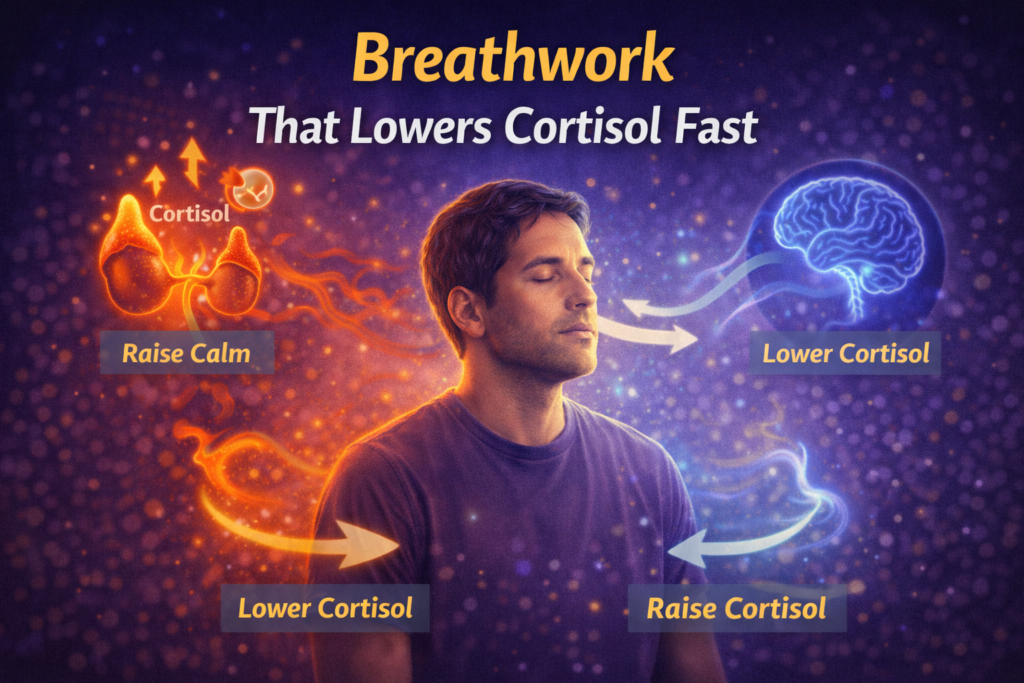
- 1–2 minutes of slow nasal breathing (rapidly lowers sympathetic nervous system activity)
- 10-minute walks after meals (reduces stress load and stabilises blood sugar)
- Morning light exposure to regulate cortisol rhythm naturally
- Limit caffeine after early afternoon
- 5-minute “brain dump” before bed to offload mental stress
- Warm showers or baths in the evening to bias parasympathetic tone
- Replace late-night scrolling with calming audio or reading
These habits pair especially well with Deep Sleep Guide and Movement for Stress & Recovery.
5) Quick wins
- keep your phone out of the bedroom
- take three slow exhales during stressful moments
- drink water before caffeine
- create one screen-free hour after dinner
- say “no” to one unnecessary commitment each week
6) What not to do
- using alcohol to “relax” (it worsens sleep and cortisol regulation)
- pushing intense training during high stress periods
- doom-scrolling late at night
- self-criticism for feeling stressed (this amplifies the stress response)
7) My personal approach
I stopped trying to eliminate stress entirely. Instead, I focus on stress load reduction — small daily actions that keep stress from stacking up.
- morning sunlight within 10 minutes of waking
- two short walks most days
- 5–10 minutes of slow breathing or mobility
- dimmed screens and lights after 8pm
- a consistent bedtime
None of these are dramatic, but together they massively improve resilience.
8) FAQs
Can stress really age you faster?
Yes. Chronic stress accelerates inflammation, mitochondrial decline, telomere shortening, and sleep disruption.
Do supplements help?
They may support relaxation, but behaviour changes create the largest and most durable effects.
How quickly can cortisol be reduced?
Breathing and walking can reduce stress markers quickly; consistent habits lower baseline levels over weeks.
Does exercise reduce stress?
Yes — especially walking, Zone 2 cardio, and strength training. Excessive HIIT can raise cortisol if recovery is poor.
Want a simple daily stress reset?
Use a short routine that lowers cortisol quickly and protects deep sleep.
Related articles
- Stress & Longevity
- Anxiety, Cortisol & Ageing
- Breathwork (Lower Cortisol Fast)
- Nervous System Reset Techniques
- Movement for Stress & Recovery
- High vs Low Cortisol Training Days
If you take one thing from this…
Chronic stress accelerates ageing — but reducing daily stress load can restore resilience faster than most people expect.
— Simon, Longevity Simplified
Disclaimer: This article is for educational purposes only and is not medical advice.
References
- Epel ES, et al. Accelerated telomere shortening in response to life stress. PNAS.
- McEwen BS. Protective and damaging effects of stress mediators. New England Journal of Medicine.
- NIH — Stress, inflammation, and ageing (review literature).

Simon is the creator of Longevity Simplified, where he breaks down complex science into simple, practical habits anyone can follow. He focuses on evidence-based approaches to movement, sleep, stress and nutrition to help people improve their healthspan.