Stress • Nervous System • Recovery
Breathwork That Lowers Cortisol Fast
A simple, science-backed breathing method that helps your nervous system downshift in minutes.
When stress hits, your body responds instantly: breathing gets shallow, heart rate rises, and cortisol climbs.
That reaction is useful in short bursts — but damaging when it lingers. The fastest way to interrupt the stress response isn’t willpower. It’s physiological. Your breath is one of the most direct levers you have to downshift your nervous system on demand.
Certain breathing patterns can reduce sympathetic (“fight-or-flight”) activation within seconds, helping your system return to a calmer baseline — where recovery and long-term resilience are easier.
In this guide, you’ll learn:
- why breathwork can feel faster than most stress tools
- the exact technique shown to reduce stress rapidly
- the One-Minute Reset you can use anywhere
- how to layer breathwork into daily life for longevity
1) The simple explanation
Your breathing pattern is a signal.
Fast, shallow breathing tells your body “something is wrong” and tends to keep the system activated. Slow, controlled breathing — especially with longer exhales — is a strong “safety cue” that helps the nervous system downshift.
Importantly: you don’t need to feel calm first. Changing the breath can shift physiology first — and the mind often follows.
If you want the bigger framework around this, read: The Nervous System Ladder. Breathwork is one of the fastest “move down the ladder” tools.
2) Why breathwork lowers stress fast (explained simply)
The exhale is the key. A slower, longer exhale tends to increase parasympathetic (“rest and digest”) activity and reduce the “stress load” feeling in the body.
Threat signals quiet down. When breathing slows, reactivity often drops — you feel less “spiky” and more steady.
Tension releases. Many people carry stress in the jaw, shoulders and chest. A deliberate exhale helps unwind that pattern.
It works quickly. Controlled breathing can change physiology within seconds to minutes, which is why it’s so useful mid-day — not just as a bedtime habit.
One widely cited paper on brief respiration practices and stress is available here: Cell Reports Medicine — brief structured respiration practices and stress reduction .
3) The physiological sigh (fastest technique)
The physiological sigh is one of the simplest breathing patterns studied for rapid stress reduction.
How to do it
- Inhale slowly through your nose.
- Take a second, short inhale to “top up” the lungs.
- Exhale slowly and fully through your mouth.
Repeat for 2–5 rounds.
Most people notice:
- heart rate settling
- jaw/shoulders releasing
- less internal urgency
- clearer thinking
4) The one-minute cortisol reset
This is your “anywhere” reset — before meetings, after stressful messages, during anxiety spikes, or when stress starts stacking.
The One-Minute Reset
- Physiological sigh x 3–5 rounds
- 30 seconds nasal breathing (smooth and quiet)
- Make the exhale slightly longer than the inhale
Total: ~60 seconds.
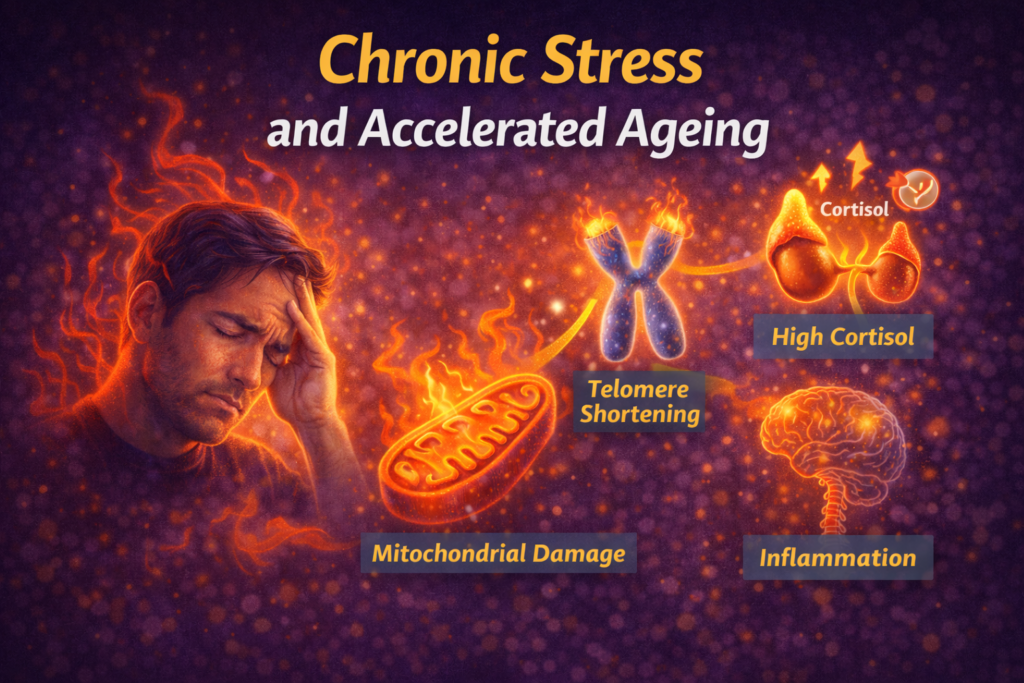
If your stress pattern is chronic (not just acute spikes), pair this with: Stress & Longevity and Chronic Stress & Accelerated Ageing.
5) When to use it
- Morning: if you wake wired, it softens the launch into the day
- Between tasks: prevents “stress stacking” across the day
- After caffeine: smooths stimulation if you feel jittery
- Before training: helps you choose the right intensity for the day
- Early evening: signals “downshift” before stress spills into sleep
- During anxiety spikes: reduces physiological arousal quickly
If your body feels “hot” and you’re not sure how hard to train, use: High vs Low Cortisol Training Days.
6) Quick wins
- set a 60–90 second timer so you don’t rush
- relax the jaw and drop the shoulders before you start
- keep the breath smooth — gentle beats forceful
- practice when calm so it works under pressure
- pair with a short walk if your stress feels “restless”
For movement that reliably lowers stress, see: Movement for Stress & Recovery.
7) Troubleshooting (if it doesn’t work)
If breathwork feels ineffective or makes you more anxious, it usually means one of these is happening:
- You’re forcing it. Make it smaller, softer, slower. A gentle exhale is enough.
- You’re too stimulated. Change inputs first: stand up, step outside, move rooms, splash cool water.
- You’re actually on the bottom rung. If you’re depleted, you may need gentle activation (light movement, hydration, food) before downshifting.
- Breath focus triggers panic. Use a shorter practice (1–2 sighs only), or switch to movement-based regulation.
The broader framework for this is here: The Nervous System Ladder.
8) My personal approach
I use breathwork as a stress load regulator — not a “calm down ritual” I only do at night.
- 2 physiological sighs when I notice tension building
- the one-minute reset before deep work or difficult conversations
- a short downshift early evening so stress doesn’t spill into the night
These tiny pauses stop cortisol from stacking up over the day — and that’s where the longevity benefit really lives.
9) FAQs
How fast does breathwork reduce cortisol?
Many people feel a shift within 30–60 seconds. Physiological changes can occur within minutes, especially with repeated practice.
Is breathwork as effective as meditation?
For immediate downshifting, controlled breathing is often faster. Meditation can be brilliant too — just not always “instant”.
Can breathwork improve sleep?
It can help by reducing evening activation. For the bigger routine, start with Stress & Longevity.
Can you overdo it?
Gentle techniques like the physiological sigh are generally safe when done naturally. If you feel lightheaded, stop and breathe normally.
Want a simple daily stress routine?
Use quick downshifts, protect recovery, and build long-term resilience.
Related articles
- Nervous System Reset Techniques (Calm Your Body in Minutes)
- The Nervous System Ladder: How to Regulate Stress for Longevity
- Chronic Stress and Accelerated Ageing
- Anxiety, Cortisol & Ageing
- Movement for Stress & Recovery
Final takeaway
Your breath can downshift stress in minutes. The physiological sigh is one of the fastest pathways from activated → regulated.
— Simon, Longevity Simplified
References
- Balban MY, et al. Brief structured respiration practices enhance mood and reduce physiological arousal. Cell Reports Medicine.
- Brown RP, Gerbarg PL. Yogic breathing practices and stress/anxiety outcomes. Journal of Alternative and Complementary Medicine.
- NHS resources on stress and self-help strategies.
Disclaimer: This content is for educational purposes only and does not constitute medical advice.

Simon is the creator of Longevity Simplified, where he breaks down complex science into simple, practical habits anyone can follow. He focuses on evidence-based approaches to movement, sleep, stress and nutrition to help people improve their healthspan.