Brain Energy & Ageing: Why Mitochondria Matter for Focus, Mood and Cognitive Health
Your brain consumes more energy than any other organ. Mitochondrial health determines how well you think, feel, recover from stress and maintain clarity as you age.
← Back to: Biology of Ageing Explained
Disclaimer: This article is for educational purposes only and does not provide medical advice. It is not intended to diagnose, treat or prevent disease. Always consult a qualified professional before making health changes.
When people think about brain health, they often focus on memory, learning, or supplements. However, underneath all cognitive function lies a simpler foundation: energy availability.
Your brain represents only about 2% of body weight, yet it consumes roughly 20% of total energy production. Every thought, emotion, movement and sensory input depends on a constant supply of ATP generated by mitochondria.
As mitochondrial function declines with age, the brain becomes more vulnerable to fatigue, mood instability, slower processing speed, and reduced stress resilience.
This guide explains how brain energy works, why mitochondria matter for cognitive ageing, and how everyday habits support long-term mental clarity.
Personal observation: What I’ve noticed is that mental clarity often tracks physical recovery more than workload. When sleep, movement and metabolic stability are strong, focus feels effortless — reinforcing how deeply energy drives cognition.
1) The simple explanation
Your brain runs on electricity, chemistry and energy — continuously.
Mitochondria inside neurons generate ATP to power:
- neurotransmitter release
- signal transmission
- memory formation
- emotional regulation
- sensory processing
When mitochondrial energy production declines, the brain becomes less stable, more fatigued and more sensitive to stress.
2) Why the brain needs so much energy
Neurons maintain electrical gradients constantly. Unlike muscle, they cannot “rest” without impairing function.
Energy is required to:
- maintain ion gradients
- recycle neurotransmitters
- support synaptic plasticity
- clear metabolic waste
Even slight energy shortfalls can impair concentration and emotional regulation.
3) Mitochondria inside neurons
Neurons contain dense networks of mitochondria, especially in synapses where energy demand is highest.
Healthy neuronal mitochondria support:
- fast signal transmission
- neuroplasticity
- oxidative balance
- cellular repair
Related: Mitochondria & Ageing and Mitochondrial Biogenesis.
4) How mitochondrial decline affects the brain
Reduced ATP availability
Lower energy impairs cognitive processing speed and attention.
Increased oxidative stress
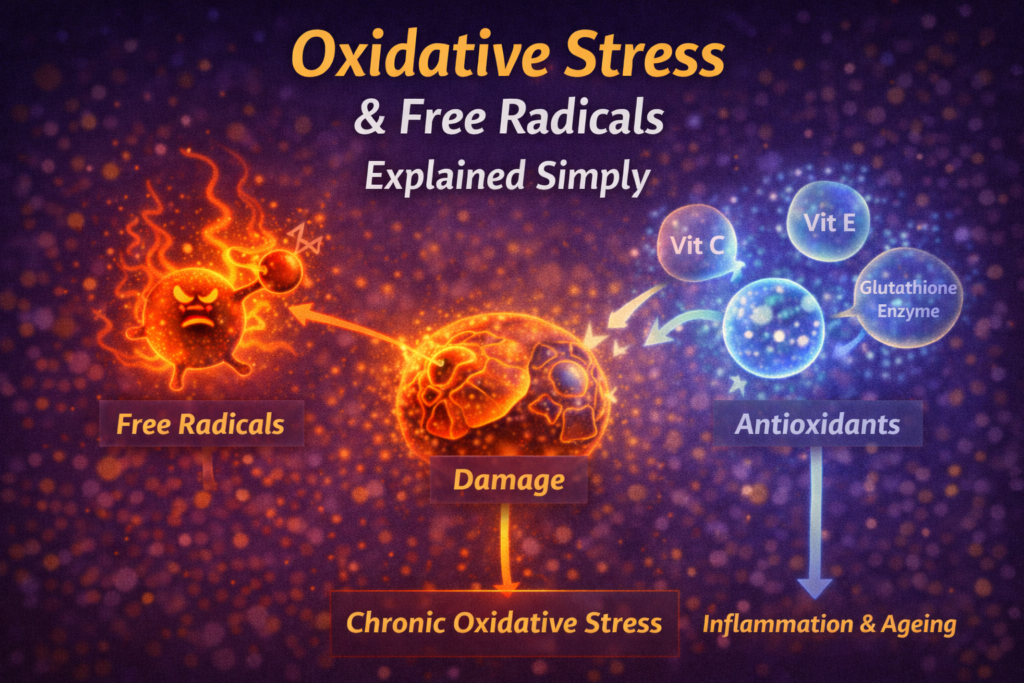
Damaged mitochondria generate excess reactive oxygen species.
See: Oxidative Stress Explained.
Impaired neurotransmitter balance
Energy deficits disrupt synthesis and recycling.
Higher neuroinflammation risk
Cellular stress activates immune pathways.
Related: Stress and Inflammation.
5) Stress, inflammation and brain energy
Chronic stress increases cortisol and inflammatory signalling, which suppress mitochondrial efficiency and neuroplasticity.
Poor sleep, psychological overload and metabolic instability amplify this effect.
Explore: Stress and Longevity and The Nervous System Ladder.
6) Movement and cerebral energy supply
Physical activity increases cerebral blood flow, oxygen delivery and mitochondrial signalling in neural tissue.
Exercise supports:
- mitochondrial biogenesis
- mitophagy
- neurotrophic signalling
- vascular health
Related: Exercise and Mitochondria and Mitophagy Explained.
7) Glucose stability and cognitive function
The brain relies heavily on stable glucose availability.
Blood sugar swings can cause:
- brain fog
- irritability
- fatigue
- attention dips
Explore: Blood Sugar & Longevity and Insulin Resistance.
8) How to support brain energy safely
Protect sleep quality
Sleep restores mitochondrial signalling and waste clearance.
Move daily
Consistent movement improves cerebral energy delivery.
Stabilise blood sugar
Avoid extreme glucose swings.
Manage nervous system load
Chronic stress suppresses energy availability.
Eat sufficient protein and micronutrients
Mitochondrial enzymes require adequate nutritional support.
FAQ
Does brain fog mean mitochondrial dysfunction?
Not necessarily, but energy instability often contributes.
Can supplements boost brain energy?
Lifestyle foundations remain more reliable than supplements.
Does ageing inevitably reduce brain energy?
Decline is modifiable through behaviour.
Is caffeine helpful or harmful?
Moderate use can improve alertness but does not improve cellular energy directly.
Final takeaway
Brain performance is fundamentally an energy problem.
Protecting mitochondrial health through movement, sleep, metabolic stability and stress regulation preserves cognitive clarity as you age.
— Simon
References
- Mattson MP et al. (2018). Energy intake and exercise in brain health and aging. Nature Reviews Neuroscience.
- Lin MT & Beal MF. (2006). Mitochondrial dysfunction and oxidative stress in neurodegenerative diseases. Nature.

Simon is the creator of Longevity Simplified, where he breaks down complex science into simple, practical habits anyone can follow. He focuses on evidence-based approaches to movement, sleep, stress and nutrition to help people improve their healthspan.