Alcohol and Sleep: Why It Wrecks Recovery Even When You “Sleep”
Alcohol may help you fall asleep — but it quietly destroys sleep quality and recovery.
← Back to: How to Improve Sleep for Longevity
Alcohol is one of the most common sleep aids — and one of the most misunderstood.
Many people believe a drink in the evening helps them sleep better. They fall asleep faster, feel relaxed, and may even sleep longer.
However, from a sleep quality and longevity perspective, alcohol consistently reduces recovery, even when total sleep time looks normal.
This guide explains:
- what alcohol actually does to sleep
- why it increases night-time wake ups
- how it affects deep sleep and recovery
- how to minimise damage if you do drink
Why Alcohol Feels Like It Helps Sleep
Alcohol is a central nervous system depressant. In the short term, it:
- reduces anxiety
- lowers inhibitions
- increases drowsiness
This is why people often fall asleep faster after drinking.
The problem is that sedation is not the same as restorative sleep. Alcohol disrupts the natural sleep architecture that supports recovery, especially later in the night.
What Alcohol Actually Does to Sleep
Once alcohol is metabolised, its effects reverse.
This rebound phase:
- increases sympathetic nervous system activity
- raises heart rate
- fragments sleep cycles
As a result, overall sleep efficiency drops — even if you remain in bed for many hours.
Large studies consistently show that alcohol reduces sleep quality and increases night-time awakenings (source).
Why Alcohol Causes Night Wake Ups
Alcohol is one of the most reliable triggers of night-time wake ups.
It contributes through several mechanisms:
- Thermoregulation: alcohol raises body temperature, worsening the effects described in temperature and sleep
- REM rebound: suppressed REM sleep returns aggressively later in the night
- Dehydration: increasing bathroom trips
- Autonomic arousal: raising cortisol and adrenaline
This explains why people often wake at 2–4am after drinking.
Alcohol, Deep Sleep and Recovery
Alcohol reduces deep sleep, particularly in the second half of the night.
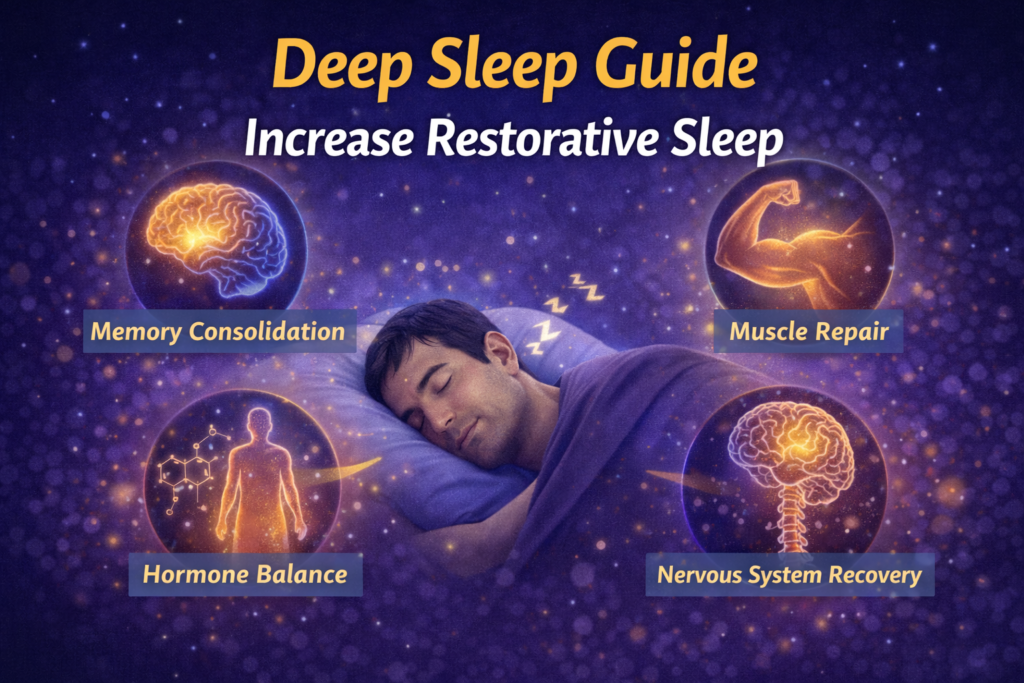
Deep sleep is where:
- physical repair occurs
- growth hormone is released
- immune and metabolic recovery happens
Even small amounts of alcohol can reduce deep sleep duration and continuity — compounding the effects of late caffeine intake discussed in caffeine cut-off times.
How to Reduce Sleep Damage from Alcohol
The best option for sleep quality is always not drinking. However, if you do drink:
- finish alcohol at least 3–4 hours before bed
- limit intake to 1–2 drinks
- hydrate well
- keep the bedroom cool and dark
- anchor your wake time the next day
Pairing alcohol with consistent circadian timing — as outlined in the best bedtime window guide — helps reduce disruption.
Frequently Asked Questions
Is red wine better for sleep than other alcohol?
No. All alcohol disrupts sleep architecture.
Does alcohol affect everyone the same?
No. Sensitivity varies, but disruption is common even at low doses.
Can alcohol ever improve sleep?
It may shorten sleep onset, but it almost always worsens sleep quality.
The Longevity Takeaway
Alcohol may help you fall asleep — but it reliably reduces sleep quality, deep sleep, and recovery.
If your goal is better energy, metabolic health, and long-term resilience, alcohol is one of the most powerful — and often overlooked — sleep disruptors.
This is why limiting evening alcohol is a core recommendation within the Sleep for Longevity framework.
References
- He S et al. “Alcohol consumption and sleep disorders.” Nature and Science of Sleep. 2019.
- Roehrs T, Roth T. “Sleep, sleepiness, and alcohol use.” Alcohol Research. 2001.
- Medic G et al. “Short- and long-term health consequences of sleep disruption.” Nature and Science of Sleep. 2017.
Disclaimer: This article is for educational purposes only and does not replace medical advice. If you have concerns about alcohol use or sleep disorders, consult a qualified healthcare professional.

Simon is the creator of Longevity Simplified, where he breaks down complex science into simple, practical habits anyone can follow. He focuses on evidence-based approaches to movement, sleep, stress and nutrition to help people improve their healthspan.